Mikrut’s challenger rise honors a guiding light

Grief tempers the young Croatian’s breakout, as titles and ranking climbs become quiet tributes to the father who shaped his path on and off the court.

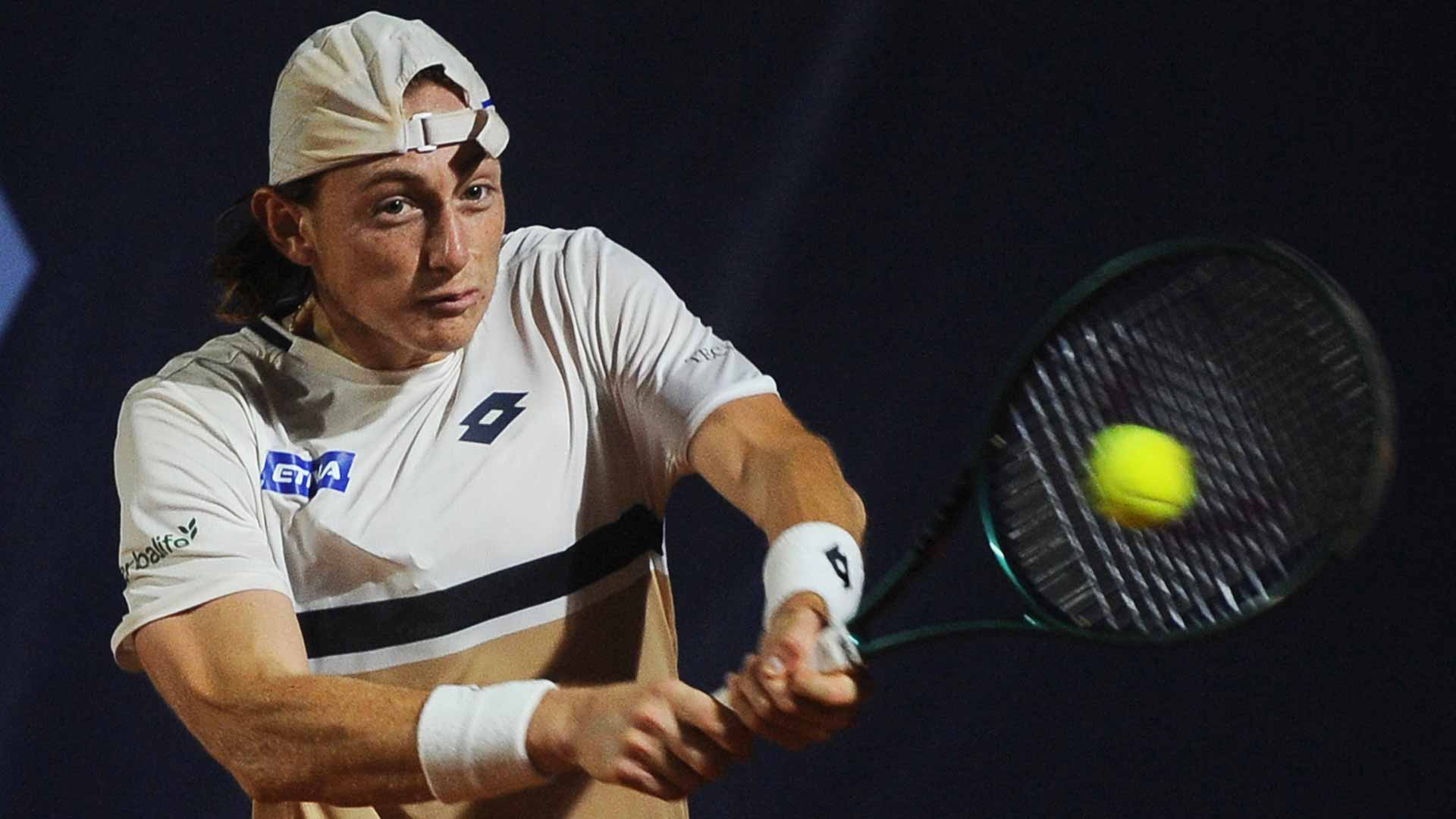
Luka Mikrut surges into the ATP Challenger spotlight, his game a blend of raw power and quiet resolve that has lifted him to a career-high No. 159 in the PIF ATP Rankings. At 21, the Split native has claimed two titles in the past three months, capping a run of 19 wins in 22 matches with a final in Valencia. This momentum carries the weight of personal loss, transforming every baseline exchange into a step toward the dreams he once shared with his late father, Mijo, who passed in 2023 after battling cancer.
Grief shadows the solitary tour
The road feels emptier without Mijo’s steady hand, which once mapped out coaching plans, flights, and recovery amid the grind of back-to-back events. Mikrut stepped onto court the day after the funeral, no time to mourn as he forced focus through early-round crosscourt rallies and underspin defenses to stay alive in draws. Emotions boiled over during Croatia’s Davis Cup tie last year, the home crowd’s roar amplifying the ache of his father’s absence from this national milestone.
“He had bad cancer,” Mikrut shared with ATPTour.com. “He was sick for one year. When they first found out what it was, they told him maybe one or two months. He pulled it out to one year. But it was very hard. Those situations really hit hard.”
“Even before he died, he was really sick and when you are younger, you don’t think about it. But when this happens in the family, you start to think about this stuff a bit and it’s not easy.”
That resilience mirrors Mijo’s own fight, a year beyond the prognosis, now fueling Mikrut’s ability to reset after tough losses with tactical one–two combinations that build pressure point by point. The logistical solo act sharpens his mental edge, turning potential distractions into disciplined serves that target weaknesses on clay or hard courts alike.
Rocky mantra steels the fight
Etched on his right bicep, a line from Rocky V captures the ethos: “It ain’t about how hard you hit. it’s about how hard you can get hit and keep moving forward, how much you can take and keep moving forward.” The most painful of his seven tattoos, it draws from a film where underdogs absorb blows in grueling rounds, much like sustaining long rallies before unleashing an inside-out forehand for the break.
Mikrut chuckles about the ink’s sting, each drop a reminder that reignites his drive during three-set marathons. He channels it to push through fatigue, varying slice backhands to disrupt opponents’ rhythms and open angles for down-the-line finishes. This inner fire has turned isolation into fuel, every victory a nod to the pride Mijo always expressed.
Split heritage ignites the surge
From age five, tennis gripped Mikrut in Split, sparked by his grandmother’s collection of classic matches featuring Roger Federer, Pete Sampras, and their clashes, including a Federer-Agassi duel at the US Open that he watched endlessly in his mother’s DVD shop. Those sessions, headband in place, mimicked fluid transitions and precise serves, laying groundwork for his current blend of baseline depth and net approaches. Nostalgia lingers, the tapes still playable as echoes of a childhood dream now unfolding on the Challenger circuit.
At Tennis Klub Split, a hub that nurtured Goran Ivanisevic and Mario Ancic, Mikrut trained alongside Dino Prizmic, a contender for the Next Gen ATP Finals presented by PIF, in a lineage tied to the late Nikola Pilic‘s hometown influence. Croatia’s outsized impact, despite its size against nations like Italy or the United States, inspires him—Ivanisevic, the first Croatian Grand Slam champion from Split, texted congratulations after the Braga title, bridging eras with a shared hunger for the top. Mikrut dissects foes with crosscourt patterns to force errors, then exploits with inside-in aggression, his 200-spot climb in two months a testament to this tactical evolution amid emotional undercurrents.
Como’s clay rewarded his topspin-heavy one–two punches, crosscourt forehands setting up backhand down-the-lines against patient returners, while Braga’s red dirt saw him rush nets with slice approaches to clinch the final 6-4, 7-5. Valencia’s hard courts demanded flatter strokes, using underspin to pull rivals forward before striking inside-out winners, extending his streak and hinting at top-150 potential by 2025‘s end. Crowd energy in these venues, from Como’s lakeside buzz to Braga’s fervent support, amplifies the stakes, each point a whisper of tribute.
“Every ink drop was worth it,” he said with a laugh. “Sometimes I remember it and it gets me going, gets me hyped and gives me some extra energy you need to win. You see Rocky in every movie, he is getting beaten a lot and somehow he wins it. Sometimes, actually very often, it’s like that in tennis.”
“We are not a big country, there’s not many of us in tennis compared to other countries like Italy, France or the United States, but we are doing good results,” Mikrut reflected on Croatia’s legacy. The club’s emphasis on versatile play suits his rise, scouting return positions to vary serves and groundstrokes across surfaces.
Though the exact spark for his breakout eludes him, Mikrut senses his father’s push in every step. “He always pushed me and I always liked to hear from him that he was proud,” he said. “And I believe he would be very proud now.”
As 2025 challengers unfold, Mikrut’s fusion of tactical precision and unyielding spirit positions him to carry Split’s torch further, each ranking gain a bridge to the ATP main draw where Mijo’s pride endures in the roar of bigger stages.