Legends shaping the next generation’s fire

With Jeddah’s Next Gen ATP Finals on the horizon, emerging talents Basavareddy, Prizmic, and Landaluce channel the enduring lessons of Ram, Nadal, and Cilic, turning late-season pressures into pathways of resilience and precision.
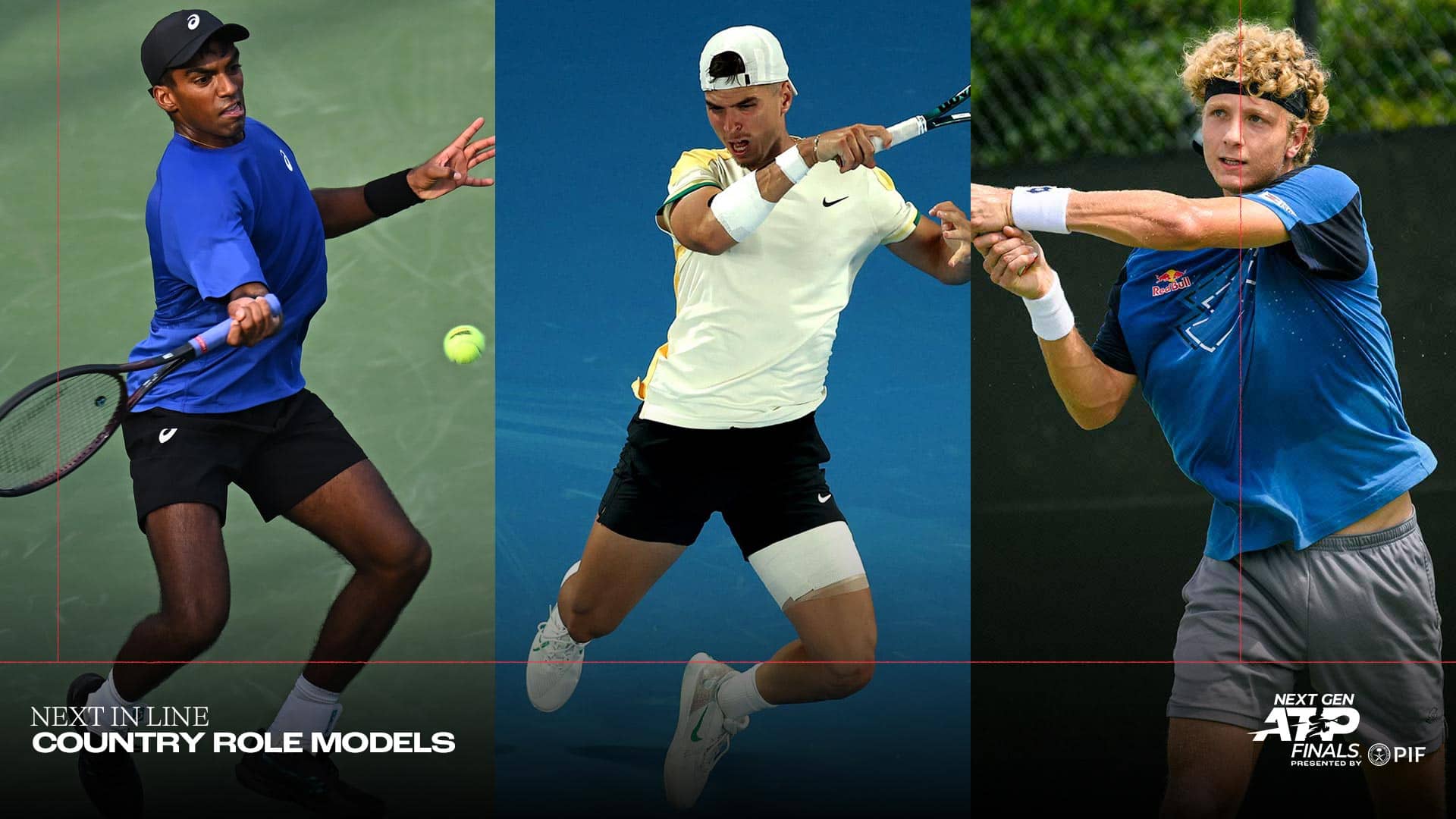
As November’s chill settles over European hard courts and Challenger circuits, Nishesh Basavareddy, Dino Prizmic, and Martin Landaluce grind through the final qualifiers for the Next Gen ATP Finals presented by PIF, their games evolving under the subtle guidance of icons who once faced the same unforgiving climb. The air hums with the thud of balls on indoor surfaces, where every rally tests not just strokes but the will to endure fatigue and doubt. These young contenders, balancing national pride with personal breakthroughs, find their rhythms sharpened by mentors whose careers whisper strategies for the tour’s psychological and tactical gauntlets.
American mentorship builds quiet confidence
For the 20-year-old from Indiana, the path weaves through shared roots and a coach’s long shadow, where Rajeev Ram’s 32-time doubles success models a life of steady ascent amid the pro circuit’s isolation. Basavareddy, who reached the semi-finals at an ATP 250 event in Auckland this year, draws from their common trainer Brian Smith—guiding Ram since he was 14 or 15 and the younger player since age eight—to refine his transitions from baseline crosscourt exchanges into net-rushing one–two finishes. This bond, evolving from distant admiration to courtside friendship, instills a calm that counters the season’s relentless tempo, allowing him to vary underspin defenses against bigger hitters while honoring his Indian-American heritage.
“We have a shared coach in Brian Smith,” Basavareddy told ATPTour.com in New York. “Brian’s been coaching Raj since he was 14 or 15, and when I moved to Indiana at eight years old, I started working with Brian too. As I’ve grown older and started playing on tour, Raj and I began crossing paths more. He’s been a great mentor, and now I can call him a friend as well.”
“It was huge,” he reflected. “When you’re younger, you don’t really know what the pro tour is like. But seeing Raj travel, compete, and win gave me a real look at it. It also gave my parents confidence. He was one of the first Indian-Americans to really make it.”
The broader American vanguard, including Frances Tiafoe, Taylor Fritz, Sebastian Korda, and Ben Shelton, offers daily glimpses of tactical poise—Fritz’s inside-out forehands carving openings, Shelton’s serves setting up down-the-line backhands—that Basavareddy adapts to his evolving style. Off-court camaraderie from these peers combats the loneliness of travel, while support from Indian fans adds emotional lift, motivating him to inspire the next wave with wins that echo Ram‘s persistence. As rankings tighten, this foundation propels him toward Jeddah, where heritage-fueled belief could spark breakthroughs on the big stage.
A new Race to Jeddah update has dropped #PIF | #ATPRankings | #partner pic.twitter.com/y5LdUDT8JS
— Next Gen ATP Finals (@nextgenfinals) November 3, 2025
Spanish icons ignite fighting spirit
In the sun-drenched courts of Manacor, Martin Landaluce plunged into elite training at 14, absorbing Rafael Nadal‘s clay-court mastery where high-bouncing top-spin loops force opponents into defensive slices before explosive inside-in winners. This immersion, just weeks after joining the Rafa Nadal Academy, taught the young Spaniard to layer precise depth in crosscourt rallies, sustaining points on slower surfaces that mirror the endurance needed in late-season European swings. Nadal’s equal respect during those sessions—treating a novice as a peer—fosters Landaluce’s humility, helping him rally from service breaks with 1–2 combinations that blend underspin approaches and volleys.
“Just a week or two after arriving, I was already practicing with Rafa, on clay, his best surface,” Landaluce shared with ATPTour.com at the academy in August. “It was a big challenge, but I loved it.”
“What shocked me most was how he treated me, like an equal,” he added. “Even though I was 14 and unknown, he respected me, trained hard, and took every point seriously. That attitude stayed with me.”
Carlos Alcaraz, a close friend and fellow US Open junior champion, injects joy into the mix, his all-court flair—quick drop shots pulling rivals forward, explosive returns neutralizing serves—reminding Landaluce to keep energy high amid grueling practices. This duo’s influence defines the Spanish essence: unyielding fight that turns 6-0, 5-0 deficits into belief-driven comebacks, as seen in his ATP Challenger Tour title in Orleans this year. With Nadal’s professionalism and Alcaraz’s brightness guiding him, Landaluce eyes Jeddah’s fast courts, ready to channel that spirit into disruptive runs against global peers.
“Carlos is an amazing guy, funny, down to earth, and so natural,” Landaluce said. “He’s achieved so much, but he still has that brightness and joy. That motivates me to keep my own spirit alive and keep learning.”
“There’s this spirit, we fight until the end,” he noted. “Even if I’m down 6-0, 5-0, I still believe I can win. That fighting spirit is part of who we are as Spanish players.”
Croatian heroes forge point-by-point resolve
Growing up along Croatia’s Adriatic coast, Dino Prizmic idolized Marin Cilic‘s towering serves and Borna Coric‘s baseline counters, learning to exploit hard-court angles with deep crosscourt returns that set up inside-out forehands in extended rallies. Cilic’s US Open triumph and Coric’s 2022 Cincinnati victory provided blueprints for mental recovery, with early meetings at the Piatti Tennis Academy turning into friendships rich with advice on varying serve placements to disrupt rhythms on indoor surfaces. Prizmic, a three-time ATP Challenger Tour champion, applies these lessons to his game, using underspin slices to neutralize power while building points with tactical patience that echoes his mentors’ poise under pressure.
“I looked up to both of them,” Prizmic explained. “From them I learned to fight every point, to believe in yourself no matter the score. I first met Borna when I was young at the Piatti Tennis Academy. We’ve been very good friends since then. And I met Marin later in Zagreb when I was training with him.”
“It’s a great thing to have players like that around you,” he continued. “You can always ask them for advice, and they’re willing to help.”
National duties amplify this resolve, as his Davis Cup debut against Slovakia this year—securing a team win—deepens the pride of representing Croatia, where collective support turns solo travels into shared purpose. Coric’s precision in returns and Cilic’s volley rushes inform Prizmic’s adjustments for fall qualifiers, fortifying him against ranking volatility with a belief that every point counts. As the season peaks, this Croatian grit positions him for Jeddah, where mentor-honed tactics could elevate his three Challenger crowns into under-21 glory.
“We played against Slovakia this year and won,” Prizmic recalled. “That was a big pleasure for me. It’s special to wear your country’s colours and feel that support.”
For Basavareddy, Landaluce, and Prizmic, these legends transcend inspiration, embedding resilience and strategy that light the final push to December’s showdown. As the Next Gen ATP series Next in Line continues on November 18 with insights into Landaluce, Justin Engel, and Federico Cina, their stories highlight how past triumphs fuel the next era’s rise, priming these stars for battles where heart and craft collide under Jeddah’s lights.