Felix Auger-Aliassime Weaves Triumphs into Legacy

Deep into the Shanghai Masters quarterfinals, Felix Auger-Aliassime confronts rivals and reflections that shape his rise, turning every hard-court rally into a step toward untamed ambitions.
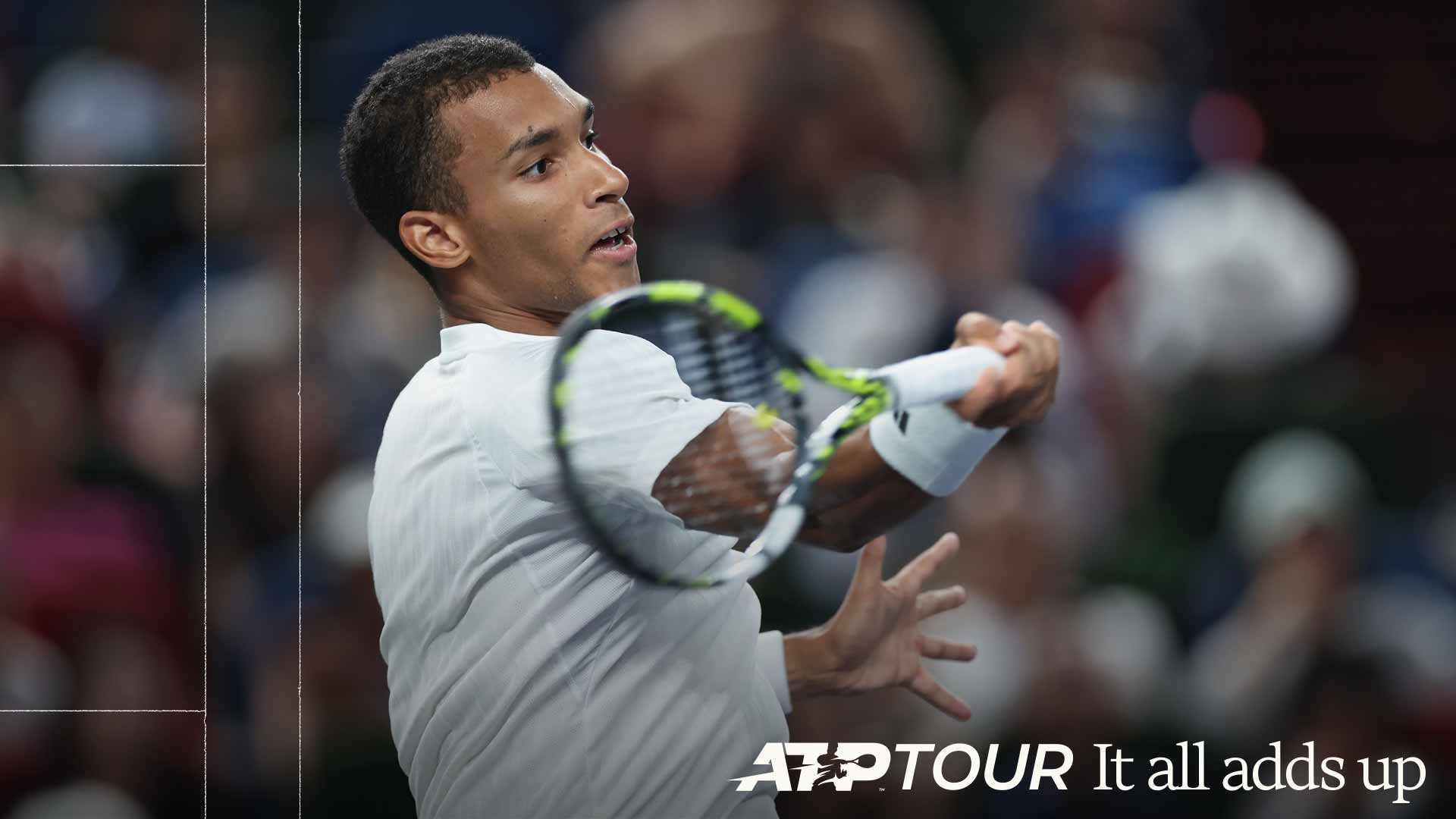
Felix Auger-Aliassime strides into the Shanghai Masters quarterfinals with the poise of a player who has turned early promise into enduring narrative. The 25-year-old Canadian has captivated fans since his ATP Tour main-draw debut in 2018 at Rotterdam, the very venue where he lifted his first title in 2022. Now, on these illuminated hard courts, each baseline exchange pulses with the weight of a season’s trials, blending raw power with sharpened instincts that keep him in the hunt.
Streak forges unbreakable confidence
The close of 2022 marked Auger-Aliassime’s defining surge, a 16-match winning run that shattered his pattern of fleeting highs. He captured three titles in succession, reached the semifinals in Paris-Bercy, qualified for the ATP Finals in Turin, and clinched the Davis Cup, moments that etched proof of his staying power. Those victories, born from junior-level flashes now sustained under tour pressure, taught him to chain successes, transforming doubt into a steady rhythm that echoes in Shanghai’s extended rallies.
Hard-court battles here demand that same trust, where a dominant one–two punch sets up inside-out forehands to stretch opponents wide. He reflects on how backing one win with another quelled the inconsistency that once plagued his path, allowing him to absorb crowd energy and tactical probes without faltering. That mental architecture now anchors his quarterfinal push, turning potential fatigue into fuel for deeper runs.
“At the end of 2022, I had this win streak — it was 16 matches. Then I qualified for Turin at the end of the year, won the Davis Cup. That whole stretch was probably what I am most proud of.”
Consistency uncovers deeper challenges
Auger-Aliassime‘s toughest hurdles lie not in physical grind but in unraveling the roots of inconsistency, a puzzle that demands raw introspection amid the tour’s chaos. He and his team dissect why form wavers—perhaps predictable patterns in crosscourt exchanges or lapses in underspin control—pushing beyond routine drills to realign his game. This season’s transitions, from hard-court openers to clay endurance tests and now Asian humidity, amplify those quests, where mental clarity separates survival from dominance.
In Shanghai, such analysis manifests in quick adjustments, like layering slice on returns to disrupt aggressive servers or opting for down-the-line backhands to pierce defensive walls. The process fosters resilience, turning seasonal slumps into tactical evolutions that keep him competitive. He emphasizes that the true difficulty emerges in quiet team sessions, confronting what blocks his best tennis.
“When you get to a point where you struggle to find consistency and you have to figure out why. You can go to work and you can play, but the most difficult part is not the physical part, it’s figuring it out with yourself and your team. ‘What do I actually need to improve? What’s making me not play the way I want right now?' That’s the difficult part, finding out the why.”
Rivalries and venues fuel his fire
Auger-Aliassime names Stefanos Tsitsipas as his sharpest rival, a bond forged in junior circuits and alive with mutual edge that spans years of back-and-forth clashes. Their matches, often unfolding in tense three-setters, sharpen his psychological defenses, anticipating net forays or countering with precise inside-in strikes. Even against tougher nuts like Daniil Medvedev, where wins came hard, these duels build perseverance, heightening the stakes in every tournament draw.
Beyond his own battles, he cherishes Djokovic-Murray rivalries for their counterpunching marathons, rallies that showcased outsmarting foes through endurance and feints—lessons he applies to Shanghai’s baseline grinds. Nadal-Federer added iconic flair, but those Novak-Andy exchanges, rich with physical demands in Slams, inspired his own rally extensions. Such inspirations weave into his game, sustaining focus amid the humid night sessions.
Among tournaments, Wimbledon tops his Grand Slam list for its historic grass, where low bounces reward flat serves and volley transitions under roaring crowds. Monte-Carlo’s clay beauty suits topspin one–two builds, Doha’s fast hard courts echo Shanghai’s speed for aggressive returns, and Auckland’s remote New Zealand vibe offers unique renewal at the 250 level. These stages, each tweaking his patterns—from grass underspin to clay endurance—anchor his schedule, blending prestige with tactical variety.
The thrill of meeting idols like Roger Federer, Rafael Nadal, Novak Djokovic, and Andy Murray stands as his career’s highlight, encounters that humanize legends and reignite passion in locker-room chats. Those moments cut through isolation, reinforcing his drive as he eyes untapped peaks: a Masters 1000 title or Grand Slam, the toughest summits that define legacies. Davis Cup glory and Olympic medal dreams already transcend the court, embedding national pride, yet those majors beckon as the ultimate tests.
“I still haven’t won a Masters 1000 title or a Grand Slam. They are the biggest categories of tournament and the toughest to win, so if you do capture one in your career, that’s huge. Those are still to do. But winning the Davis Cup, winning an Olympic medal were huge. I think capturing a medal goes beyond your sport.”
As quarterfinal lights glare in Shanghai, Auger-Aliassime carries this tapestry forward, each point a thread in a story poised for grander chapters, where mental steel meets court craft in pursuit of immortality.