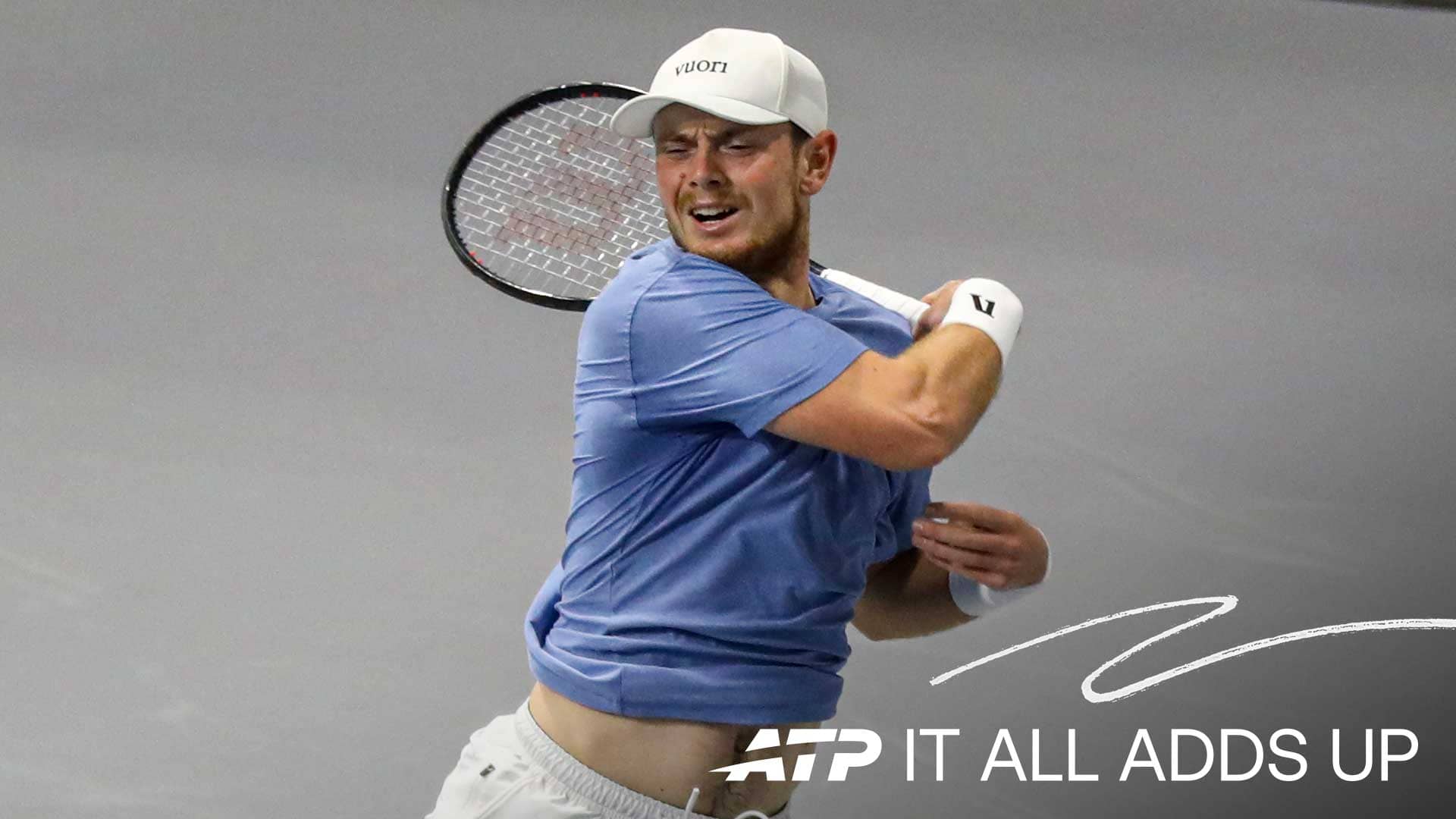
Korda’s Road Back from the Boot to the Baseline

Sebastian Korda savors a family-fueled Delray Beach triumph after a shin fracture tested his limits, blending mental grit with tactical tweaks as he eyes upsets at Indian Wells.

Sebastian Korda hoisted the Delray Beach Open trophy under Florida’s February glare, his nephew’s giggles piercing the post-match roar as he pulled the boy from the stands for an impromptu victory lap. The scene captured a hard-earned third ATP Tour title, one that bridged months of isolation and doubt. At 25, the American’s smile hid the grind of a stress fracture that had dropped him to No. 86 in the PIF ATP Rankings last August, his lowest since April 2022.
“It was cool. Had a long journey to get back to winning a title. Especially with my whole family there, it was something I’ve never experienced before,” Korda said. “It was emotional, it was cool. It was a lot of hard work behind the scenes, but I was just super happy with it.”
Family moments ground the recovery
The nephew, son of pro golfer Jessica Korda, marked his second tennis tournament ever, a novelty despite Uncle Sebi and Grandpa Petr Korda’s legacy on the circuit. With Jessica’s home just blocks from the venue, Sebastian blended casual hangouts with final preparations, the normalcy a balm after rehab’s confines. That shared elation on court wasn’t mere relief; it rooted him amid the tour’s nomadic pull.
Less than a year earlier, everyday motions turned adversarial. A boot encased his right shin for three months, sidelining him from the clay swing and forcing a retreat into solitude. Crutches echoed through quiet days, driving off-limits, the injury stripping away the baseline rhythm he thrived on.
“It was tough. I couldn’t drive around. I couldn’t do things. I had some crutches for a couple of weeks as well,” Korda recalled. “It wasn’t a fun experience. I never realised how tough crutches are as well. It wasn’t a fun time…”
Mental hurdles tower over physical ones
Last year’s shadows lingered longest, injuries prompting Korda to withdraw inward, his team emerging as anchors through the haze. The physical rehab followed a clear path, but recapturing match-day nerves demanded deeper navigation. He resurfaced in Winston-Salem last August, carving into the semis with inside-out forehands that exploited the hard court’s pace.
Athens capped the year with another semifinal run, where he traded crosscourt rallies with Top-10 star Lorenzo Musetti in a three-set battle that tested his recovering footwork. Yet setbacks dotted the slate: first-round defeats at the US Open and Australian Open, where crowd energy amplified every tentative step. Those weren’t stroke failures but echoes of disconnection from the competitive pulse.
“The toughest part was coming back. Different environments, you kind of disconnect yourself from the stress of playing matches and nerves and just getting back to that and getting comfortable again,” Korda explained. “Being in those situations definitely was the toughest part.”
The head game proved the steeper climb. Uncertainty loomed in high-pressure spots, where forehands might falter under scrutiny despite solid practice sessions. “You look through those moments, uncertainty, you don’t know how you will perform, maybe [how you will] be with the pressure,” he noted. “The mental is definitely a lot tougher than the physical.”
“I felt like I was playing good tennis, but I couldn’t really translate it into a match atmosphere. I think the last two months of just playing a ton of matches has been really helping.”
Tactical shifts build hard-court momentum
January’s three-match skid gave way to a Challenger final in San Diego, where slice backhands disrupted returns and rebuilt his point construction. From there, quarterfinals at the ATP 500 in Dallas showcased a refined 1–2 pattern, serve dipping low before a deep approach that pinned foes deep. The Delray crown followed, his down-the-line backhands slicing through defenses with renewed bite.
Now at Indian Wells, the season’s first ATP Masters 1000, Korda takes on sixth seed Alex de Minaur in the second round, the desert hard courts favoring his patient baselines. Coach Ryan Harrison, newly on board, sees the adaptation in real time. “He’s responding really well to every situation that comes at him,” Harrison observed.
“Sometimes you’ll be in a match, and you’ll have some bad luck happen — guys will play well, and then other times you might not be feeling your best at the very beginning.”
Korda’s focus holds firm through momentum swings, turning underspin serves into setups for inside-in forehands that exploit de Minaur’s speed. “Every time he’s been playing, he’s been finding a way to get better and better throughout each match,” Harrison added. “[He has been] very resilient out there, even when there are those moments in a match that things can get really tricky to stay on it. He’s been very, very strong mentally.”
For the former World No. 15, this year’s trials—from boot to baseline—have forged sharper edges. “Grateful for these experiences,” Korda reflected. “And then learned from them and tried to get better from them.” As Indian Wells heats up, his arc bends toward contention, each resilient point paving the way forward.