Poland ignites United Cup with early commitment

Hubert Hurkacz and Iga Swiatek anchor Team Poland’s return to the 2026 United Cup, channeling recent near-misses into a focused bid for glory amid the high-stakes team battles of Australia’s summer swing.
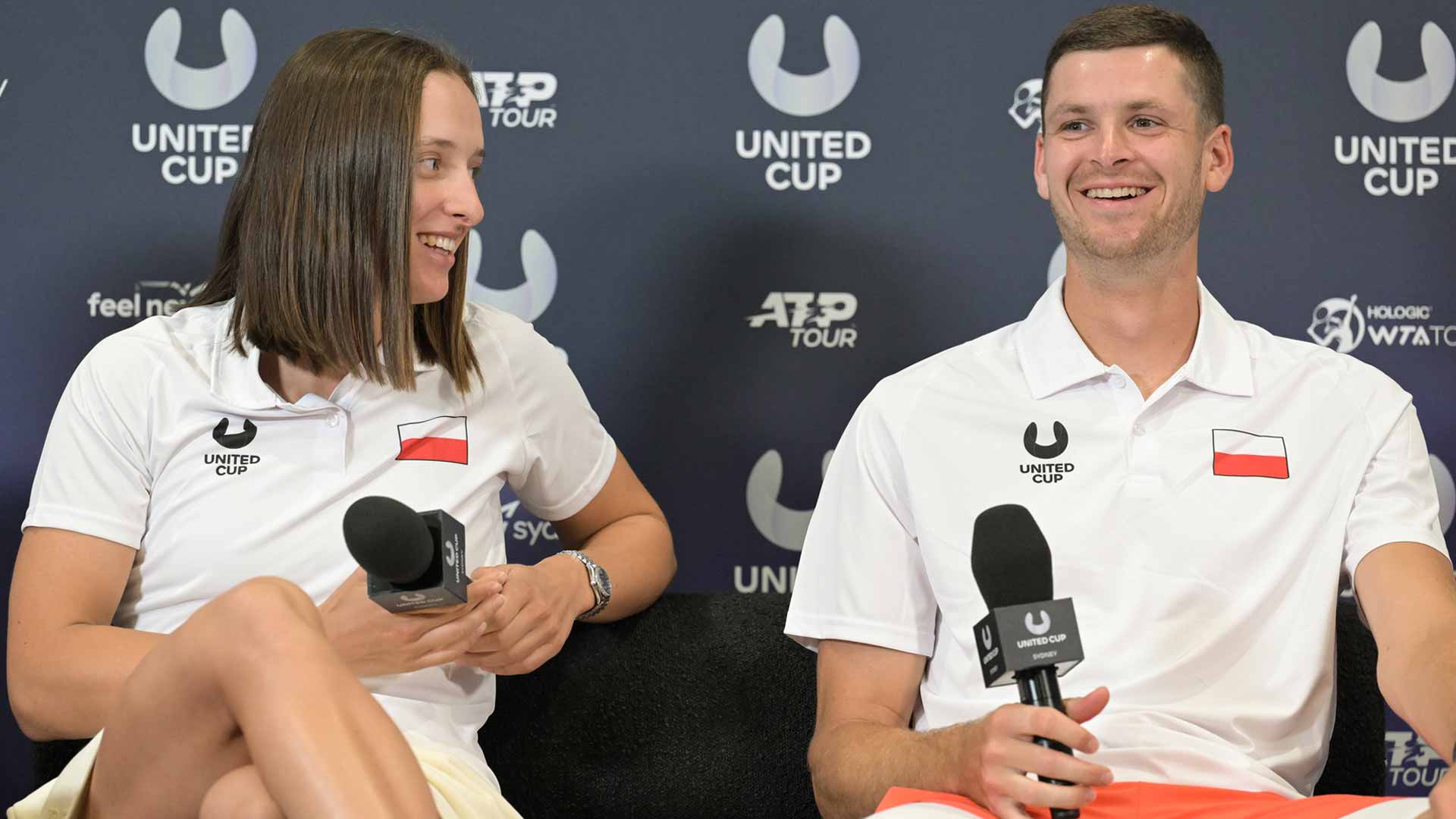
As the off-season hum builds toward another Australian summer, Poland steps forward first for the 2026 United Cup. Former World No. 6 Hubert Hurkacz teams with six-time major champion and 2025 Wimbledon winner Iga Swiatek, locking in their spots for an event that fuses national pride with raw competition. This duo’s pledge signals intent to transform past finals frustrations into triumph, drawing 18 nations into a mix of singles and doubles from January 2 to 11 across Perth and Sydney. Each country fields up to three men and three women, chasing a trophy, a minimum AUD $17 million prize pot, and 500 PIF ATP and WTA rankings points in a format that amplifies every point’s weight.
Poland marks its fourth appearance as two-time finalists, their resolve tested by recent heartbreaks that exposed the fine margins of team play. Swiatek, now World No. 2 after her latest Grand Slam and a 25th career singles title in Seoul last month, leads with a formidable 14-2 singles record at the United Cup. In 2025, they fell 2-0 to Team USA’s Coco Gauff and Taylor Fritz in the final, a straight-sets sweep that lingered as a tactical reminder. The year before, in 2024, Germany edged them 2-1 after Poland held championship points in mixed doubles, underscoring the event’s emotional volatility.
“The United Cup is always amazing. it’s always an amazing experience and just an honour to represent your country and especially alongside such great players,” said Swiatek. “I love being part of the team and have great memories of playing this event. This tournament is different. It brings more excitement than normal tournaments we play during the year.”
Embracing team bonds and fan fire
Swiatek’s enthusiasm reveals the United Cup’s unique pull, where individual stars merge into a collective force under the glare of national expectations. She anticipates reconnecting with Polish supporters in Australia, their presence a steadying force amid the tour’s isolation. “They’re the best because they’re literally everywhere,” Swiatek added. “In any country that we go, there are many Polish people and in Australia, there’s a big Polish community. I think they’re really committed and really believe in us, and that’s what’s most important.”
Hurkacz shares that affection for the team dynamic and the Down Under vibe, his words capturing the restorative energy of the trip after a grueling season. “I really enjoy the team atmosphere and the opportunity to represent our country,” he noted. “And I really love coming to Australia and of course the Australian people. I really, really like the atmosphere there.” This shared passion fuels their preparation, blending her baseline endurance with his serve dominance to build unbreakable synergy.
Their partnership thrives on complementary styles: Swiatek’s heavy topspin forehands set up inside-out angles that pull opponents wide, while Hurkacz’s powerful first serves—often exceeding 130 mph—allow aggressive net approaches in mixed doubles. Past finals taught them to refine these elements, like incorporating more underspin on returns to disrupt flat hitters on the hard courts’ true bounce. As they gear up, the focus sharpens on sustaining mental composure through the round-robin ties, where a single lapse in the best-of-three singles sets can shift momentum irreversibly.
Navigating hard-court tactics and schedule
Perth’s RAC Arena opens the action on January 2, its controlled environment favoring precise groundstrokes as humidity aids ball grip for Swiatek’s one–two combinations of deep forehands into crosscourt backhands. Sydney’s Ken Rosewall Arena follows with group stages from January 3, introducing open-air winds that demand adaptive serves—Hurkacz might opt for higher kick trajectories to maintain control against gusts. Nine teams per city divide into three round-robin groups, each tie pitting top singles players in best-of-three sets before mixed doubles in two tie-break sets plus a 10-point decider if needed.
Group winners advance to quarterfinals, joined by the best runner-up from each city, with Perth’s quarters on January 7 and Sydney’s on the 8th and 9th leading to semis and final on the 10th and 11th in Sydney. This progression tests tactical flexibility, as Poland’s early commitment allows time to simulate multi-match days, honing adjustments like varying serve placements to exploit return weaknesses. Qualification rules add intrigue: 10 nations enter via the highest-ranked individuals, eight more through combined top pairs, with Top 10 wild cards potentially reshaping lineups by November 17, Australia’s spot secured either way.
Swiatek’s Wimbledon success, where she mastered grass-court transitions with down-the-line backhands to break prolonged rallies, now translates to hard-court aggression, her net rushes countering big servers in potential rematches. Hurkacz draws from his hard-court pedigree, emphasizing slice serves to the body that force uncomfortable returns, preserving energy for doubles poaches. The surface’s medium pace rewards their styles—her topspin gripping the court for sustained pressure, his flat drives piercing defenses in shorter exchanges—positioning Poland to navigate the grind without the fatigue that derailed prior runs.
Building toward collective breakthrough
Tournament Director Stephen Farrow welcomes their commitment, highlighting the event’s role in blending elite play with national fervor. “We are delighted six-time Grand Slam champion Iga Swiatek and Hubi Hurkacz of Poland have committed early to the United Cup this summer,” he stated. “The United Cup holds a unique position in global tennis, with the world’s best men and women representing their country at the highest level. We’re extremely proud to be delivering the fourth edition of the tournament.”
Western Australia Tourism Minister Reece Whitby praises Perth’s hosting as a vibrant kickoff, drawing crowds and boosting the local economy through the holiday stretch. NSW Minister for Sport Steve Kamper echoes the excitement for Sydney’s marquee stages, where Swiatek’s leadership promises electric atmospheres. Tickets for Sydney’s quarterfinals, semis, and final go on sale October 13 at 4pm AEDT via Ticketmaster from $50, while Perth’s quarters follow at 4pm AWST via Ticketek from $43; group stages hit in November from $40 in Sydney and $43 in Perth.
For Poland, the path ahead weaves personal resilience into team triumph, their early move a strategic edge in a field defined by rankings deadlines on November 11 and 17. Swiatek’s mental edge, forged in Wimbledon’s pressure cooker, pairs with Hurkacz’s team uplift to target those elusive final points, turning inside-in forehands and volleys into victory anthems. As the draw unfolds, their preparation promises a narrative of redemption, where Australia’s sun-baked courts become the canvas for a long-awaited Polish legacy.