Hsieh and Ostapenko Claim Riyadh Momentum

Under the glare of the WTA Finals, the sixth seeds turned the tables on their top-seeded rivals, blending sharp angles and bold volleys to seize a vital straight-sets win and edge toward the semifinals.
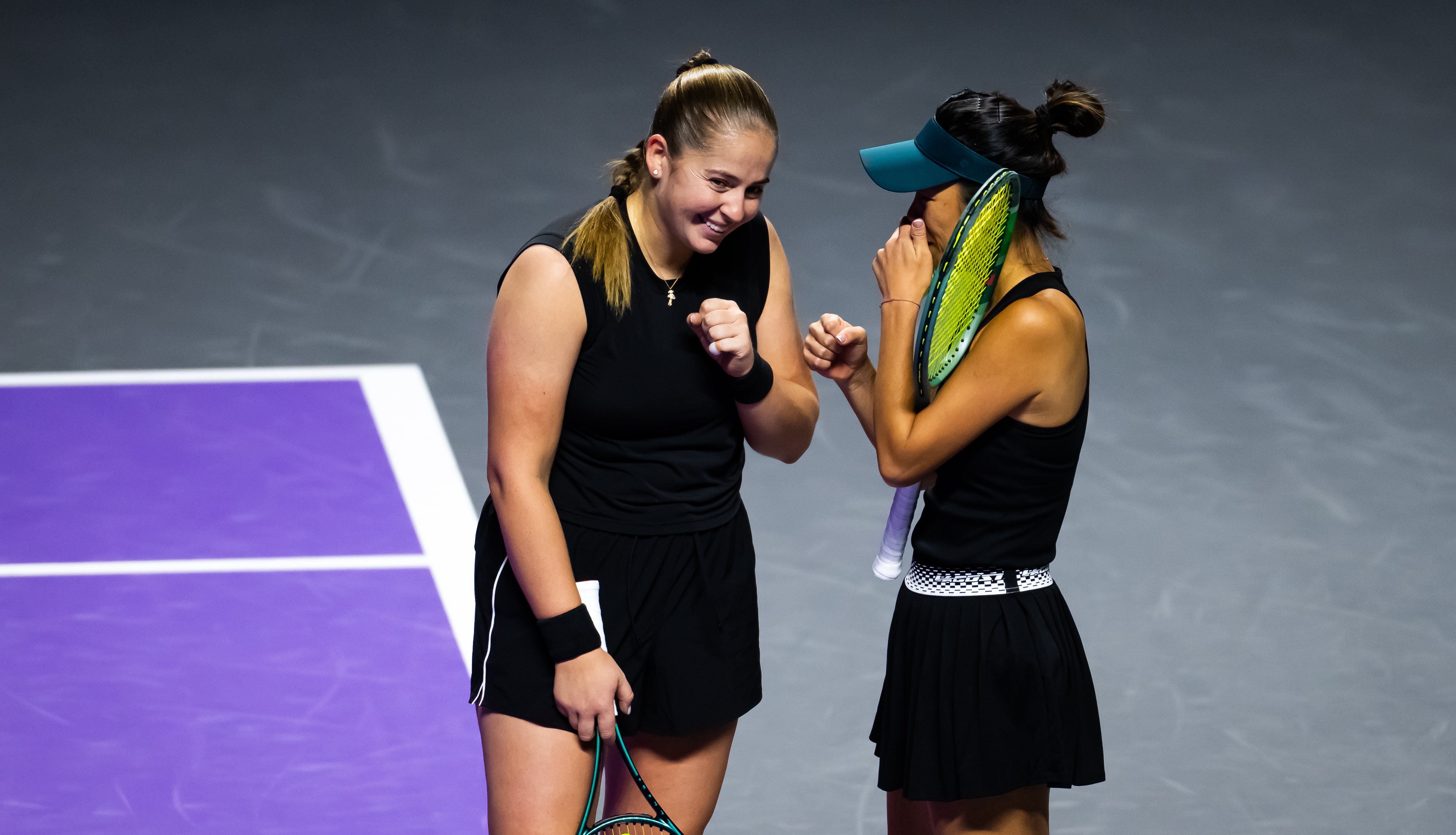
In the pulsing heart of the WTA Finals Riyadh, Hsieh Su-Wei and Jelena Ostapenko asserted dominance in the Martina Navratilova Group, dispatching the No. 1-seeded Sara Errani and Jasmine Paolini 6-3, 6-4 to improve to 2-0. This triumph reversed their 6-4, 6-0 semifinal loss to the Italians in Beijing a month earlier, showcasing a partnership refined for the indoor hard’s swift tempo. With Veronika Kudermetova and Elise Mertens facing Asia Muhammad and Demi Schuurs later, a victory there would crown Hsieh and Ostapenko as group leaders, streamlining their path to the knockouts amid the season’s closing intensity.
Aggressive opener dispels early doubts
Hsieh and Ostapenko shed the hesitancy of their debut, where they had trailed Kudermetova and Mertens 6-1, 4-2 before rallying. Here, they struck first with Hsieh’s return winner, followed by one of her signature acute angles that sliced crosscourt and left Paolini lunging in vain. The pair swept the opening eight points, forging a 3-0 lead as Ostapenko unleashed high-risk drive volleys from deep, her slice disrupting rhythms to tee up powerful inside-out forehands that pinned Errani deep.
The Italians, riding high from Australian Open and Wimbledon finals, faltered with uncharacteristic flatness, their forecourt maneuvers repeatedly outflanked by the sixth seeds’ net pressure. Riyadh’s indoor hard amplified this edge, the quicker bounce favoring Ostapenko’s flat drives over the top pair’s spin variations that had thrived outdoors. For scores, draws, and order of play from the WTA Finals Riyadh, fans can track the unfolding group dynamics in real time.
“I feel like Su-Wei was playing really well today,” Ostapenko said in their on-court interview. “Me, it was so-so, but it was OK -- it was a tough match, they are great players. We felt we had to play very aggressive all the time to keep them under the pressure. There were so many games we lost at deuce, but we tried to be calm and stay positive.”
Second-set pressure reveals team grit
As the match tightened, Errani heightened her net incursions, her inside-in slices testing Ostapenko’s passing shots and drawing errors on deciding points. The Latvian twice botched aggressive returns at deuce, granting the Italians momentum and extending games into tense standoffs, the Riyadh crowd’s murmurs rising with each shift. Yet Hsieh’s improvisational touch steadied them, her underspin lobs forcing Paolini back and opening angles for crosscourt winners that kept holds intact.
This phase echoed their season’s arc of resilience, where inconsistent form gave way to focused execution under finals scrutiny. The top seeds’ verve flickered back, Paolini’s down-the-line strikes keeping them in contention, but the sixth seeds’ one–two patterns—serve followed by volley—neutralized threats, turning potential breaks into defensive stands. Their prior comeback had forged this poise, transforming deuce-laden frustration into a quiet confidence that the Italians couldn’t shatter.
Clutch volleys secure semifinal edge
In the final game, with Errani and Paolini serving at 5-4, Ostapenko ignited the decider from 40-15 down, her backhand volley piercing inside-out to the corner before a sharp angled return induced an error for match point. Hsieh converted with a crisp net finish, the ball thudding satisfyingly as the Riyadh arena erupted, sealing a win that avenged Beijing and lifted the duo’s spirits. This sequence highlighted their synergy, Ostapenko’s audacity meshing with Hsieh’s calm to exploit the surface’s speed.
Hsieh credited their bond for weathering the deuces, a trust built through highs and lows that now propels them forward. As the group hangs on the later tie, their 2-0 mark positions them to control the narrative, eyes fixed on a semifinal run where tactical boldness could carry them deeper into the spotlight.
“I know we always have our backs,” she said. “So I didn’t worry when we were down and there were so many deuces and we didn’t take a few. We have our backs.”