Anisimova Returns to Doha with Familiar Fire

Defending champion Amanda Anisimova steps onto Doha’s hard courts seeking a repeat, drawing confidence from her 2025 Qatar TotalEnergies Open breakthrough, while Elena Rybakina arrives recharged after her Australian Open triumph.
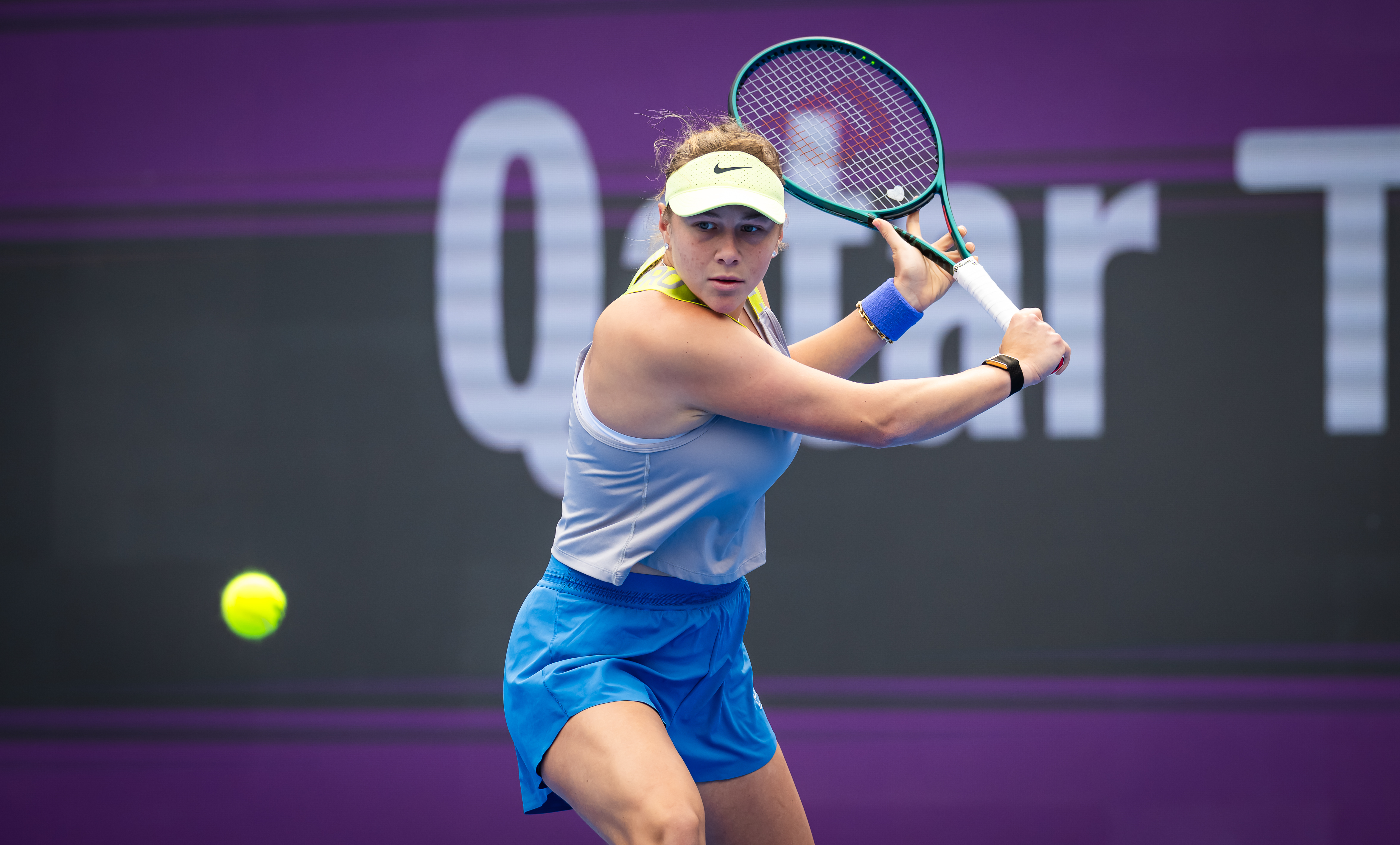
In the crisp air of Doha, where the hard courts hum with the season’s first big swing, Amanda Anisimova arrives as the guardian of her own legacy. Her 2025 Qatar TotalEnergies Open victory transformed a middling season into a revelation, the win marked her third career singles title on the WTA Tour Driven by Mercedes-Benz and her first at the WTA 1000 level. Seeded No. 3 now, after climbing from No. 41, she eyes a defense that could cement her ascent, with a bye easing her into a second-round date against the winner of Karolina Pliskova and Solana Sierra.
Anisimova’s path here echoes the controlled fury that defined last year, when she carved through four straight-set wins before grinding out a quarterfinal comeback against Marta Kostyuk, 4-6, 7-5, 6-4. Those deep crosscourt forehands pulled her opponent wide, opening the court for inside-in backhands that sealed the shift. Fresh from a 2026 Australian Open quarterfinal, lost 2-6, 6-7(1) to Jessica Pegula, she carries refined returns and steadier net play into the desert.
“I would say I’m still the same person, the same player for most part just obviously I have the addition of a lot of experiences last year,” Anisimova said to press Sunday on media day in Doha. “I’d say I’m pretty much in the same place and kind of mindset as I was last year. I feel like I was in a really good place when I got here last year. Also I learned a lot of lessons and I had a lot of great matches that add to me coming into this tournament.”
Breakthrough echoes in every rally
That Doha title lingers as Anisimova’s mental cornerstone, a week of physical battles that built her for two Grand Slam finals and a Beijing 1000 crown in 2025. She recalls the grind fondly, how varying depths—heavy topspin to shove rivals back, slice to jam them up—turned momentum in key moments. On these medium-paced courts, where balls skid with precision, her flat groundstrokes thrive, demanding she summon that same edge against potential early tests like Pliskova’s serve or Sierra’s speed.
“It was really great for me to have won that title last year,” she added, her words cutting through the media day’s buzz. The boost reaffirms her big-match poise, especially now, with practice tweaks like sharper 1–2 patterns on returns translating to match play. As the draw tightens, Anisimova’s story bends toward endurance, each point a nod to the underdog fire that first lit her up here.
Rybakina balances triumph and recovery
Elena Rybakina slips into Doha from nearby Dubai, her second Grand Slam trophy from the 2026 Australian Open still warming her thoughts, though a small cold muted the full celebration. The World No. 3 savored quiet team moments and a trophy stroll through Melbourne before resting up for this quick pivot. With a bye, she awaits Xinyu Wang or Emiliana Arango, her heavy topspin serve poised to dominate the early exchanges on courts that mirror Melbourne’s grip.
Rybakina’s marathon in Australia—longest run in the field, packed with three-setters—left emotions raw and body tested, yet she adapts to the tour’s unforgiving rhythm. Her down-the-line backhands sliced through defenses there, and here, she’ll lean on similar patterns to preserve energy amid the psychological pull of sustaining momentum. The Kazakh’s presence adds heavyweight tension, her flat power a counterpoint to Anisimova’s variety in any later clash.
“Of course we tried to celebrate after the match a little bit with the team,” Rybakina said to reporters. “it’s been not much time since Australian Open, but I had some time to rest. I think it’s good for me to start here, to still try to keep the momentum, and hopefully I can play well here.”
“It was a long tournament in Australia, a lot of matches, and of course a lot of emotions after,” she continued, framing the cold-forced downtime as a reset. Now recharged, Rybakina eyes a deep run that turns Slam glow into steady points, her one–two serve-forehand combos forcing errors on these fast surfaces. The field’s predators circle, but her composure hints at a week where victory’s echo propels her forward.
Subtle shifts define the draw
Beyond the headliners, Iga Swiatek arrives honing her serve’s finer points, chasing toss stability and deeper twists to amp the kick without upending her motion. Elbow retraction and hip drive sharpen her contact, countering returners who pounce on any dip, much like the frustrations from Melbourne. As top seed, these intentions—reminders for forehand and backhand too—position her to control rallies with topspin dips that exploit the court’s true bounce.
“For sure getting the toss more stable, and twisting more. Also there are different parts of the body that you can focus on when you twist. There are some different (things) that I’m doing, but at the same time moving the elbow more back or getting the hips more,” Swiatek explained. Her adjustments weave into the draw’s broader pulse, where precision meets pressure in the season’s opening 1000.
Ready for the first 1000 of the year 🤩@qteopen | #QatarTotalEnergiesOpen pic.twitter.com/Fjr9UigQCB
— wta (@WTA) February 7, 2026
Jasmine Paolini brings a lighter thread, reflecting on being an Olympic torchbearer as Italy gears up for the 2026 Winter Games. The honor fueled her national pride, a counterbalance to the tour’s intensity, while she jokes about saving skiing for retirement—too risky mid-career. In Doha, her crosscourt defense turns into opportunistic counters, her speed a wildcard on courts that reward quick transitions.
“To carry the Olympic flame was a privilege, and I felt really honored to be part of the journey. I wish all the organizations, the athletes in Italy good luck for these Olympic games. it’s always good to have them at home, and I think it’s a really good thing for our country,” Paolini shared. As the Qatar TotalEnergies Open ignites, these personal arcs—defenses mounted, recoveries claimed, tweaks tested—set a tone of quiet resolve, with the hard-court swing promising clashes that echo through the majors ahead.