Gauff digs deep to outlast Paolini in Riyadh

With her WTA Finals campaign on the brink, Coco Gauff summoned the poise that defined her breakthrough year, overpowering Jasmine Paolini in straight sets to breathe new life into her semifinal pursuit.
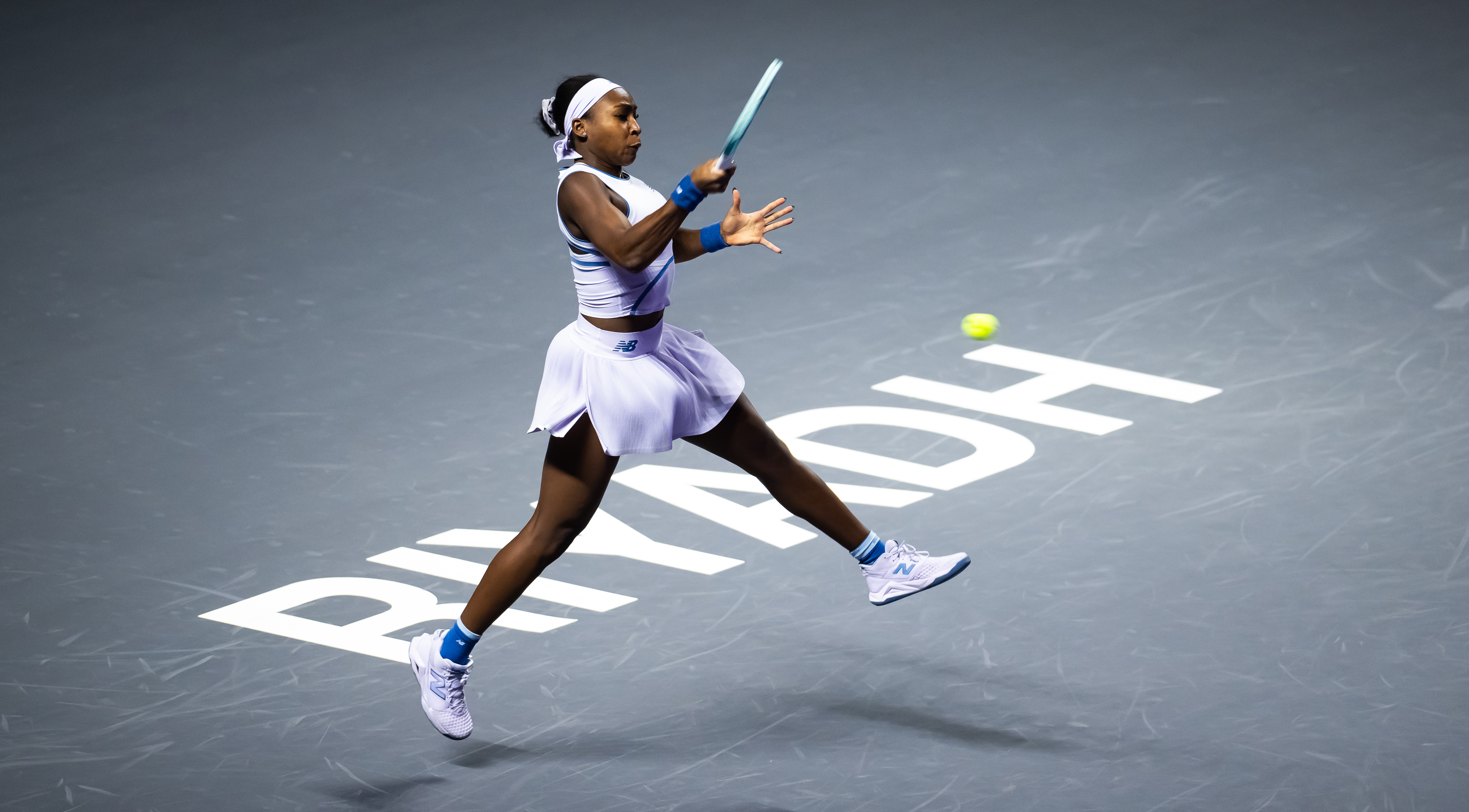
In the sleek confines of Riyadh’s arena, where the hum of anticipation mingles with the swift bounce of the indoor hard court, Coco Gauff stepped up against the specter of early exit. The defending champion, still smarting from a three-set stumble against Jessica Pegula that unraveled with 17 double faults and 45 forehand unforced errors, needed a statement win in the Stefanie Graf Group. At 21, the youngest player in the singles field, she channeled the grit from her Roland Garros triumph and a season of two majors into a 6–3, 6–2 dismissal of eighth seed Jasmine Paolini, lifting her record to 1–1 and staving off elimination for at least one more day.
Coach praises her zone-like focus
Jean-Christophe Faurel, who has guided Gauff for the past six years, marveled at her capacity to lock in during high-stakes clashes. Before the tournament, he shared insights into what sets her apart, drawing from her French Open final as a prime exhibit of mental lockdown.
“She’s amazing in the ability she has to just close everything,” he explained. “For me, the French Open final is the best example. Like every player, she can be irritated, distracted when she plays -- look at us [in the player’s box] too much. She maybe she looked at us two times. She was in the zone. This makes her different from many, many players. Semifinals, final, big match … she plays her best tennis most of the time. I think she’s 11-for-14 in finals.”
This clutch prowess, with 11 victories in 14 WTA Tour finals, underscored the American’s rebound as she tightened her game against an opponent who had edged her in three of four meetings earlier in the year. Paolini arrived buoyed by that head-to-head edge, yet Gauff flipped the script, echoing her straight-sets semifinal win over the Italian in Wuhan last month en route to the title.
Serve steadies amid early pressure
Gauff seized the initiative by breaking in Paolini’s opening service game, unleashing deep crosscourt forehands that pinned the baseline and forced a quick concession for a 1–0 lead. She then rattled off eight straight points, only to slip into a love-40 deficit on her own serve, testing her resolve on the fast surface where balls skid and demand quick adjustments. Rather than falter, she dug in with patient defense—low underspin returns disrupting Paolini’s rhythm—and reeled off the final five points to forge a 3–0 cushion, the crowd’s murmurs swelling as her confidence took hold.
Paolini clawed back momentum, crafting three break-point opportunities to level at 4-all, her flat backhand slicing inside-out to stretch Gauff’s court coverage. The third seed countered with a surge of five consecutive points, blending topspin lobs to counter net rushes and down-the-line backhands that exploited gaps, securing a 5–3 edge and the first set. Her serve, erratic in the Pegula loss, transformed here: just three double faults, 35 of 50 points won overall, and a sharp 15 of 19 on second delivery, often directed crosscourt to widen the angles and neutralize returns.
This efficiency marked her 33rd career victory over a top-10 foe, a milestone that highlighted the tactical refinements honed over the season’s ups and downs. Paolini, now 1–4 in WTA Finals singles across two appearances, saw her tournament end in straight sets, though she and doubles partner Sara Errani remain top seeds and very much in contention there.
Breaks propel second-set dominance
The second set opened with holds, the tempo measured as both players probed for weaknesses on the true-bouncing hard court. Gauff struck first in the fifth game, engineering her third break of the match through a one–two pattern: a wide serve pulling Paolini off-court, followed by an inside-in forehand winner that clipped the line. She consolidated swiftly, varying with slice backhands to draw the Italian into the net before lobbing over her advances, maintaining pressure without overcommitting.
Breaking again in the seventh, Gauff closed out the 6–2 win with controlled aggression, her footwork crisp as she absorbed Paolini’s pace and redirected with crosscourt redirection. The victory eliminated her opponent from semifinal contention but leaves the American’s path uncertain, pending the later group clash between world No. 1 Aryna Sabalenka and Pegula—scenarios involving games won or sets could tip the balance. Faurel reflected on the year’s turbulence post-match, noting two Slams secured yet an unquenched drive for greater heights.
Thursday’s round-robin finale against Sabalenka, where the Riyadh courts might favor Gauff’s adjusted power over raw force, promises high drama and a chance to channel that finals record once more. In this year-end cauldron, her blend of mental steel and surface savvy positions her to navigate the intrigue, extending a title defense forged in resilience and ready for whatever the group math demands.