Andreeva resets in Brisbane with advice for Jones

Mirra Andreeva shakes off a first-set wobble to beat Olivia Gadecki at the Brisbane International, drawing on hard-won lessons to guide teen sensation Emerson Jones through the hype.
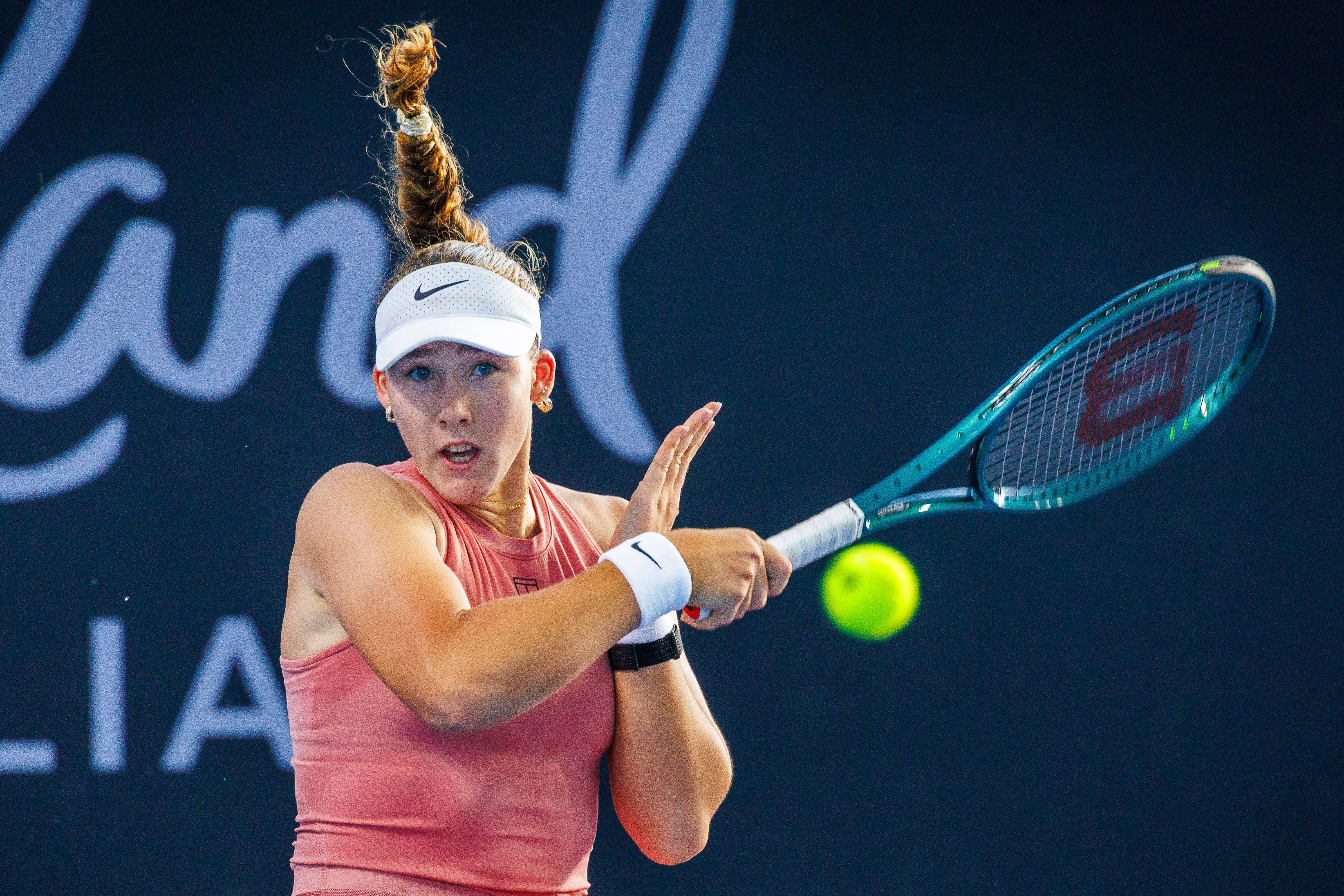
In the thick Brisbane humidity, Mirra Andreeva launched her 2026 season at the Brisbane International with a comeback that felt like a declaration. The 18-year-old Russian dropped the first set 4-6 to local qualifier Olivia Gadecki but flipped the script, winning 6-1, 6-2 to reach the second round. Her path echoed the highs and lows of 2025, when back-to-back WTA 1000 titles in Dubai and Indian Wells propelled her into the Top 10, only for a 4-5 slump after Wimbledon and three final losses to dim the shine.
Andreeva’s early struggles mirrored a nagging pattern: six losses in eight matches on opponents’ home soil since the 2024 US Open, including defeats to Amanda Anisimova in Miami, Lois Boisson at Roland Garros, Taylor Townsend at the US Open, and Zhu Lin in Ningbo. Gadecki, ranked No. 204, seized a 3-1 lead in the opener by targeting second serves with sharp returns, her flat crosscourt forehands forcing defensive slices from the Russian. Yet Andreeva steadied, tightening her first-strike patterns to regain the edge on these fast hard courts.
“I did feel pressure from a lot of people, especially after I won the two tournaments,” she said. “I felt like people would expect me to win Miami, and then they would expect me to win Madrid and Rome. And I was, you know, that’s basically almost not possible.”
Backhand pivot shifts the momentum
At 1-1 in the second set, Andreeva faced two break points that threatened a set-and-a-break deficit, her serve under fire from Gadecki’s inside-in returns. She erased them with aces slicing wide, then broke back with a down-the-line backhand that skimmed the line, sparking a 13-point run to close the set. From there, her heavy topspin forehands pushed Gadecki deep, opening the court for crosscourt angles that dismantled the Australian’s flat hitting.
The third set turned into a baseline clinic, Andreeva’s fluid one–two punch—deep forehand into backhand variation—exploiting the surface’s low bounce to force errors. Gadecki’s aggression faltered against this depth, her error count rising as the Russian’s lateral movement turned passing shots into overheads. This win not only snapped Andreeva’s three-match losing streak but also broke the home-soil hex, her composure amid the Pat Rafter Arena crowd noise fueling a confident stride forward.
Reflecting post-match, she spoke of evolving her mental game through team talks, turning external expectations into a personal toolkit. The pressure after her 2025 titles had been relentless, but those conversations built resilience for moments like this. Now, as World No. 9, she enters 2026 equipped to handle the spotlight without letting it dim her focus.
“I did feel the pressure that people were expecting me to win basically every tournament that I would play, and that was not easy. But last year I learned a lot how to deal with the pressure, how to not pay attention to what people say, and how to talk about this. Because I was talking a lot about how I felt with my team and now I feel like I know more about this. I have learned a lot from the last year, and if that happens this year, I certainly know what to do with this.”
Words of wisdom for a rising star
Across the draw, 17-year-old Australian Emerson Jones captured attention with a first-round upset over Tatjana Maria and a Vogue Australia feature, her explosive winners lighting up the court. But against No. 10 seed Liudmila Samsonova, she led 3-0 with a barrage of inside-out forehands before the Russian took 12 of the last 14 games for a 6-4, 6-1 victory. Jones’s slight frame packs surprising power, her flat backhand skimming low on the speedy surface, yet sustaining that intensity against deeper shots proved tough.
Andreeva, impressed by the former junior No. 1’s talent, sees echoes of her own early pressures in the teenager’s hype. She advised tuning out comparisons that can overwhelm young players on the rise. Brisbane’s buzz around Jones amplifies the stakes, but Andreeva’s counsel stresses forging an individual path amid the noise.
“I think she’s very talented,” she said. “Because she’s very thin, she’s very small, but she hits pretty hard.”
“I just think that if I had a chance to tell her something, maybe I would have said not to focus on whatever people say,” she told press. “Because there’s going to be a lot of people that would say, ‘Oh, you’re going to be the next Sharapova or the next Ash Barty.' You just have to focus that you are who you are, and you have your own career and you have your own path. I’m Mirra Andreeva. She’s Emerson Jones. She’s not going to be the next Ash Barty, because Ash Barty stopped her career. She’s not playing anymore. She’s going to have her own career, and I think she should focus on making her own path in tennis.”
Quarterfinal paths test top seeds
No. 2 seed Anisimova, World No. 3 after Grand Slam finals at Wimbledon and the US Open plus a Beijing WTA 1000 title to end 2025 strongly, needed 63 minutes to beat wild card Kimberly Birrell 6-1, 6-3. She slammed 18 winners to the Australian’s four, her refined backhand on the run sealing match point with a crosscourt scorch. A brief second-set dip at 3-2, where a double fault handed serve, vanished amid an 11-point streak that bridged sets.
Anisimova’s flat-hitting thrives on Brisbane’s pace, her serve holding over 80% first balls in against local pressure. This solid start contrasts Andreeva’s late-2025 fade, yet both navigate the arc of backing breakthroughs. Their potential quarterfinal looms, but third-round tests await.
Andreeva meets No. 9 seed Linda Noskova for the third straight Brisbane, after the Czech edged Magdalena Frech 6-7(5), 6-4, 6-4 in 2 hours and 31 minutes despite a leg issue. They split prior tournament meetings—Noskova’s 7-5, 6-3 quarterfinal in 2024, Andreeva’s 6-3, 6-0 third-round revenge in 2025—with Andreeva leading overall 3-2. Noskova’s all-court mix, blending underspin approaches and inside-out forehands, challenges Andreeva’s topspin grind, especially if injury curbs net play.
Anisimova faces No. 16 seed Marta Kostyuk, who rallied from a set down against lucky loser Yulia Putintseva 6-7(5), 6-1, 6-0. Kostyuk leads their head-to-head 2-1, including a 4-6, 7-5, 6-4 Doha quarterfinal last year where her defensive depth frustrated the American’s power. On these courts, Kostyuk’s low-skidding backhand could force errors, pitting patience against punch in extended rallies.
As the Brisbane International pulses with young talent recalibrating, Andreeva’s reset and guidance to Jones highlight a key 2026 theme: psychological edges sharpening tactical ones. Deep runs here could reshape Top 10 dynamics, with hard-court adaptations like varied spin and precise patterns setting the tone for majors ahead. These phenoms, blending raw power with growing maturity, promise a year where personal paths define the chase.