Fritz rebuilds amid knee’s quiet demands

Taylor Fritz arrives in Perth chasing health over headlines, his offseason a deliberate push against tendonitis that tested last year’s resolve. As Team USA opens the United Cup, he balances recovery with the sharp edges of strategy that keep him in the Top 10 fray.
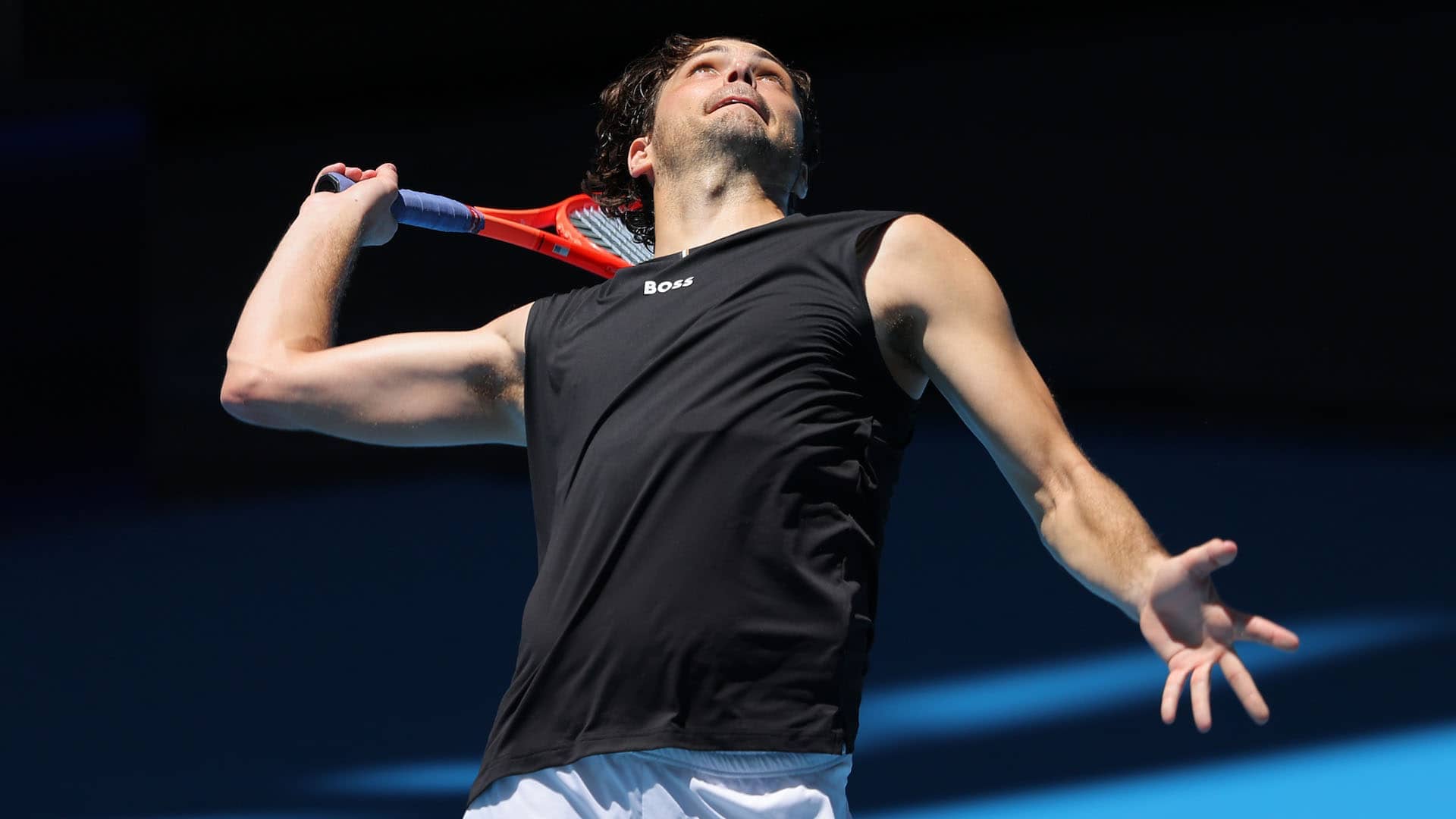
In Perth’s steady heat, Taylor Fritz steps into the United Cup with a body tuned for endurance rather than overhaul. The No. 6 in the PIF ATP Rankings spent his offseason locked on knee rehab, the tendonitis a lingering pull from 2025’s uneven run. While others chased technical edges, he hit just enough to hold his timing, every controlled rally a stake in the ground for what’s ahead.
“I couldn’t really [target] anything,” Fritz told ATPTour.com in Perth when asked what he had been working on before beginning his season competing for Team USA at the United Cup. “I said at the end of the [Nitto ATP Finals], my goal was really just to try and rehab my knee. I still have pretty serious tendonitis, and that’s something that takes a really long time to get rid of.”
The ache doesn’t scream for a full shutdown, but it shapes his choices on tour. Fritz weighs the tour’s grind against rest, opting to play through when the pain allows, building strength in those six weeks off. He eyes a couple of months into 2026 for relief, his sessions light on volume but heavy on intent—crosscourt backhands to groove rhythm without strain.
Rehab forges a resilient base
That focus carried into light drills, where Fritz preserved his feel through measured patterns, avoiding the explosive sprints that flare the tendonitis. The injury sidelined him for two months last year, erasing the clay swing and dulling his return until grass courts beckoned. Yet he still carved a 53-23 record, titles in Eastbourne and Stuttgart underscoring how his flat serves and inside-in forehands click when the body cooperates.
His year-end No. 6 spot, down from No. 4, masks the disruptions—strong starts in Australia, a grass surge, then late flutters. Fritz sees the high points as proof of untapped level, the rehab a bridge to consistent health. On United Cup hard courts, he plans to lean on deep second serves followed by net poaches, minimizing lateral bursts that test the knee.
“The demands of playing make it a lot harder to get rid of it, but at the same time I don’t really want to go full stop for four months to try to get it better when I feel like I can sometimes play through it,” he said. “Sometimes it gets too bad to play through, but that was really the focus of the six weeks, just doing a lot of rehab and strengthening, and trying to lay out a base where I can maybe start to get it better.”
“Maybe a couple of months into the season, I can be over it. That was really the main focus. Just hitting to keep my timing, keep my game, keep my feel, but not overdo it on my knee.”
Four Top-10 players lead the way at the United Cup to start the season
Read all about our season opener https://t.co/zoc27UiXcr@ | #ATPScoutingReport | #partner pic.twitter.com/B55d6JQtk8— ATP Tour (@atptour) January 2, 2026
Tactics thrive in team exchange
Even with physical limits, Fritz’s mind sharpens on matchups, his collaboration with coach Michael Russell a blend of input and instinct. Russell highlights opponent habits—like a rival’s down-the-line lean in tiebreaks—while Fritz steers point construction, debating angles until the plan solidifies. This back-and-forth sustains his edge, turning sessions into mental workouts amid the rehab.
He admits to skimping on full-match scouting but trusts the curated clips, probing why a certain slice might falter against his topspin. Fritz leads the breakdowns, voicing setups for one–two combinations that exploit weaknesses, his team often nodding along. it’s this tactical clarity that fueled his 10 tour-level titles, from hard-court grinds to grass assaults.
“I would say the stuff that Mike brings to me is more the tendencies of my opponents,” Fritz explained. “I could do a better job, I guess, of watching full matches of the people I am playing, but he’ll go through and pick out certain parts and show me what he wants me to look at. I trust him a lot on things like an opponent’s tennis and what they are most likely to do in a big moment. I think that’s a really important thing.”
“Then as far as structuring points and playing, it’s more I say what I think and hear their opinions. That’s kind of how it’s always been for me. I like to talk and break things down, and if any of my team disagrees with what I’m saying, I want to hear and want to know why they think that. And maybe why we don’t see it the same way. I feel like a lot of the times, when I give a breakdown of how I should structure a point, stuff like that, why I’m doing the things I’m doing, I feel like they do agree with me.”
Rivalries spark the season’s pulse
Spearheading Team USA with Coco Gauff for a third United Cup crown, Fritz tunes into broader currents, the Alcaraz-Sinner rivalry a gravitational force. He watches for challengers to their throne, the duo’s blend of power and precision a benchmark for his own adjustments. Young risers draw his gaze, their potential strides a reminder of the tour’s restless climb.
Joao Fonseca and Learner Tien top his watchlist, their speed and spin poised for breakthroughs, perhaps not yet at the summit but closing ground. Fritz tempers expectations, seeing big steps over instant leaps. This lens fuels his drive, the knee’s shadow no match for the competitive hum in Perth’s arenas.
“I think the biggest storyline is obviously the Alcaraz-Sinner rivalry, and if there’s going to be anyone who can step up and challenge that,” he said. “I think that is the obvious one. Also seeing how a lot of guys progress. Seeing if any of the really young guys take a step all the way up to competing with Carlos and Sinner.”
“I think that might be a little bit of a stretch so soon. I could be wrong, but regardless of that, I think there’s a lot of guys that could get there. Maybe not this year, but definitely take some big strides towards it. The guys I’m excited to see keep improving. The two that come to my mind are Joao [Fonseca] and Learner [Tien].”
“I think when I was healthy and playing, my level was really high,” he reflected. “It’s easy for me to look at it and be like, ‘Well I finished No. 4 the year before and finished No. 6 last year’, but I spent probably two months of the season injured. I missed the clay-court season, came back from the injury and wasn’t really playing well.”
As the United Cup unfolds, Fritz carries this rebuilt base into the fray, his tactics honed and rivalries in view. The hard courts here test his limits, but with health on the mend, he positions for a 2026 where interruptions fade and his game surges unchecked.