Challenger Risers Face Slam Spotlight in Melbourne

As the Australian Open main draw ignites, five ATP Challenger standouts carry the weight of breakthrough seasons into high-stakes debuts, where mental edges and hard-court tactics collide under Melbourne’s glare.
Under Melbourne’s unyielding sun, the Australian Open main draw welcomes a cadre of ATP Challenger players whose 2025 campaigns—marked by relentless qualifiers and late-night triumphs—now face the grand stage’s unforgiving scrutiny. These risers, from teenage phenoms to seasoned grinders, embody the circuit’s raw ambition, their games sharpened on identical blue hard courts but tested by the major’s psychological marathon. For them, every inside-out forehand and down-the-line pass carries the freight of a year’s sacrifices, turning the tournament’s underbelly into a proving ground for ascent.
Teen duel ignites next-gen fire
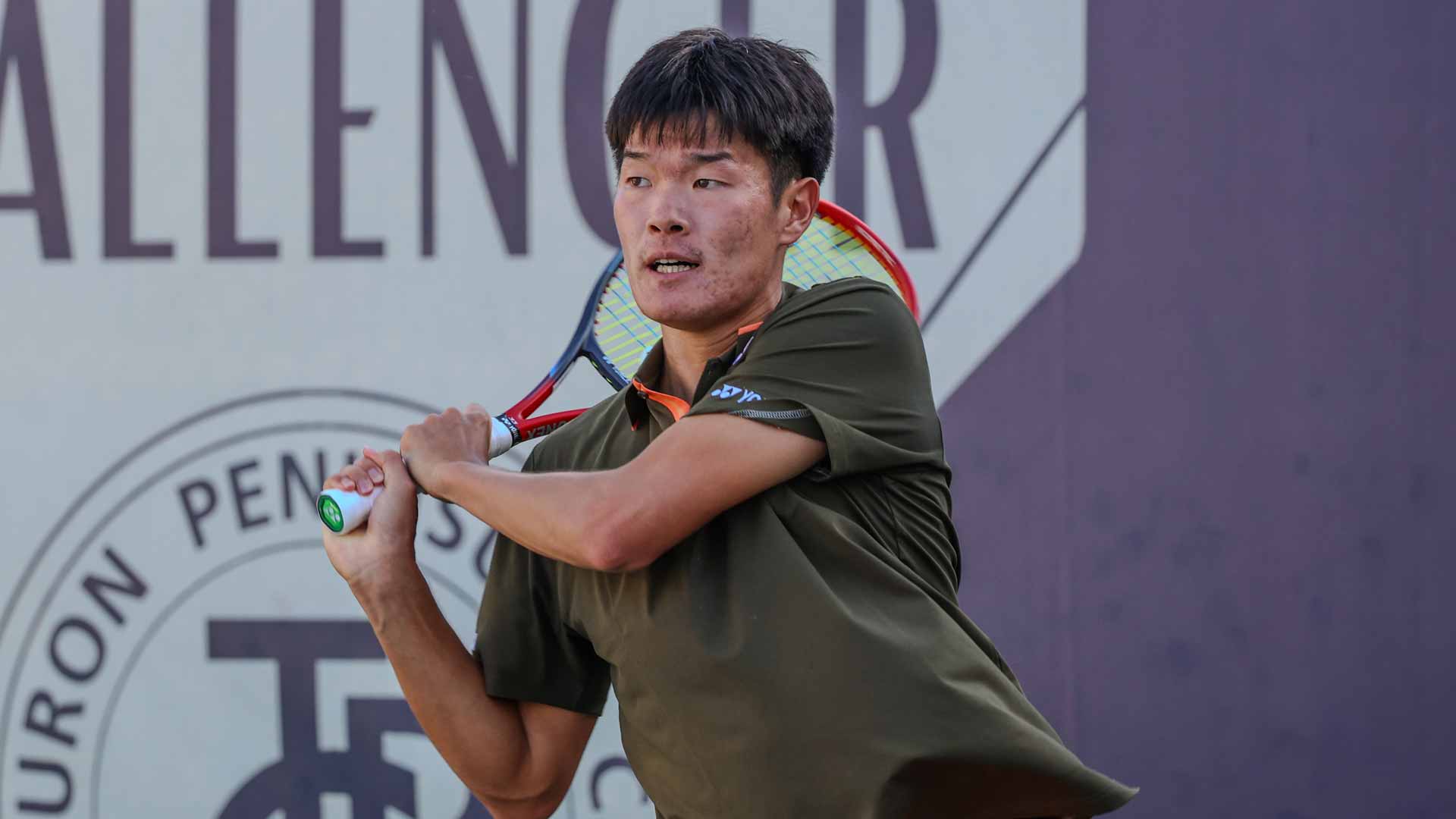
Rei Sakamoto steps onto these courts not as a junior sensation but as a 19-year-old who seized the 2024 boys’ singles crown here, the first Japanese player to etch that name in Australian Open history. His 6’4” frame powered three Challenger titles in 2025, including a home victory in Yokohama that capped a year of explosive growth, and he stormed qualifying without dropping a set, highlighted by a 6-1, 6-2 rout of former World No. 21 Daniel Evans. Now, Sakamoto confronts fellow 19-year-old Rafael Jodar in the opener, a matchup brimming with the tension of mirrored paths from Challenger clay to Melbourne’s pace.
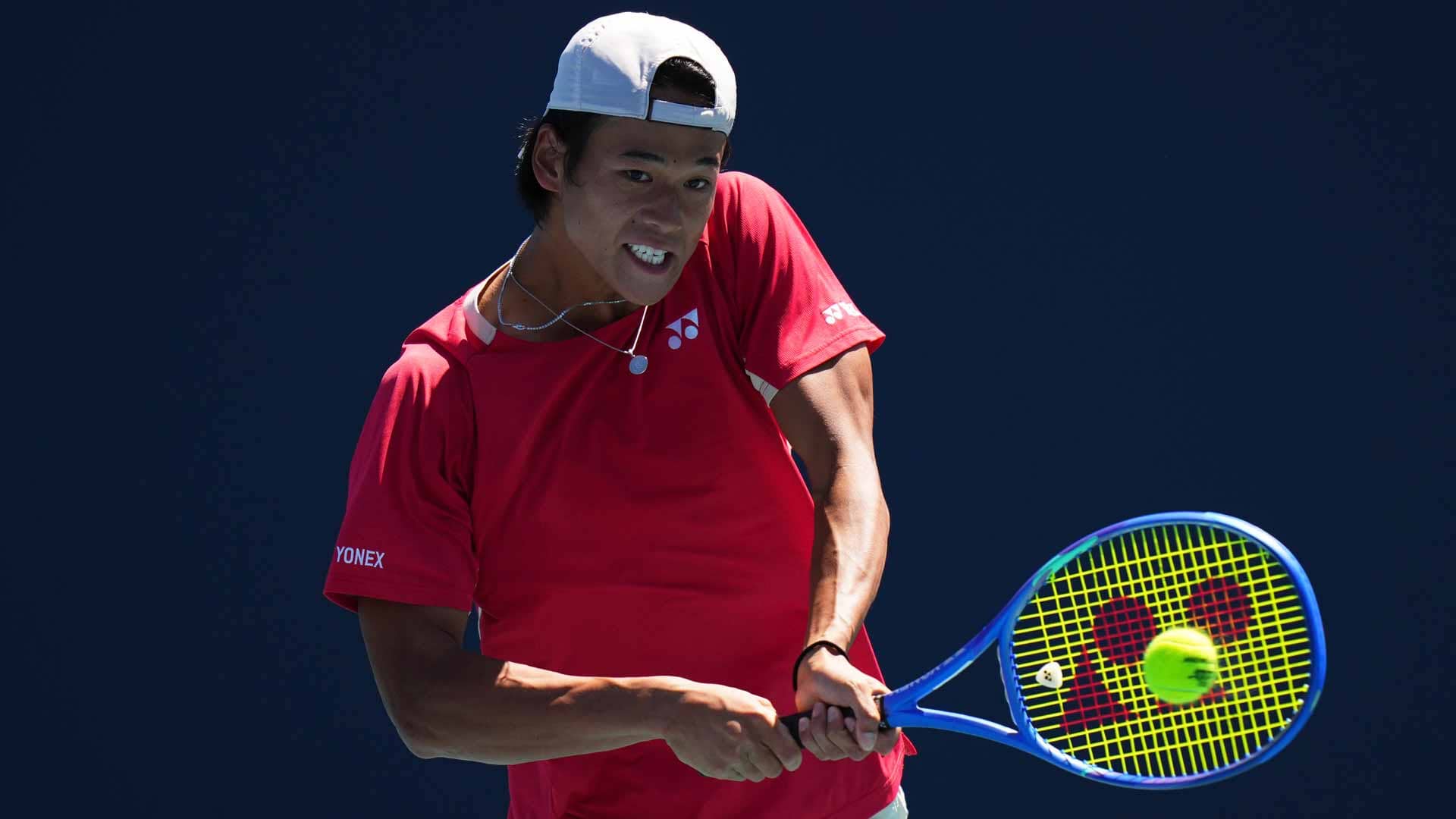
Jodar, the Spaniard who turned pro on New Year’s Eve after two seasons at the University of Virginia, surged with three Challenger titles in the second half of 2025, securing a berth in the Next Gen ATP Finals presented by PIF and reaching a career-high No. 150 in the PIF ATP Rankings. His recent Canberra Challenger final defeat to 2025 Jeddah runner-up Alexander Blockx underscored a need for tighter 1–2 patterns against big servers, yet his agile footwork and slice backhands thrive on this surface’s moderate bounce. This clash demands Sakamoto‘s heavy topspin forehands to pin Jodar deep, while the Spaniard angles inside-in shots to disrupt the Japanese player’s rhythm, all under the crowd’s expectant hum.
Dramatic escapes build main-draw resolve
Liam Draxl, the 24-year-old Canadian and former University of Kentucky standout, tied Emilio Nava with a season-high 44 Challenger match wins in 2025, claiming the Winnipeg hard-court title in July and reaching six other finals. His qualifying climax against Mackenzie McDonald—a 3-6, 3-5 hole clawed back to a 3-6, 7-6(2), 6-2 triumph via a clutch backhand pass—epitomized the mental fortitude forged in endless rallies. Facing Damir Dzumhur now, Draxl’s all-court versatility, with looping topspin lobs and low-skidding slices, could exploit the Bosnian’s flat strokes on this faster hard court.
A broader wave of newcomers amplifies the buzz, as these Challenger survivors punch into the spotlight.
Slam debut incoming
Arthur Gea, Rafael Jodar, Rei Sakamoto, Francesco Maestrelli, Nicolai Budkov Kjaer, Michael Zheng and Liam Draxl punch their ticket to the @AustralianOpen main draw!#ATPChallenger | #AusOpen pic.twitter.com/VHsR4k90H9— ATP Challenger (@ATPChallenger) January 15, 2026
Experience tempers tough openers
Raphael Collignon, the 23-year-old Belgian whose father is a brain surgeon, channels last year’s US Open third-round surge—capped by a five-set, three-hour, 30-minute upset over 12th seed Casper Ruud—into his Australian Open debut against fifth seed Lorenzo Musetti. At career-high No. 72, he added two 2025 Challenger titles in Pau and Monza, plus a Brisbane quarterfinal this month, refining heavy topspin forehands that climb Melbourne’s bounce to target Musetti’s one-handed backhand. Collignon’s net approaches and underspin variations will test the Italian’s defense, potentially echoing that New York grit amid the evening session’s roar.
Patrick Kypson, the 26-year-old American and seven-time Challenger champion who tied for most titles with four in 2025, earned his spot via the USTA’s Australian Open Wild Card Challenge, driven by Sioux Falls and Helsinki wins. Returning to Melbourne after 2024, he chases a first major main-draw victory over Francisco Comesana, leveraging flat serves at 82 percent hold rate on hard courts to set up crosscourt forehand returns. Against the Argentine’s defensive baseline game, Kypson’s one–two patterns and deeper returns could break the stalemate, turning seasonal pressure into a rankings leap past No. 100.
These five, alongside debutants like Arthur Gea, Francesco Maestrelli, Nicolai Budkov Kjaer, and Michael Zheng, infuse the Australian Open with Challenger intensity, where tactical shifts—like varying pace on humid nights—meet the inner push for deeper runs. As the draw unfolds, their resolve promises upsets that echo through Melbourne Park, rewriting underdog tales on a surface that favors the adaptive and unyielding.