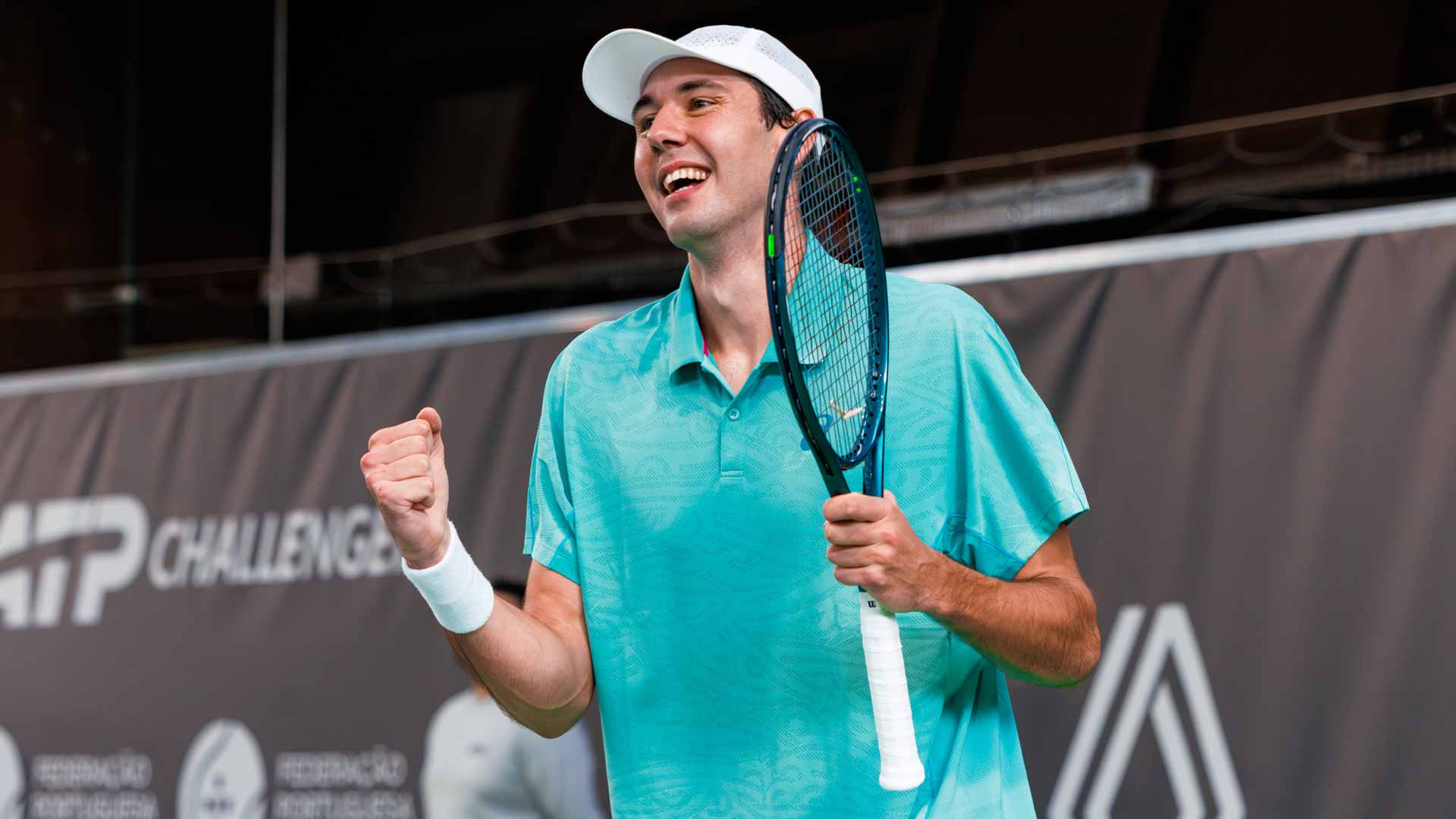
Rodesch’s Resilient Path to Challenger Dominance

From relearning to walk after a debilitating illness to lifting back-to-back trophies in Portugal, Chris Rodesch’s journey blends raw grit with tactical poise on the ATP Challenger circuit.
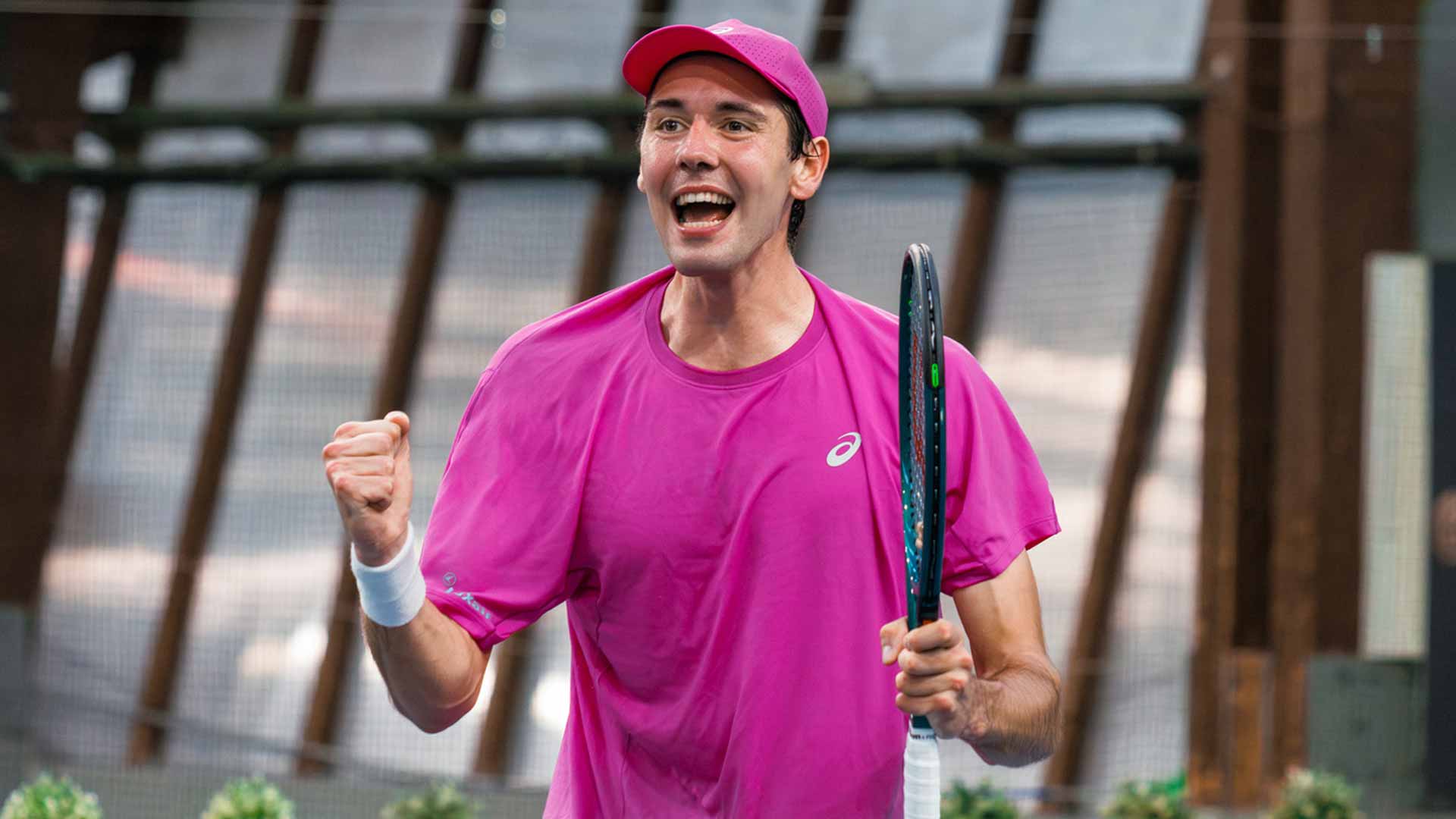
Chris Rodesch towers over the baseline in Oeiras, his 6-foot-6 frame whipping a heavy topspin forehand that skids low off the clay. The Luxembourger’s back-to-back ATP Challenger titles in Portugal have propelled him to a career-high No. 138 in the PIF ATP Rankings, a surge that echoes far beyond the red dirt. Seven years ago, at age 17 in 2019, this promising junior faced a far grimmer fight: Guillain-Barré syndrome, triggered by food poisoning at a junior tournament, left him numb and unsteady, erasing any thoughts of college tennis or turning pro.
Nerves betray a rising star
Raised in a sporting family—his father a Luxembourg national footballer, his mother a former basketball player—Rodesch built his athletic foundation through handball, football, and above all, tennis. He picked up the racquet inspired by watching Rafael Nadal and Roger Federer clash in a Roland Garros final. But that drive vanished when the auto-immune disease struck, turning simple tasks into battles.
“My body just went numb,” Rodesch told ATPTour.com. “I couldn’t open bottles anymore, I couldn’t walk straight anymore. I almost couldn’t walk stairs anymore because my nerves were not responding.”
The diagnosis came swiftly during a visit to the nerve doctor, where demonstrating his lost balance led to immediate hospitalization. Competitive tennis dropped to the back of his mind; high school survival took precedence. He lay in bed, watching friends compete in junior Grand Slams, his once-elite coordination reduced to shaky steps.
“In the beginning, I was not even thinking about competitive tennis anymore,” he reflected. “I was just thinking of being healthy again, to be able to walk to school again because I was still in high school. Tennis really became the fifth option.”
“I remember going to the nerve doctor for the first time and I showed him what I couldn’t do anymore because of my nerves. I couldn’t stand straight anymore,” Rodesch recalled. “I lost my balance and right away he said, ‘This is it. This is the disease. We have to hospitalise you’.”
Oeiras 1 Oeiras 2 What a fortnight of picking up prizes in Portugal for Rodesch#ATPChallenger pic.twitter.com/p4BysYUiCj — ATP Challenger (@ATPChallenger) February 1, 2026
Oeiras 1
Oeiras 2
What a fortnight of picking up prizes in Portugal for Rodesch#ATPChallenger pic.twitter.com/p4BysYUiCj— ATP Challenger (@ATPChallenger) February 1, 2026
Rehab forges patient strokes
Recovery unfolded over two grueling years, starting with three months of intensive rehab. Rodesch began with a mini racquet and lightweight 10-and-under balls, gradually rediscovering the feel of impact on strings. Six months in, normal swings returned; after a full year, he could compete again, though the psychological weight lingered.
He gained perspective from the ordeal, noting how others suffer permanent effects like paralysis or disfigurement. That fortune in misfortune taught him patience and the value of presence, lessons that now steady him through long matches. The isolation sharpened his appreciation for the tour’s nomadic joys—traveling the world, exploring new courts under varying skies.
“There’s people from that disease whose face gets deformed or who don’t recover from it, maybe in a wheelchair after,” he said. “It was a long process, but I had luck in the bad luck. I definitely learned to be patient, but also to find happiness in what we are doing here. We travel the world and we’re exploring these nice places.”
By 2020, Rodesch enrolled at the University of Virginia, a top program that offered a scholarship despite his two-year results drought. He thrived there, earning three ITA All-American honors and graduating in 2024, blending team dynamics with personal growth on faster American hard courts. Their trust in his potential, amid the uncertainty, fueled his gratitude and drive.
“I really give credit to the University of Virginia because I really had no results for two years with the sickness,” he added. “UVA is one of the most competitive college teams out there, so they definitely took a risk with me, giving me that scholarship, because I didn’t show them that I was ready to compete for them, I don’t think. I have to thank them so many times because they trusted me and it’s amazing from them and it shows their character.”
“I saw all my friends playing these nice tournaments, the junior Grand Slams and I’m lying there in bed,” said Rodesch, who no longer lives with complications from the disease.
Titles reward tactical evolution
Turning pro, Rodesch embraced the ATP Challenger circuit as his bridge to the ATP Tour, where surface shifts demand constant adaptation. His first title came last April in Tallahassee, where he broke Emilio Nava’s 19-match winning streak in the final with precise inside-out forehands and a reliable 1–2 pattern. That win instilled pride in the tour’s legacy, a stepping stone for so many careers.
“You always hear as a kid, ‘Challengers are kind of the stepping stone to the ATP’, and it just makes you proud to be part of this kind of history of the Challenger Tour,” Rodesch said of his maiden Challenger crown.
In Oeiras, the medium-paced clay tested his adjustments: deeper crosscourt loops to control rallies, slice backhands to vary pace and disrupt opponents’ footing. His towering serve gained effectiveness with kick serves that kicked high off the bounce, setting up aggressive returns. The consecutive titles—each netting 110 points—demanded endurance, his illness-honed positivity keeping focus sharp against fatigue.
The Portuguese crowds, alive with cheers for his down-the-line passes, mirrored the momentum of his recovery. Rodesch’s game now mixes power with depth, his height exploiting the slow surface for net approaches that catch foes off-guard. These back-to-back runs in early 2026 position him for ATP breakthroughs, where mental resilience meets tactical finesse on bigger stages.
“To be present in the moment when you achieve something big because it can go away quite fast with a thing like that,” Rodesch reflected. “I think all these little lessons I learned—being present, being patient, being positive—helps me even now sometimes going through a tough phase.”
With three Challenger trophies in hand, Rodesch’s arc from bedside uncertainty to clay-court command hints at upsets ahead, especially in majors like Roland Garros. His deliberate progress, one steady step after another, promises a pro tenure rich with hard-earned triumphs.