Zvonareva’s Passion Reignites at Australian Open

At 41, Vera Zvonareva returns to Melbourne’s hard courts after surgery, chasing the simple thrill of competition in singles and doubles without a rigid plan.
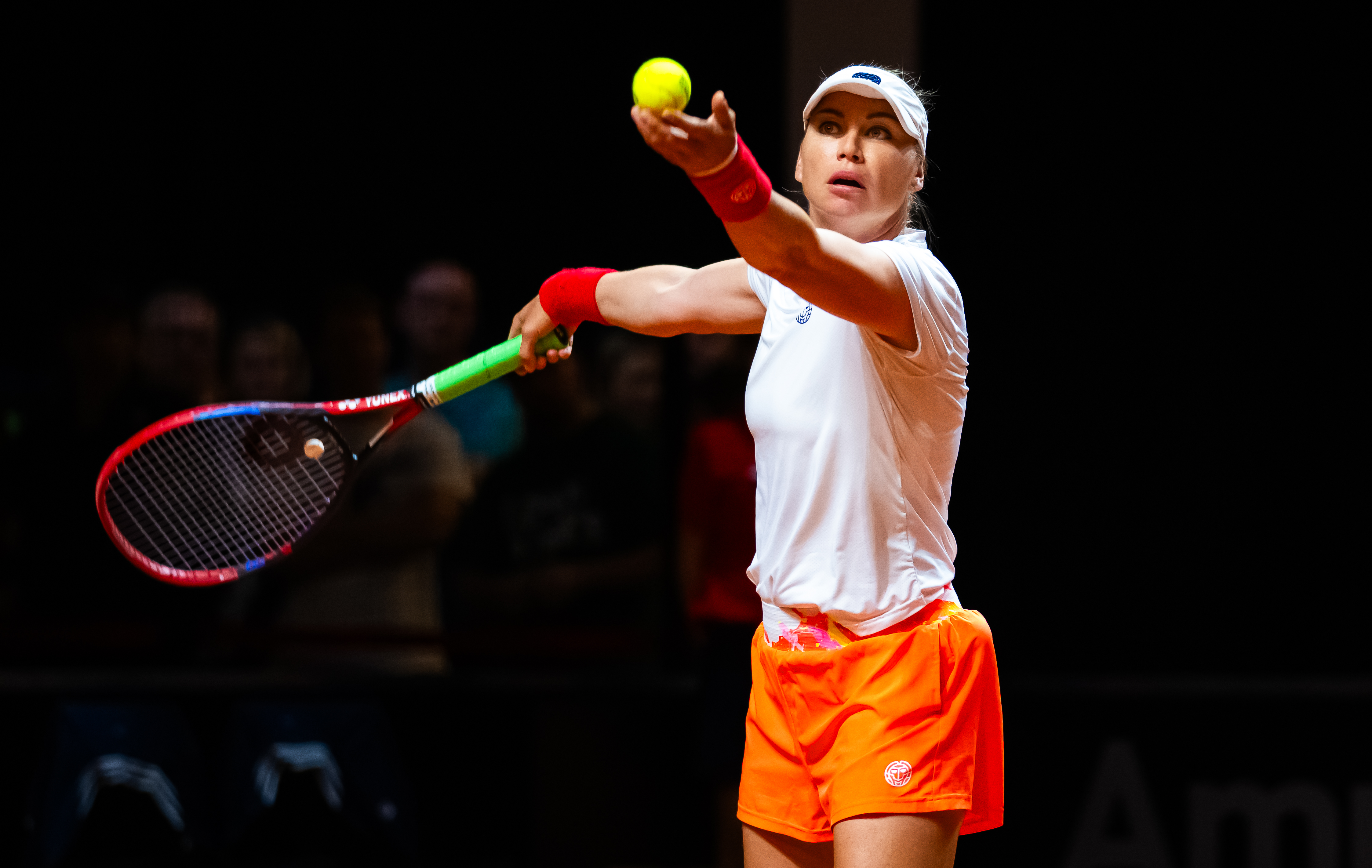
On Melbourne Park’s sun-drenched hard courts, where the Australian Open 2026 pulses with the thud of baseline exchanges, Vera Zvonareva reclaims her place at 41. Surgery in 2024 had paused her career, but now she mixes singles glimpses with doubles focus, her strokes carrying the echo of a No. 2 peak from 2010. Amid veterans like Venus Williams, the oldest at 45 in women’s singles, and Stan Wawrinka, the first man over 40 to reach the third round since Ken Rosewall in 1978, Zvonareva’s quiet return adds depth to the draw’s veteran thread.
She kicked off her comeback at the ITF W100 in Dubai last December, reaching the singles final before falling 6-3, 6-3 to young Croatian Petra Marcinko at the Habtoor Grand Resort. That match tested her flat backhands against aggressive inside-out forehands, yet affirmed her down-the-line passes still bite on outdoor hard. Protected ranking in hand, she slips into tournaments, blending joy with the grind of facing fresh talent and old rivals.
“There was always a question if my body can handle it or not,” Zvonareva told wtatennis.com from Melbourne. “I had another surgery in 2024, that’s why I stopped. I still enjoy hitting the ball. I was coaching a little bit and if my body allowed, I wanted to try to play a little bit.
As long as I’m still enjoying it, that’s the most important thing. I do enjoy playing matches myself and for now, my body does allow me to compete so I’m happy to be back on tour. I had a protected ranking and that obviously helps because I can get into some tournaments and play against a lot of new girls on tour. But at the same time, there’s still a lot of girls that I played with before and I’m enjoying the competition.”
Embracing uncertainty on the court
Without a fixed schedule, Zvonareva takes each event as it comes, her 12 WTA singles titles a backdrop to this unhurried approach. Time off let her coach across levels, sharpening her view of rallies—spotting a predictable 1–2 pattern or a serve ripe for an inside-in return. This perspective now feeds her game, turning mid-match doubts into tactical shifts like deeper crosscourt groundstrokes to control pace on Melbourne’s medium-bounce surface.
The Australian Open’s plexicushion demands adjustments; her slice backhands loft higher to counter high kicks, while underspin lobs disrupt aggressive returns. Wind gusts across the arenas force flatter down-the-line shots, but she adapts with the calm of experience, her footwork holding steady through extended exchanges. Coaching herself mid-point, she whispers cues on varying topspin depth, easing the psychological pull of a body once questioned.
Reaching finals in her first three tournaments—singles in Dubai, doubles there and at the WTA 125 in Canberra—builds quiet confidence. These hard-court runs highlight her serve’s kick drawing short balls for aggressive follow-ups, even as younger players probe with heavy forehands. Each tough hold or saved break point reinforces that her level persists, one rally at a time.
Young Croatian Petra Marcinko wins the 28th Al Habtoor Tennis Challenge after defeating veteran Russian Vera Zvonareva 6-3, 6-3 in final at the Habtoor Grand Resort in Dubai #Tennis (560) https://t.co/vbqYe5k4ep pic.twitter.com/JBQ96SYFHW
— Gulf Today (@gulftoday) (560)December 8, 2025
Doubles anchors her renewed focus
Partnering Japan’s Ena Shibahara, Zvonareva has advanced to the women’s doubles third round, upsetting No. 10 seeds Diana Shnaider and Liudmila Samsonova in the opener with sharp poached volleys. Against local wild cards Taylah Preston and Lizette Cabrera next, their one–two combinations—flat serves into crosscourt forehands—exploit gaps on the hard courts. Doubles suits this stage, her higher ranking opening bigger draws while singles offers bursts of thrill.
“I think I was never in a rush,” she said. “I was taking my time and enjoying my time off the tour as well. I was thinking maybe I will come back, maybe not. But then as soon as the opportunity came up, I tried. I’m still trying. I don’t know how long I can compete, but like I said, as long as my body allows me to do so I want to be competing and playing.”
Her major haul—three women’s doubles and two mixed titles, including the 2020 US Open women’s doubles—proves her net instincts endure. In Melbourne’s humid air, she times approaches to cut off angles, her experience dictating poaches that younger pairs overlook. This priority eases the physical load, letting her savor the court’s rhythm without singles’ full endurance test.
“I’m enjoying coaching as well. it’s a bit different and obviously I still need to build my experience in that, but I’ve had a good amount of time to explore coaching and with different levels of players. I think it also helps me to be a better player as well, because you’re a bit on the other side and you see things differently. I can kind of tell myself certain things when I’m on the court, not just as a player, but as a coach and that’s very interesting.”
Memories stir deeper motivation
Melbourne evokes strong pulls for the 2008 Beijing Olympics bronze medalist, who won the 2012 women’s doubles here and reached singles semifinals in 2009 and 2011. Back since 2022, she thrives in the atmosphere, wind be damned, as crowds appreciate her grit amid the tournament’s electric hum. These hard courts reward her patient baseline game, mixing slice to draw opponents forward before lobbing over for points.
“Wherever I can, I play some singles because I’m enjoying it,” she said. “And my doubles ranking is much higher. So that allows me to play bigger tournaments. So I’ll try to manage both a little bit. But I think doubles is my priority at this stage of my career.”
That Dubai final loss to Marcinko, captured in a tweet from Gulf Today on December 8, 2025, with #Tennis (560), stung but sparked realization—she can still push top juniors on hard courts, trading heavy groundstrokes in tight sets. It sets the tone for 2026, balancing recovery with ambition across the calendar. As the Australian Open’s middle Sunday unfolds, her story hints at more matches ahead, passion guiding her through the tour’s demands.
“Definitely that helped me a lot to get back in the game and to realize that I still have the level,” Zvonareva said. “Obviously, I need to work hard to maintain it, but I still have the level to play. The most important thing for me was to be on the court to experience those tough situations and to understand that I’m still enjoying competing. That was the most important thing. And I think I’ve done really well just taking it one tournament at a time.”
“I always loved playing in Australia and I’ve had some great results here in the past,” she said. “I’m enjoying this moment. it’s a bit windy, but it’s part of the game, but I’m enjoying my time.”
In a draw alive with youth’s fire, Zvonareva’s presence reminds that the game’s pull can outlast physical trials, her third-round doubles clash a chance to extend this joyful chapter into the season’s broader arc.