Djokovic eyes redemption on Shanghai’s hard courts

Novak Djokovic arrives in Shanghai chasing shadows of recent defeats, his unbreakable spirit fueling a quest to outmaneuver Alcaraz and Sinner in a season teetering between legacy and renewal.

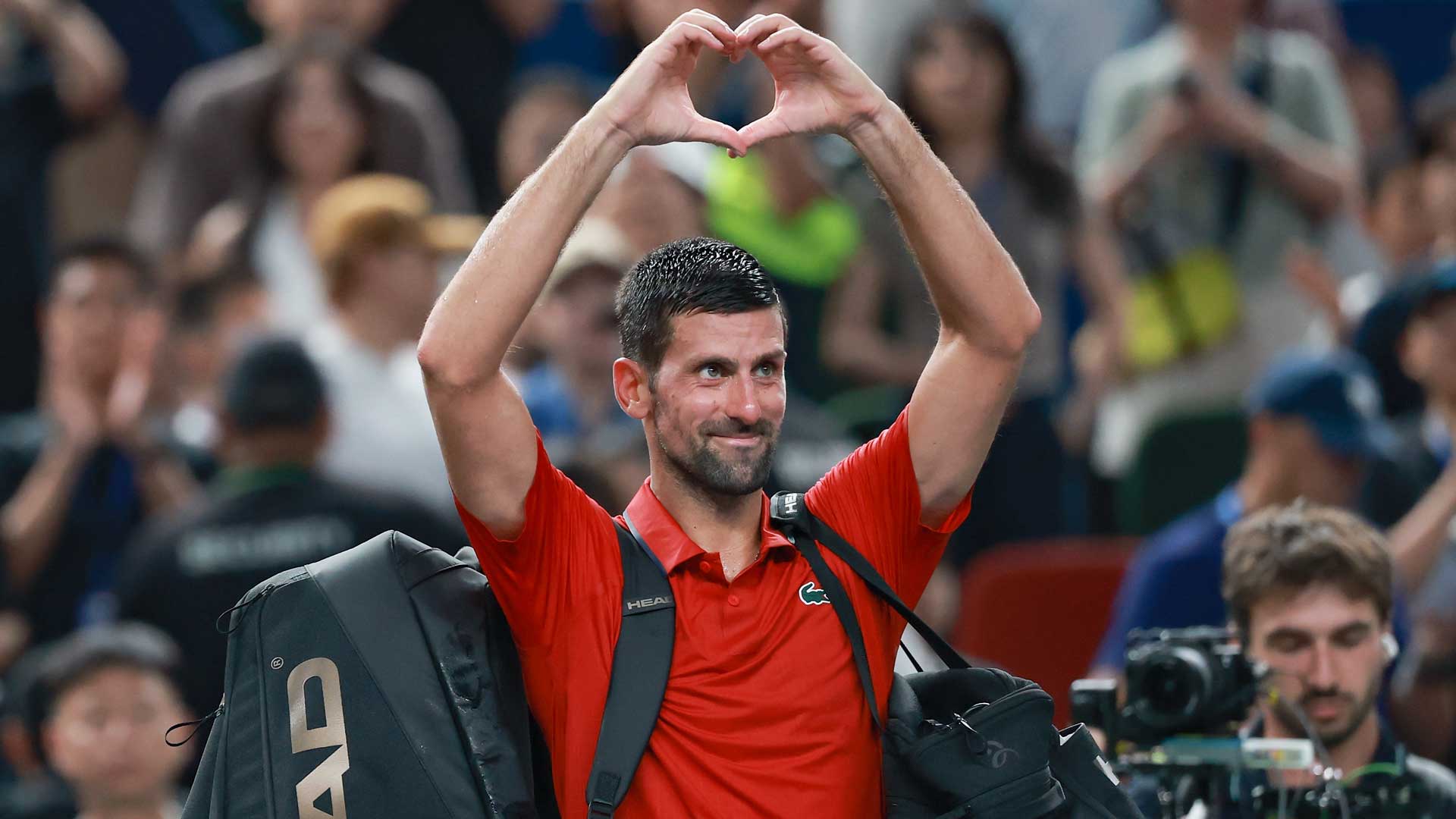
Under the golden haze of Qizhong Forest Sports City, Novak Djokovic steps into the Shanghai Masters with the quiet resolve of a champion recalibrating his game. The 38-year-old Serbian, whose intergenerational rivalries with Carlos Alcaraz and Jannik Sinner have dominated tour conversations for three years, carries the weight of a season defined by deep runs that ended just short of glory. Since his last major crown at the US Open in 2023, the Spaniard and Italian have divided eight Grand Slams, their explosive styles reshaping the baseline battles Djokovic once ruled unchallenged.
Yet defiance lingers in his strokes, etched in the gold-medal triumph over Alcaraz at the Paris Olympics in 2024, where a pinpoint down-the-line backhand sealed the moment, and the grueling victory against Sinner in the 2023 Nitto ATP Finals title match, powered by relentless crosscourt returns. This year, though, the script flipped: semis at Roland Garros and Wimbledon fell to Sinner’s unerring precision, while Alcaraz’s agility dismantled him in the US Open quarterfinals. Now, competing here for the first time since New York, Djokovic confronts these foes not just on court but within, his mind a forge of tactics and temperament.
“I’m still working my hardest that I possibly can in the circumstances to challenge the guys or to challenge myself primarily and really see how I can do on all the tournaments that I take part in,” Djokovic said on Thursday during his pre-tournament press conference in Shanghai. “Of course, best-of-three, duration of the tournament, ideally seven days, that’s where I feel I have a better chance to win a trophy or to make a significant result. Other than those matches that I lost to these best two players in the world, I think I played really good tennis in Grand Slams and reached semi-finals in each one of them. So it speaks about the level and the consistency and so I’m pleased with that. But at the same time there’s a part of me that always is a winner, that, you know, wants to be the best. I’ve been fortunate to experience the greatest thing.”
Losses fuel tactical reinvention
The sting of those defeats sharpens Djokovic’s edge, pushing him toward adjustments suited to Shanghai’s medium-fast hard courts, where bounce rewards his flat backhand slices over the higher kick of clay. Against Sinner, whose thunderous serves demand deeper returns, he plans to vary with underspin lobs that pull the Italian off the baseline, opening angles for inside-in forehands that exploit any forward rush. Alcaraz‘s one–two combinations of heavy topspin and sudden drops require Djokovic to creep inside the lines earlier, turning potential defensive scrambles into aggressive crosscourt winners that test the Spaniard’s footwork.
Opening against Marin Cilic, a matchup rich with history from their five-set Wimbledon wars, allows a measured warmup: Djokovic can probe with low-skidding serves to the body, neutralizing Cilic’s big flat groundstrokes before unleashing patterned approaches in later rounds. A potential semifinal clash with Sinner looms large, the Italian leading 6-4 in their head-to-head with five straight wins since Turin in 2023, yet the Serb sees opportunity in the best-of-three format, where explosive bursts eclipse the endurance tests of majors. His 31-10 record this year, capped by a 100th tour-level title in Geneva, underscores consistency, but the inner competitor hungers for breakthroughs that could tilt these rivalries back in his favor.
Psychologically, the losses carve questions of time and transition, the crowd’s murmurs in packed arenas amplifying the isolation of a baseline duel gone awry. Djokovic channels this into motivation, his practice sessions a symphony of adjusted spins and angles, eyes fixed on the PIF ATP Live Race to Turin where he sits fourth, primed for the Nitto ATP Finals from November 9-16. On these courts, where he holds a 39-6 lifetime mark since debuting in 2009, the air crackles with the promise of redemption, each rally a step toward reclaiming the narrative.
Family ignites enduring passion
Beyond the tactical grind, Djokovic’s fire draws from deeper wells, his family a courtside heartbeat that transforms solitary pursuits into shared triumphs. Son Stefan, increasingly hooked on the sport, begged to join this China trip, his enthusiasm a mirror of his father’s early Belgrade days, though school duties keep him grounded. Daughter Tara’s joyful energy shone in the fun highlight of this year’s Wimbledon, her celebration dance with Djokovic a burst of levity amid the Centre Court tension, while wife Jelena’s steady presence anchors the chaos of the tour.
Their absence in Shanghai heightens the focus, yet their influence echoes in every point, turning pressure into propulsion as passionate cheers from past stands fuel his resolve. He reveals that playing under their gaze elevates the stakes, each winner a thread in the family tapestry, countering the psychological toll of defeats with the warmth of legacy. This emotional core sustains him, a reminder that his journey transcends trophies, weaving personal joy into the professional storm.
“It is not ideal when you really are playing big matches and you’re losing against currently the best players in the world. But nevertheless, that’s not discouraging me to keep going,” Djokovic said. “I don’t play tennis only for the sake of making results and winning trophies, there’s several other reasons why I keep going. My son, he plays tennis more and so he follows what’s going on. He was really insisting on traveling with me to China. He wants to travel with me everywhere, but he has to do school, and it’s not that simple. But he’s really in love with tennis and the sport. My kids and my wife are my biggest supporters and when they are in the stadium you’ve seen them how they support, how passionately they care about and play with me every single point. So, of course, me seeing them on the stands it’s even more inspirational. I love to have them.”
Shanghai sparks tennis’s Asian flame
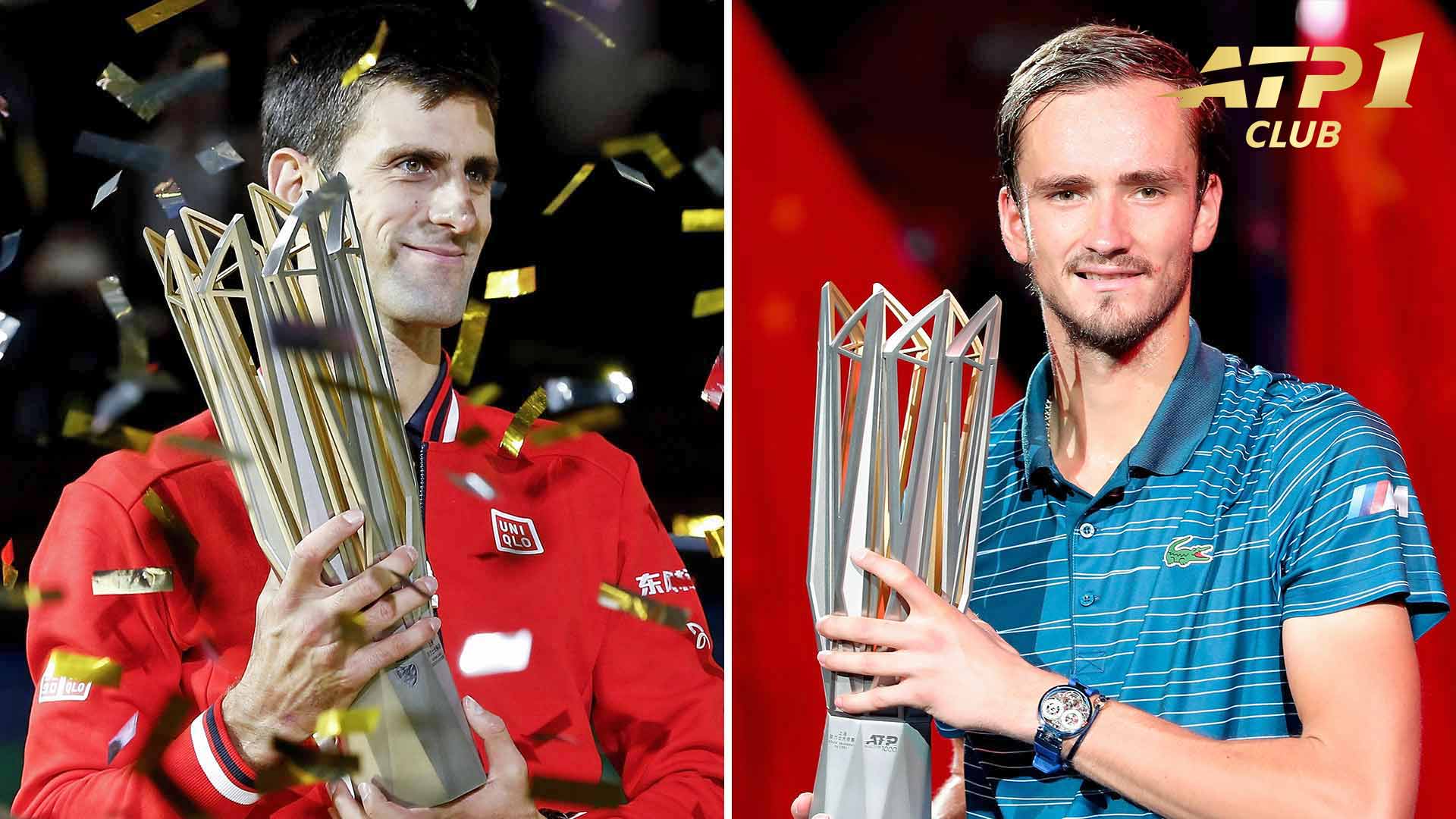
The Shanghai Masters pulses as more than a personal proving ground for Djokovic, a record four-time champion here whose victories have long illuminated the tournament’s role in tennis’s global ascent. He champions its importance in Asia, where China’s population rivals India’s in untapped potential, drawing crowds from ping-pong traditions to embrace the sport’s drama under the arena lights. The excitement ripples from Beijing’s streets to Qizhong’s packed stands, fostering a new generation amid the roar of baseline exchanges.
For the Serb, these trips blend competition with purpose, the shorter format allowing psychological resets between points, much like his one–two serve-and-volley plays that shorten rallies against aggressive foes. As he eyes a fifth title, the event’s energy reignites his vision, the hard court’s tempo suiting his varied slices and inside-out lasers. In this crucible, rivalries with the young guns evolve, each match a bridge between eras, promising the tour’s future while honoring its past guardians.