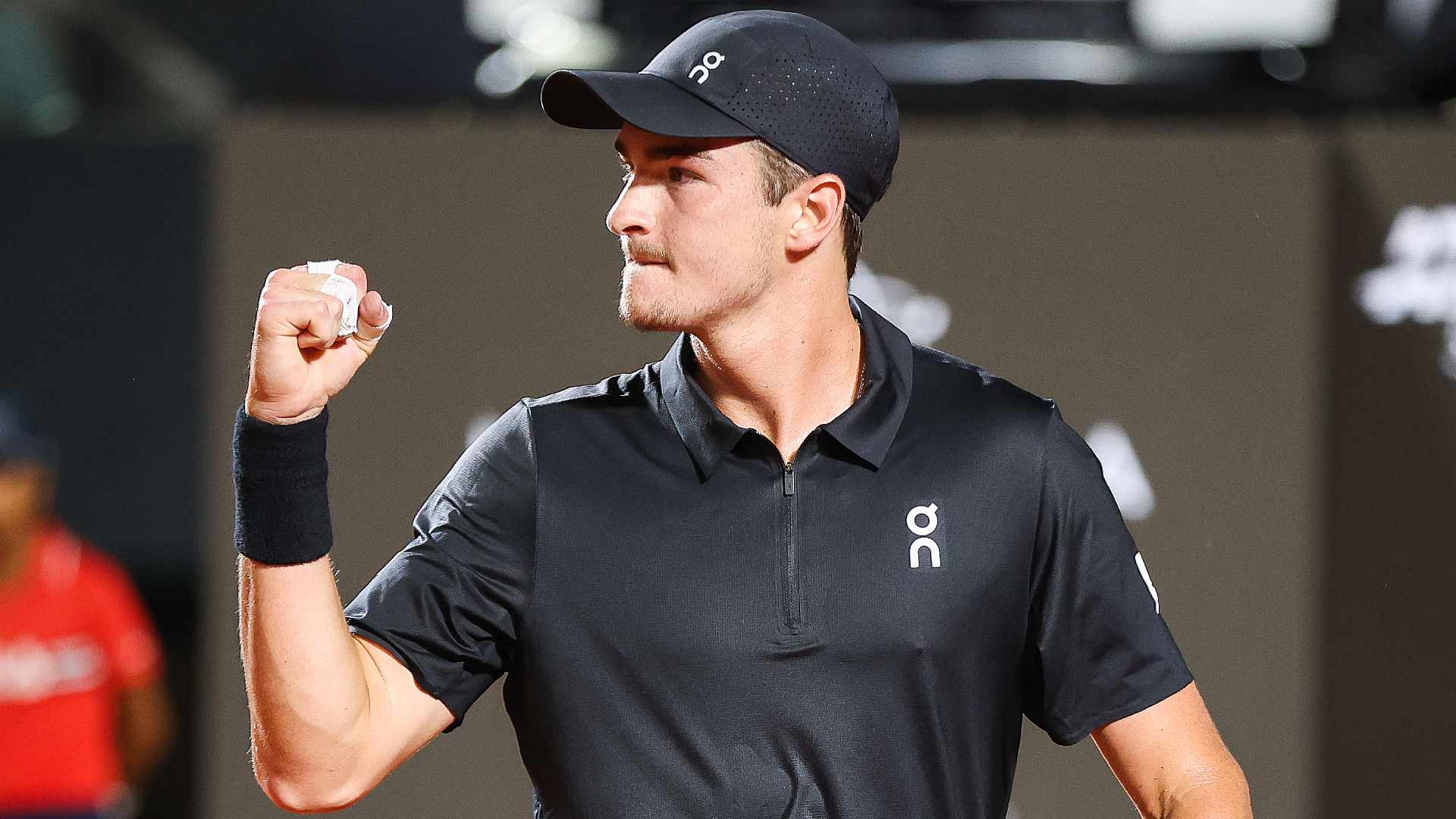
Buse Edges Berrettini in Rain-Lashed Rio Thriller

Under Rio’s unpredictable skies, Ignacio Buse outlasted Matteo Berrettini in a quarterfinal disrupted by downpours, pushing his 2026 Rio Open run to the brink of glory while others carved their own paths on clay.

Rain-slicked baselines in Rio de Janeiro turned Friday’s quarterfinals at the Rio Open presented by Claro into a test of nerve and adaptation. Ignacio Buse, still buzzing from his upset over third seed and home favorite Joao Fonseca the previous day, squared off against former No. 6 Matteo Berrettini. The 21-year-old Peruvian grinded out a 6-3, 2-6, 6-2 victory in the ATP 500 clay-court event, his composure amid four rain delays securing the biggest semifinal of his career.
Berrettini’s serve boomed through the humid air, but the damp clay dulled its bite, allowing Buse to loop heavy topspin forehands crosscourt and pull the Italian off balance. He disrupted longer rallies with low slice backhands that skidded unpredictably, saving four of six break points in their maiden ATP Head2Head clash. As the match hit two hours and 19 minutes, the intermittent stops heightened the tension, yet Buse’s returns stayed deep, forcing errors on second serves.
“Today it was really tough because we stopped, I think, four times because of the rain,” Buse said. “The conditions are sometimes fast, sometimes slow. You never know. But it was a difficult match, but I’m happy I managed it in a good way.”
Rain halts momentum, Buse resets
At 5-2 in the third set, Buse stood on the edge of triumph when the fourth downpour struck, tarps flying across the court as the crowd huddled under umbrellas. Resuming under patchy clouds, he faltered on two match points during Berrettini‘s serve, the Italian’s down-the-line forehand clipping the line to extend the drama. Buse regrouped with a crisp one–two pattern—serve wide, then inside-in forehand—breaking serve to close it out, the relief rippling through the stands like a sudden clearance in the weather.
This win builds on his early 2026 momentum, the clay’s grip demanding constant footwork adjustments that his agile game handles with growing assurance. Now, he awaits Thiago Agustin Tirante or Alejandro Tabilo in the semis, matches that could vault him toward a top-100 breakthrough if his serve holds steady against their baseline grinding.
Etcheverry notches century on resilient clay
Across the draw, eighth seed Tomas Martin Etcheverry claimed a personal landmark, defeating lucky loser Jaime Faria 7-6(4), 6-4 for his 100th tour-level victory. The 26-year-old Argentine erased all five break points in the opener, his crosscourt passes threading tight angles amid the rising humidity. By the second set, his deeper returns shifted the tempo, pinning Faria back and drawing unforced errors from the baseline.
“It was a tough tie-break,” Etcheverry said. “I played nicely in the end in the tie-break. And in the second set, I think I played better than the first one.”
Etcheverry’s topspin forehands gripped the court better as it dried, turning defense into pressure points that echoed his steady rise through South American events. Facing Vit Kopriva next promises a stylistic duel, the Czech’s flatter shots testing the Argentine’s ability to extend rallies on a surface that rewards his endurance.
Kopriva cruises to second semifinal shot
Vit Kopriva advanced with quiet efficiency, toppling Juan Manuel Cerundolo 6-4, 6-4 without facing a single break point. His inside-out forehands stayed flat and penetrating, exploiting the court’s variable bounce to keep the Argentine lunging wide. Five years after his debut semifinal in Gstaad back in 2021, this marks Kopriva’s resurgence, his precise placement turning potential pressure into controlled dominance.
For Buse and the semifinal field, Rio’s rains have sharpened edges against the tour’s grind, each delay a reminder that clay favors those who adapt mid-point. As the draw narrows, these battles hint at finals where tactical poise could eclipse rankings, setting up clashes that linger in the South American swing’s humid memory.