Blinkova conquers doubts with title and fluent Mandarin

Trailing early against a backhand prodigy in Jiujiang, Anna Blinkova rallied with tactical poise and unyielding belief, capping a tough Asian swing by lifting her second WTA trophy while bridging languages on stage.
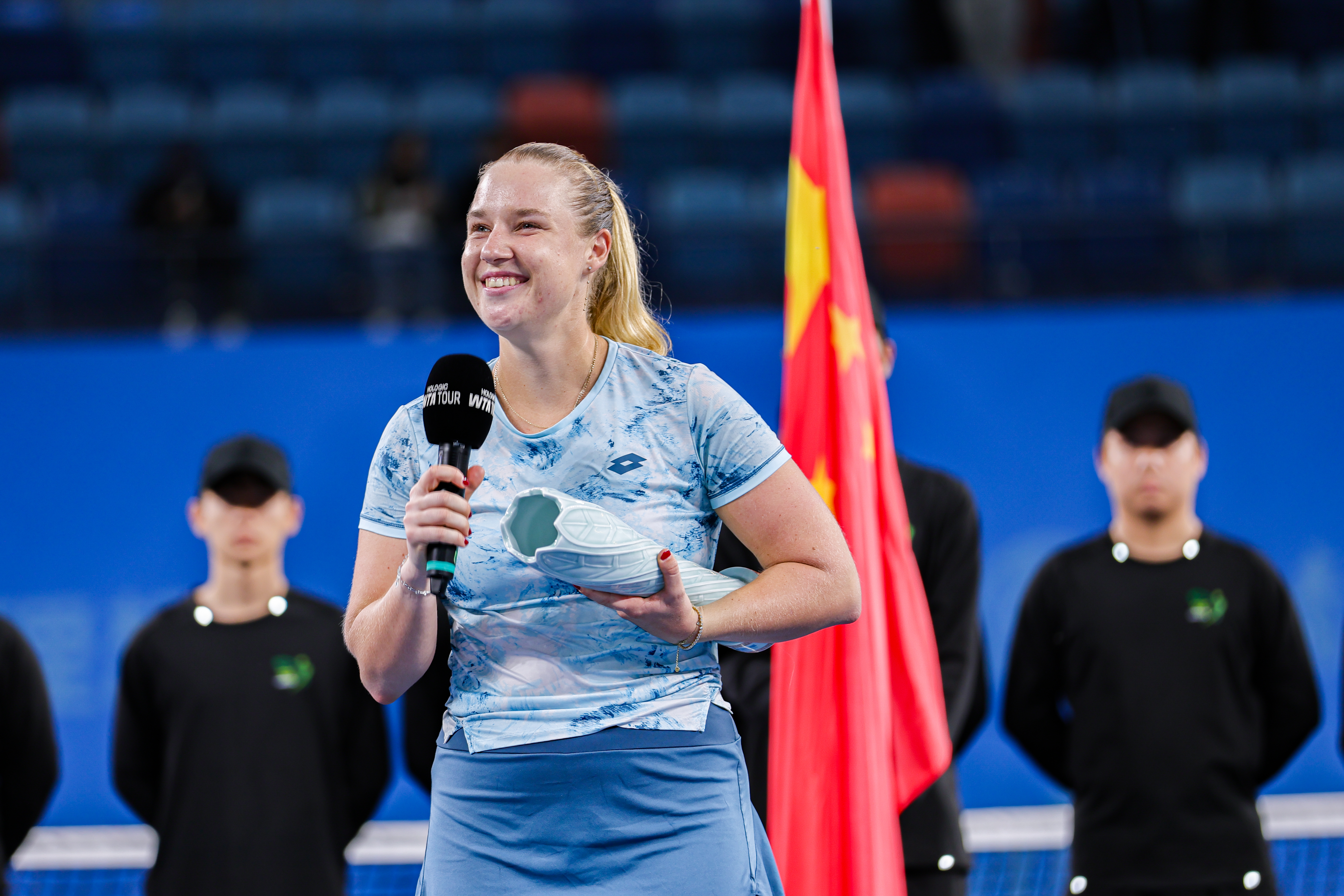
In the steamy finale of the Jiangxi Open, Anna Blinkova turned a season of frustrations into triumph, defeating 17-year-old wildcard Lilli Tagger 6-3, 6-3 to claim her second career title on the hard courts of Jiujiang. The 27-year-old Russian, ranked No. 95, had endured first-round losses in Beijing and qualifying defeats in Wuhan and Guangzhou since leaving home on September 8, yet her daily practice sessions fueled a flawless run through the draw without dropping a set. As cheers echoed under the evening lights, her victory extended to the podium, where she navigated the trophy ceremony and press conference by switching effortlessly between English and Mandarin, a skill honed since 2018 and now shining in front of an appreciative Chinese crowd.
Resilience turns early setbacks into momentum
Blinkova’s path to this moment blended quiet determination with linguistic ambition; as the Asian swing kicked off in September, she told Bounces of her desire to deliver a Mandarin interview, viewing her progress as ready for the challenge. Those initial stumbles tested her resolve, but in Jiujiang, she channeled that persistence into sharp focus, her serve finding rhythm on the outdoor hard courts where moderate bounce rewarded depth and variety. The humid air thickened the tension, yet her belief held firm, transforming the season’s final tournament into a personal redemption.
“I left home on September 8,” she reflected afterward. “I played so many tournaments and I lost in the first or second round, but I kept working hard every day, practising every day and believing I could still make a good result, even in the last tournament of the season. And I did it!”
I left home on September 8. I played so many tournaments and I lost in the first or second round, but I kept working hard every day, practising every day and believing I could still make a good result, even in the last tournament of the season. And I did it!
Tactical shifts outfox teenage firepower
Tagger burst onto the scene with a one-handed backhand echoing Justine Henin’s precision, unleashing down-the-line winners that pierced the baseline early and drew oohs from the stands. The opening games saw four straight breaks, the Austrian teen seizing a 3-2 lead after a marathon hold through eight deuces and four saved break points, her returns skimming low to exploit the surface’s grip. Blinkova absorbed the pressure, then elevated her game by steering more balls crosscourt to Tagger’s forehand, where occasional errors crept in, while her own backhand sliced with underspin to disrupt setups and open angles for inside-out replies.
That adjustment sparked a surge of five consecutive games, carrying her to a 1-0 edge in the second set as returns landed with aggressive depth, blending solidity and risk to force defensive lobs from the prodigy. The crowd’s energy shifted with the momentum, the hard court’s pace amplifying Blinkova’s one–two patterns of crosscourt forehand into down-the-line backhand finishers. Tagger’s weapon, though rock-solid, couldn’t overcome the targeted pressure in key moments, pushing the veteran to summon peak tennis amid the growing humidity.
“Her backhand was rock solid, but at some points I felt she started missing with her forehand,” Blinkova said. “So I played a bit more to her forehand in the important moments. I also put a lot of pressure with my return—I was just a bit more aggressive and solid at the same time.”
Her backhand was rock solid, but at some points I felt she started missing with her forehand. So I played a bit more to her forehand in the important moments. I also put a lot of pressure with my return—I was just a bit more aggressive and solid at the same time. I think she’s a really great player for her age. She really pushed my limits today, and I had to play my best tennis to beat her.
“I think she’s a really great player for her age,” she added. “She really pushed my limits today, and I had to play my best tennis to beat her.”
This win, mirroring her 2022 Cluj-Napoca breakthrough, intertwined on-court success with off-court connection, as Blinkova addressed fans in Mandarin all week, her words weaving warmth into the tournament’s fabric. For a deeper look at the event’s progression, check the Scores, Draws, and Order of play.
Doubles final highlights enduring journeys
No. 3 seeds Quinn Gleason and Elena Pridankina captured the doubles crown, outlasting Ekaterina Ovcharenko and Emily Webley-Smith 6-4, 2-6, 10-6 in a match that swung with the hard court’s demands for quick net play and resilient returns. Gleason notched her second WTA doubles title, building on her 2024 Merida success alongside Ingrid Martins, while Pridankina celebrated her first, her steady volleys complementing her partner’s power in the super-tiebreak decider. The victory underscored complementary styles thriving under pressure, as the duo’s poise in the fading light sealed a hard-fought end to the weekend.
Webley-Smith’s appearance in her first WTA final at age 41 carried profound weight, a milestone 26 years after her 1999 professional debut and amid 27 ITF doubles titles earned along the way. Her career peaks—No. 240 in singles from 2011 and No. 113 in doubles from 2015—framed this run as a testament to longevity, her experience steadying the pair through second-set breaks despite the surface’s taxing pace. As the courts emptied, Blinkova’s surge and these doubles narratives hinted at fresh momentum heading into the off-season, where persistence promises more breakthroughs on the horizon.