Basavareddy Edges into Next Gen Semifinals on Rival’s Momentum

In Jeddah’s tense group finale, Nishesh Basavareddy clinched a Next Gen ATP Finals semifinal berth not through his final point, but a rival’s opening surge—highlighting the mental calculus of under-21 breakthroughs.
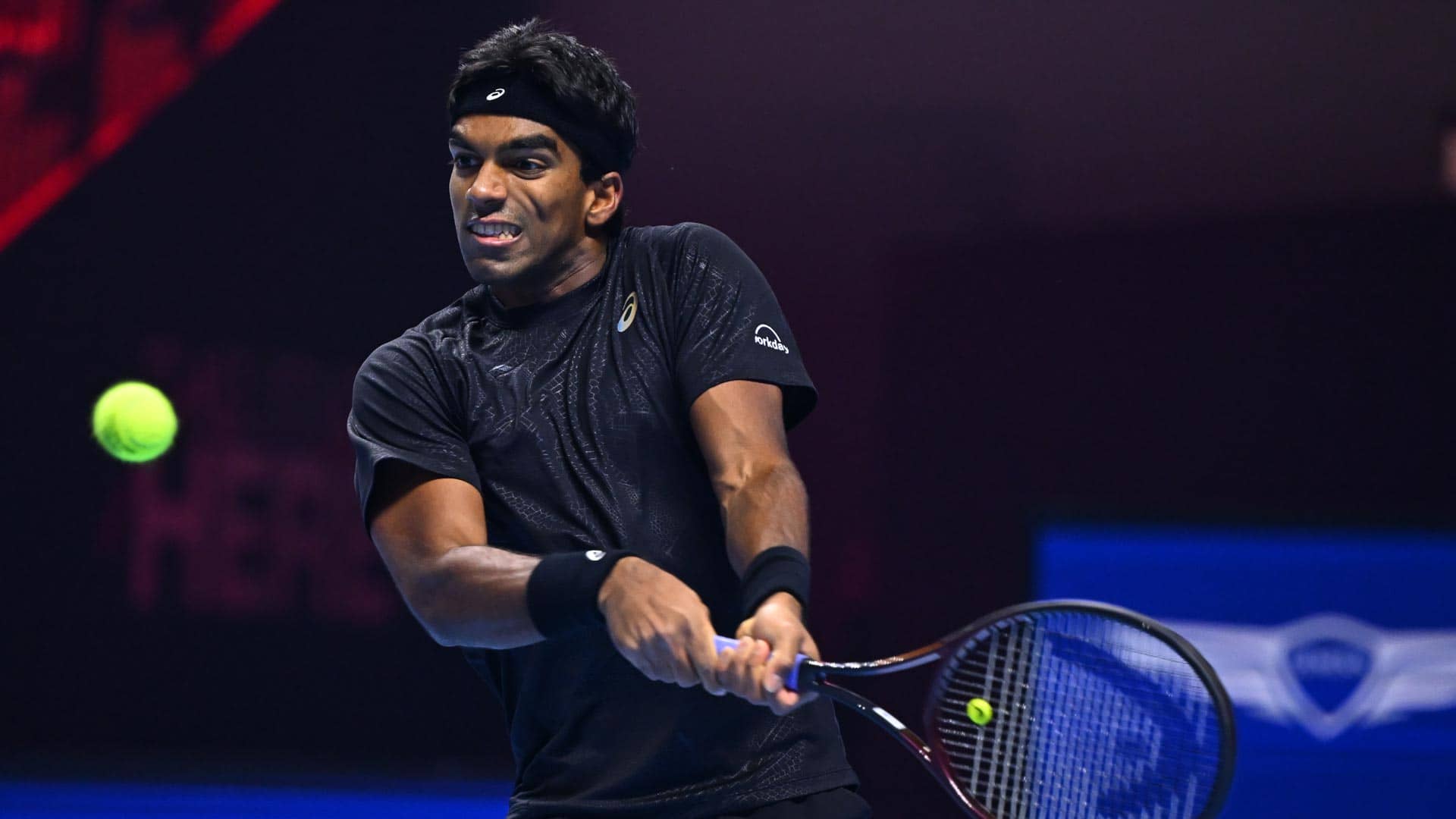
In the pressurized close of Red Group at the Next Gen ATP Finals presented by PIF, Nishesh Basavareddy advanced to the semifinals when Alexander Blockx seized the first set against Dino Prizmic on Friday afternoon in Jeddah. The 20-and-under event’s math turned in Basavareddy’s favor as Blockx’s tie-break win guaranteed the Belgian the group lead, slotting the American as runner-up for a Saturday matchup against Blue Group’s winner. This indirect qualification amplified the tournament’s psychological layers, where control often slips to the adjacent court.
Basavareddy entered the day with a 1-1 record, facing Justin Engel in the opener to keep his hopes alive. He dispatched the German 4-3(3), 4-2, 4-3(5) over 70 minutes, relying on steady baseline rallies to absorb flat shots and counter with heavy crosscourt topspin. From a 3/5 hole in the third-set tie-break, he clawed back with precise down-the-line backhands, securing the 2-1 group finish that set the stage for dependence on the later match.
“I didn’t look at any of that [the permutations],” Basavareddy said. “In the third set, I was thinking maybe if I win this in straight sets it would be better for my cause, but before the match, I was just trying to prepare the best I could for this match.”
Blockx‘s tie-break delivers relief
With his own semifinal spot locked at 2-0, Blockx approached the clash against Prizmic knowing a first-set edge would crown him group top seed. He surged to a 4-3(4) tie-break victory, his aggressive returns disrupting the Croatian’s setup and forcing errors on inside-in forehands. For Basavareddy, watching from the sidelines amid Jeddah’s building crowd hum, this quick strike erased the need for straight-sets drama, turning potential anxiety into assured progression.
Prizmic, fresh off a group-stage loss to Basavareddy, struggled to find rhythm on the mid-paced hard courts that reward quick transitions. Blockx exploited this with one–two patterns, following flat serves with low slices to pull his opponent forward. The result not only propelled Basavareddy but underscored the event’s format, where a single set can reshape destinies in the 20-and-under fray.
Cervara’s touch refines the grind
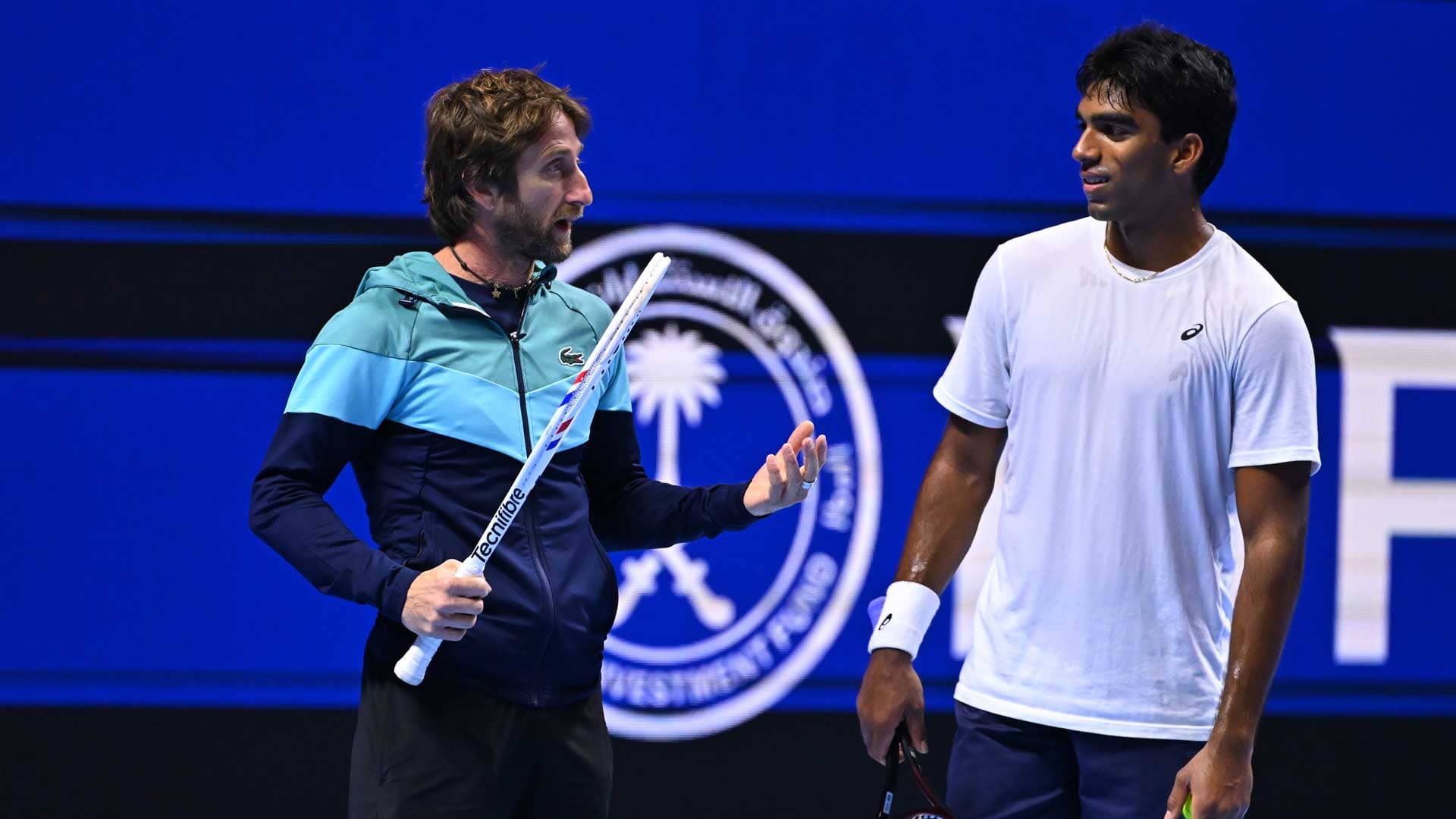
For the first time, Basavareddy competed with coach Gilles Cervara courtside, their December partnership—formed after Cervara’s August split from former World No. 1 Daniil Medvedev—already yielding gains. The Frenchman’s input sharpened Basavareddy’s serve, which landed with more kick against Engel, pushing returns deep and opening angles for inside-out winners. This physical edge, combined with fitness tweaks, let him dominate extended exchanges on a surface that demands lateral quickness.
“In the short time we have been together we have already made some improvements, him and my fitness coach,” Basavareddy said on Cervara. “I think we have progressed a lot physically and I think my serve today was a lot better than it normally is.” The collaboration infused quiet assurance into his game, blending tactical depth with the resilience needed for Jeddah’s high-stakes tempo. Read more about Basavareddy and Cervara’s partnership here.
Engel departed at 0-3, his baseline steadiness unable to close tie-breaks despite a year marked by an ATP Challenger title and a quarter-final in Stuttgart at the ATP 250 level. The youngest in the field takes these encounters as fuel for 2026, where converting pressure points will define his rise. Basavareddy, in his second Next Gen appearance after opening with a win over Prizmic, now eyes the semifinals with evolved poise, ready to unleash varied spins against Blue Group’s survivor in a format that tests adaptability under the arena’s intensifying lights.