Babos and Stefani stage comebacks to reach WTA Finals final

In Riyadh’s charged semifinals, Timea Babos and Luisa Stefani erased early breaks in both sets to defeat Hsieh Su-Wei and Jelena Ostapenko, advancing to a title match that blends Babos’s experience with Stefani’s breakthrough moment.
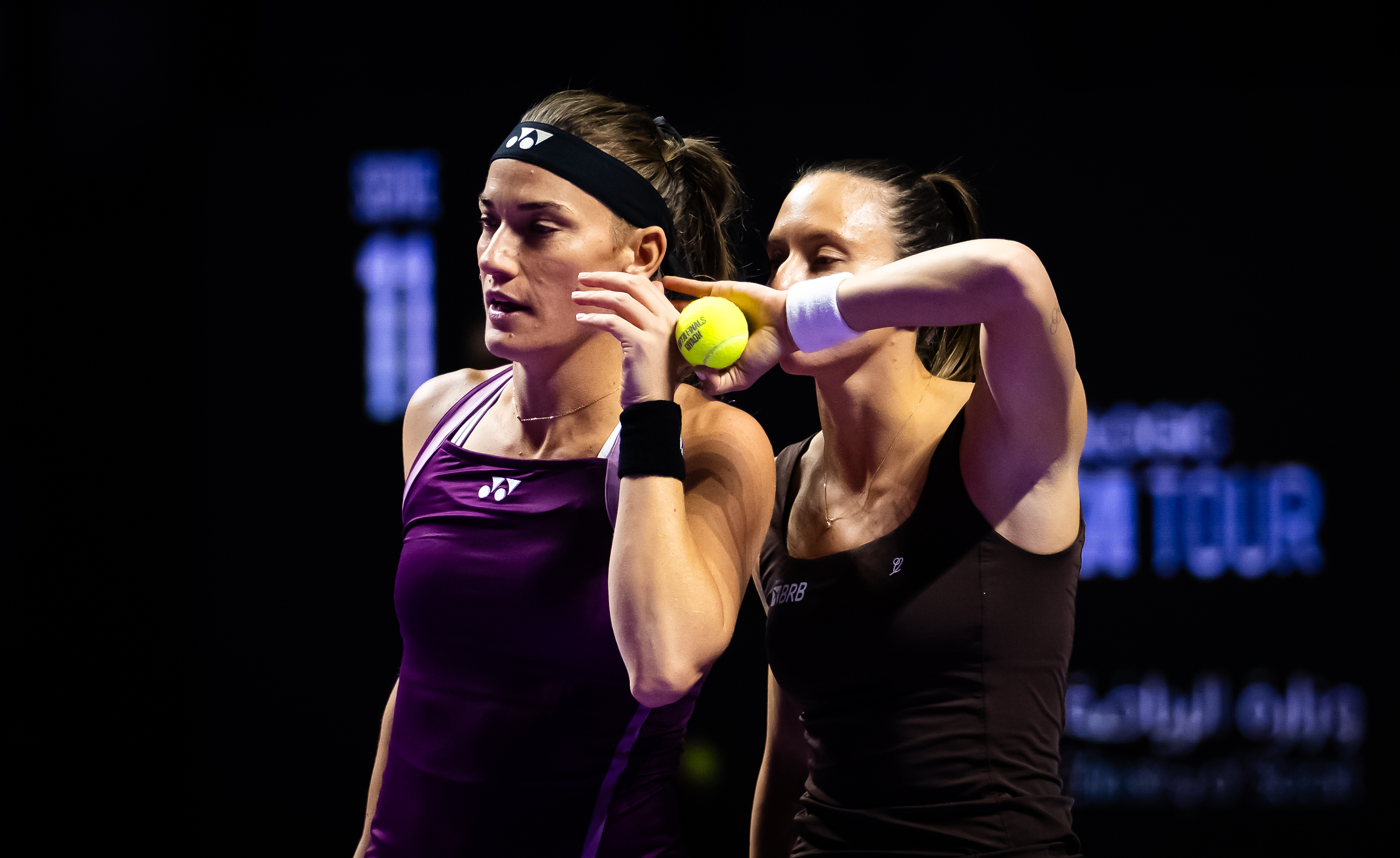
Under the glare of Riyadh’s indoor lights, Timea Babos and Luisa Stefani turned a semifinal pressure cooker into their own narrative of resilience. The No. 7 seeds, debuting as a team at the WTA Finals, absorbed early jolts from No. 6 seeds Hsieh Su-Wei and Jelena Ostapenko to claim a 6-4, 7-6(5) victory in their first meeting. This gritty escape not only books their spot in the final but caps a 2025 run with five finals, including a first beyond WTA 500 level and three straight after runners-up in Ningbo to Nicole Melichar-Martinez and Liudmila Samsonova, then champions in Tokyo.
Navigating deficits with championship poise
The Hungarian-Brazilian pair entered uncharted waters together, with Stefani marking her debut at the event and becoming the first Brazilian to reach the doubles final in its history. Babos, drawing from three prior titles—with Andrea Sestini Hlavackova in 2017 and Kristina Mladenovic in 2018 and 2019—leaned on those memories to steady the ship when opponents grabbed a 3-1 lead in the opener. Their one–two combinations of deep crosscourt groundstrokes and net poaching began to chip away, turning the fast hard courts into a stage for Stefani’s tenacious retrieves that kept rallies alive against Ostapenko’s power surges.
As the set wore on, the duo’s consistency outshone the volatility across the net, where Hsieh’s creative underspin lobs and Ostapenko’s inside-out forehands flickered but faltered under pressure. Babos’s slice backhands disrupted the rhythm, forcing mid-court mishits, while the crowd’s rising hum mirrored the shifting momentum on court. For ongoing updates, consult the WTA Finals Scores, Draws, and Order of play, which track every pivot in this elite showdown.
“I never lost in a semifinal of the WTA Finals before, so I’m just keeping that,” Babos said in her on-court interview. “I’m very proud of us.”
Defensive grit repels stylistic assaults
The second set echoed the first’s turbulence, with Ostapenko finding sharper accuracy to break Stefani for 4-2, her down-the-line backhands exploiting the surface’s low bounce. Yet Babos and Stefani responded by varying their patterns, mixing high topspin returns with slice to slow the tempo and expose gaps in the opponents’ approach. Spectacular defense defined key moments, as they held firm at net to block Ostapenko’s blistering volleys and deflect Hsieh’s angled drop shots, the arena’s echoes amplifying each desperate lunge and thud.
Stefani’s energy injected life into the partnership, her wide-angle crosscourt passes flipping defense into counterattacks that eroded the lead. The psychological bond, forged through the season’s highs and lows—from Ningbo’s late heartbreak to Tokyo’s triumph—held them together, with Babos orchestrating adjustments that limited passing shots and forced 43 unforced errors overall. As they reached 5-4, the tension thickened, the duo’s shared resolve turning the indoor hard’s speed from a foe into an ally for quick transitions.
Tiebreak resolve crowns the comeback
Hsieh’s touch saved the first two match points at 5-4, her deft volleys keeping the drama alive, but the tiebreak captured the match’s emotional core. From 5-2 down, a pair of nervy volley errors gifted opponents a lifeline, yet at 5-5, Ostapenko netted a forehand under pressure, her shot sealing the shift. Babos closed on her third match point with a service winner skimming the line, the Riyadh crowd’s roar releasing the pent-up strain of a grueling year.
Stefani reflected on the stylistic clash afterward, highlighting their unity against a pair blending raw power with inventive angles. This victory positions the newcomers for Stefani’s maiden Finals shot and Babos’s fourth title with a third partner, their adaptability on these swift courts poised to fuel the final’s intensity. As the title match approaches, the mental lift from this escape could transform seasonal fatigue into sharpened ambition, ready to seize the crown.