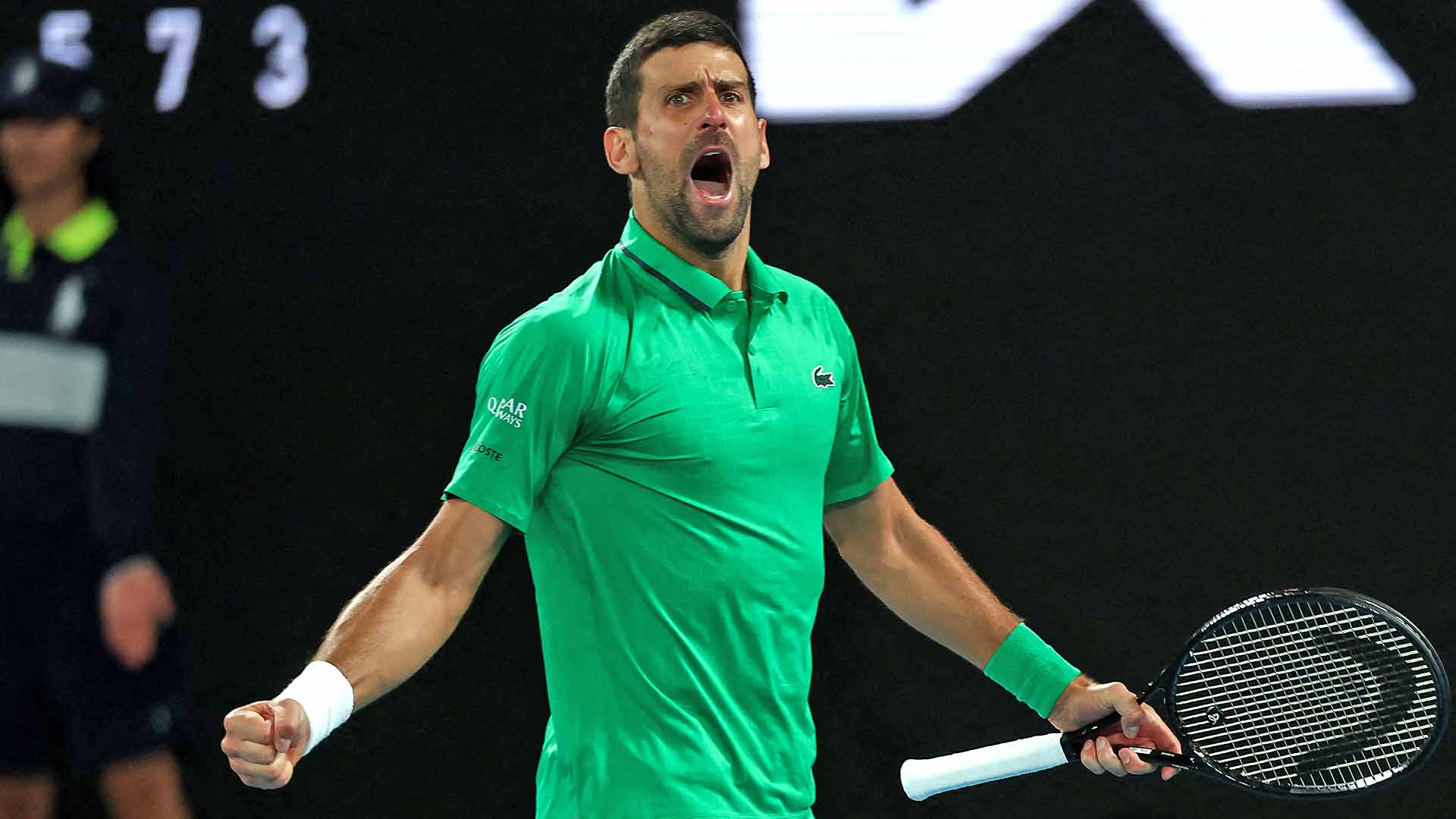
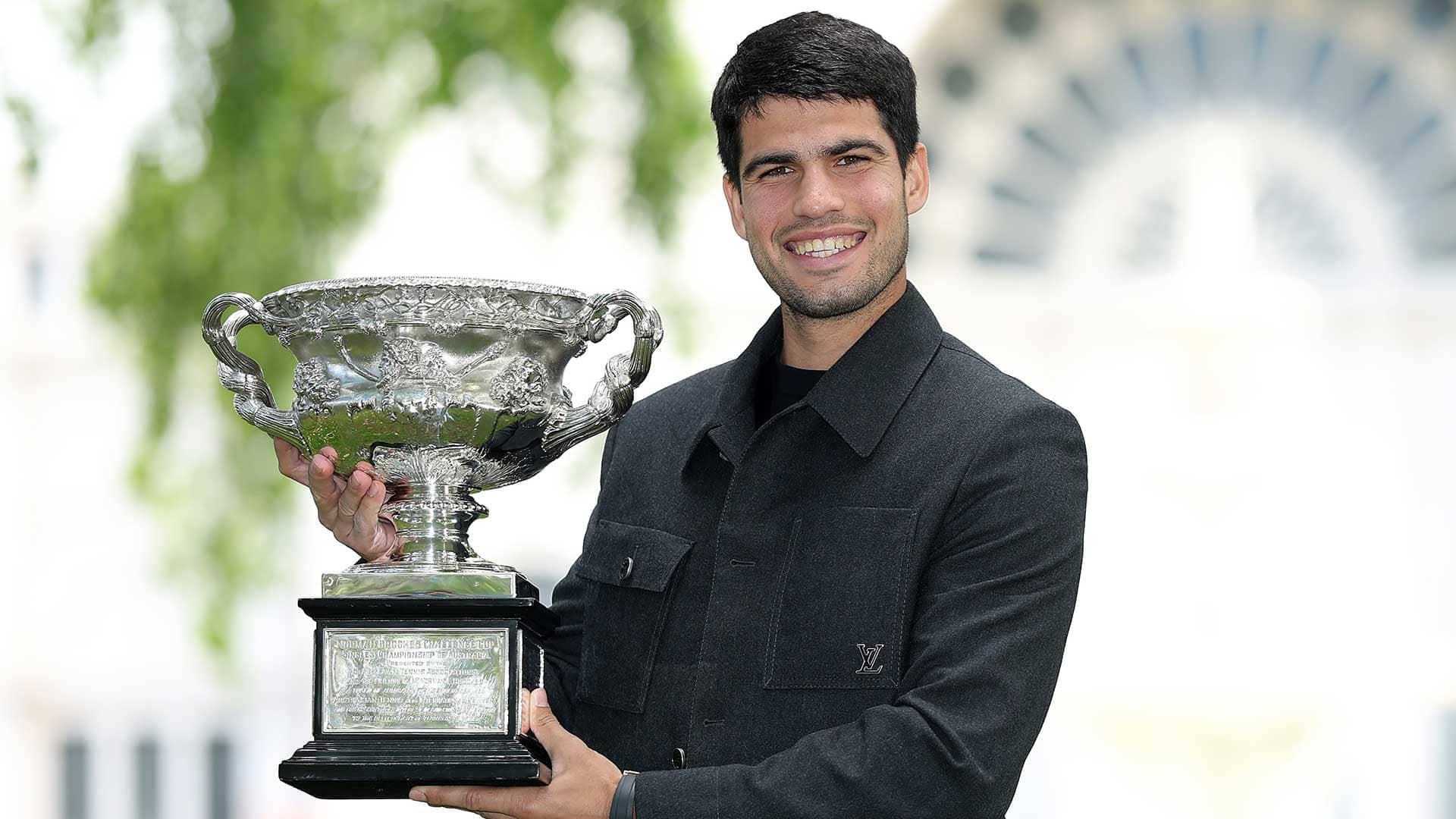
Melbourne Sizzles as Australian Open 2026 Looms

With qualifying wrapping under the summer sun, Carlos Alcaraz leads a star-studded field into the first Grand Slam, where Jannik Sinner defends his crown amid rising tensions and tactical recalibrations on the hard courts.
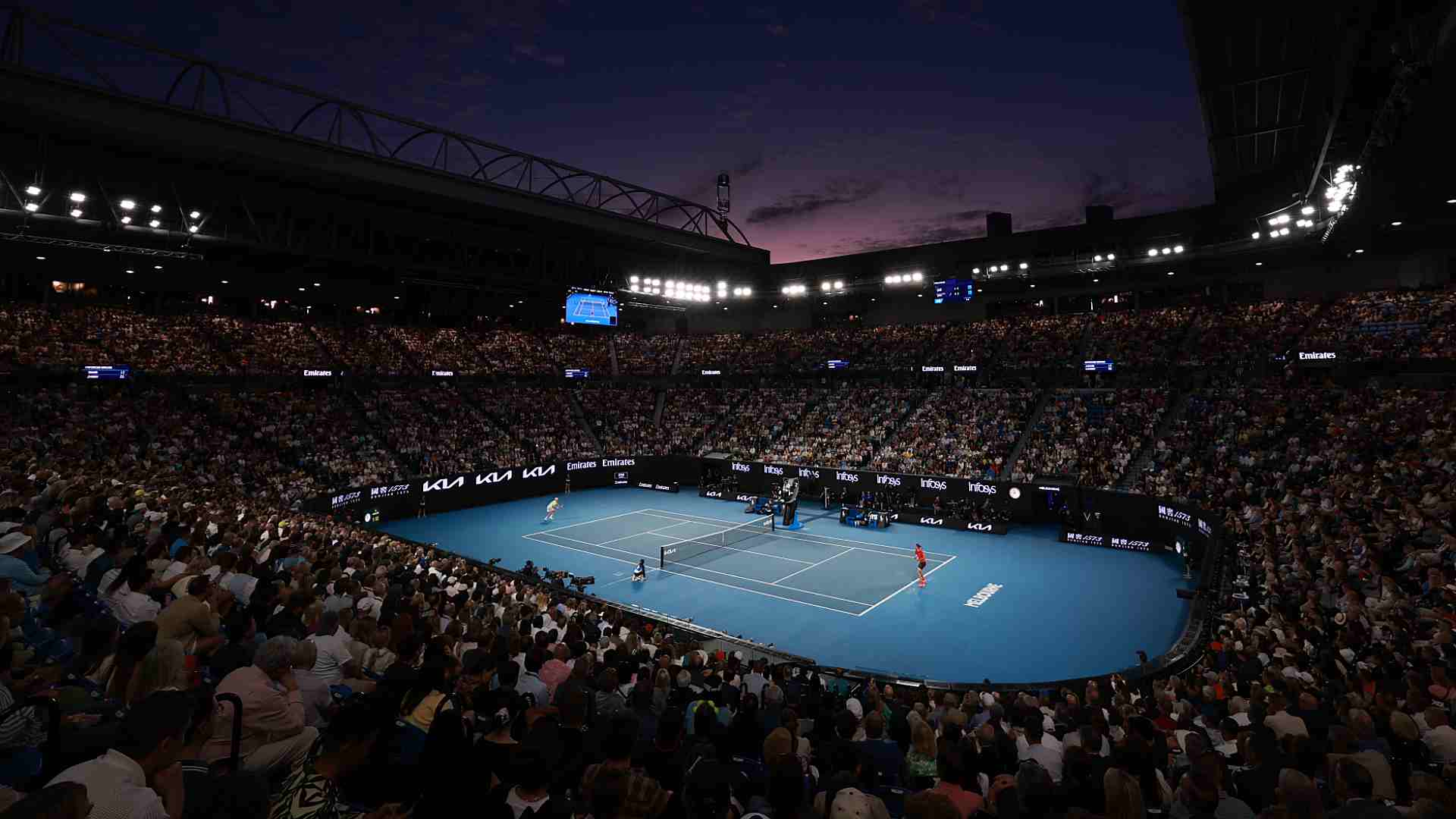
On January 14, 2026, Melbourne Park hums with the final echoes of qualifying rounds, where underdogs clawed for main-draw entry amid the Australian heat. The Australian Open, the season’s opening Grand Slam established in 1905, beckons from January 18 to February 1 under tournament director Craig Tiley’s steady hand. No. 1 in the PIF ATP Rankings Carlos Alcaraz steps onto these Plexicushion courts with explosive intent, his inside-out forehands slicing through the humid air, while defending champion Jannik Sinner prepares to guard his throne against a pack of hungry challengers.
Defenders confront familiar shadows
Sinner’s 2025 triumph—a crisp 6-3, 7-6(4), 6-3 dissection of Alexander Zverev in the final—still lingers, but repetition demands sharper edges to his flat groundstrokes. Zverev, stung by that runner-up finish, rebuilds with a serve-volley arsenal that could turn early tiebreaks into turning points, his power tested against the surface’s medium bounce. Ten-time winner Novak Djokovic prowls the baseline with elastic returns, his down-the-line backhands a reminder of why he owns this venue, even as the years nudge his game toward calculated risks over raw athleticism.
Felix Auger-Aliassime brings thunderous serves over 130 mph, pairing them with a one–two pattern that exploits the court’s pace, yet he’ll need to temper his heavy topspin to avoid the skid that unravels long rallies. Lorenzo Musetti weaves artistry through one-handed backhand slices, opening crosscourt angles to unsettle foes, while Ben Shelton‘s lefty bombs force opponents into defensive slides from the outset. Home favorite Alex de Minaur feeds off the Rod Laver Arena roar, his speedy counters chasing down inside-in shots, a spark for a nation awaiting its first local champion since Mark Edmondson in 1976.
Taylor Fritz flattens returns to neutralize big serves, building momentum in five-set grinds, as Alexander Bublik injects chaos with underarm tricks that probe mental frailties. The psychological weight settles early; Alcaraz must channel his top ranking into focus, dodging the complacency that shadows every practice hit. Crowd energy amplifies these duels, turning night sessions into pressure cookers where a single unforced error echoes louder than the cheers.
Draws and days forge the battle rhythm
The singles draw emerges tomorrow at 2:30 p.m. AEDT, seeding fates that might align Alcaraz with Djokovic in the semis, a baseline war of speed versus savvy. Doubles follows on January 17 at 3 p.m., where last year’s victors Harri Heliovaara and Henry Patten defend against duos like Simone Bolelli and Andrea Vavassori, who sync volleys to clip points short. Qualifying, from January 12 to 15 starting at 10 a.m. and shifting to 11 a.m. on the final day, doles out 30 points to survivors, a slim edge in the bracket’s unforgiving math.
Main draw ignites January 18 with 11 a.m. and 7 p.m. starts, holding steady through January 27 before easing to 11:30 a.m. and 7 p.m. on the 28th and 29th. Friday’s semifinals hit 12 noon and 7:30 p.m., the doubles final slots Saturday January 31 from noon, and the singles crown falls Sunday February 1 at 7:30 p.m. under lights. This cadence punishes jet-lagged arrivals, demanding quick pivots—like deeper returns to jam second serves—in the 90-degree swelter that saps stamina mid-rally.
Players like de Minaur thrive in the evening buzz, his footwork a blur against the floodlights, while Shelton’s power holds firmer in cooler air. The schedule’s late nights breed fatigue, forcing tactical tweaks: Musetti might lean on underspin to slow the tempo, buying time against Auger-Aliassime’s aggression. As draws solidify, uncertainty sharpens preparations, each matchup a potential pivot from routine win to season-defining clash.
Prizes and pasts sharpen every stroke
AUD $111.5 million in prize money hangs over the fortnight, with singles winners claiming $4,150,000 and 2,000 points, finalists $2,150,000 and 1,300, semifinalists $1,250,000 and 800. Quarterfinalists pocket $750,000 and 400 points, fourth-round survivors $480,000 and 200, third-round $327,750 and 100, second $225,000 and 50, first $150,000 and 10. Qualifiers earn $83,500 with 16 points in the final round, $57,000 and 8 in semis, $40,500 with none in the opener—stakes that turn every hold into high finance.
Doubles teams split $900,000 and 2,000 points for the title, $485,000 and 1,200 for runners-up, $275,000 and 720 for semis, $158,000 and 360 for quarters, $92,000 and 180 for third round, $64,000 and 90 for second, $44,000 for first. History presses in: Djokovic’s 10 singles crowns lead, but Sinner joined No. 1 victors like Ivan Lendl in 1990, Jim Courier in 1993, Pete Sampras in 1994 and 1997, Andre Agassi in 2000, Roger Federer in 2006-07 and 2010, Rafael Nadal in 2009, and Djokovic across 2012-13, 2015-16, 2019, and 2021. Ken Rosewall took oldest honors at 37 in 1972, Mats Wilander youngest at 19 in 1983, Edmondson the lowest-ranked at No. 212 that same year.
The Bryan brothers—Bob Bryan and Mike Bryan—share six doubles titles, a benchmark for Heliovaara and Patten’s gritty 6-7(16), 7-6(5), 6-3 upset over Bolelli and Vavassori last year. Federer’s 102 match wins loom as an endurance talisman, urging newcomers like Fritz to pace their one–two assaults amid the heat’s haze. Follow the pulse through View On Official Website, #AO2026 across platforms, @australianopen on Instagram and X, Australian Open on Facebook, AustralianOpenTV on YouTube, and @ausopen on TikTok—each feed a window into rallies where mental steel forges champions, priming the tour’s relentless year ahead.