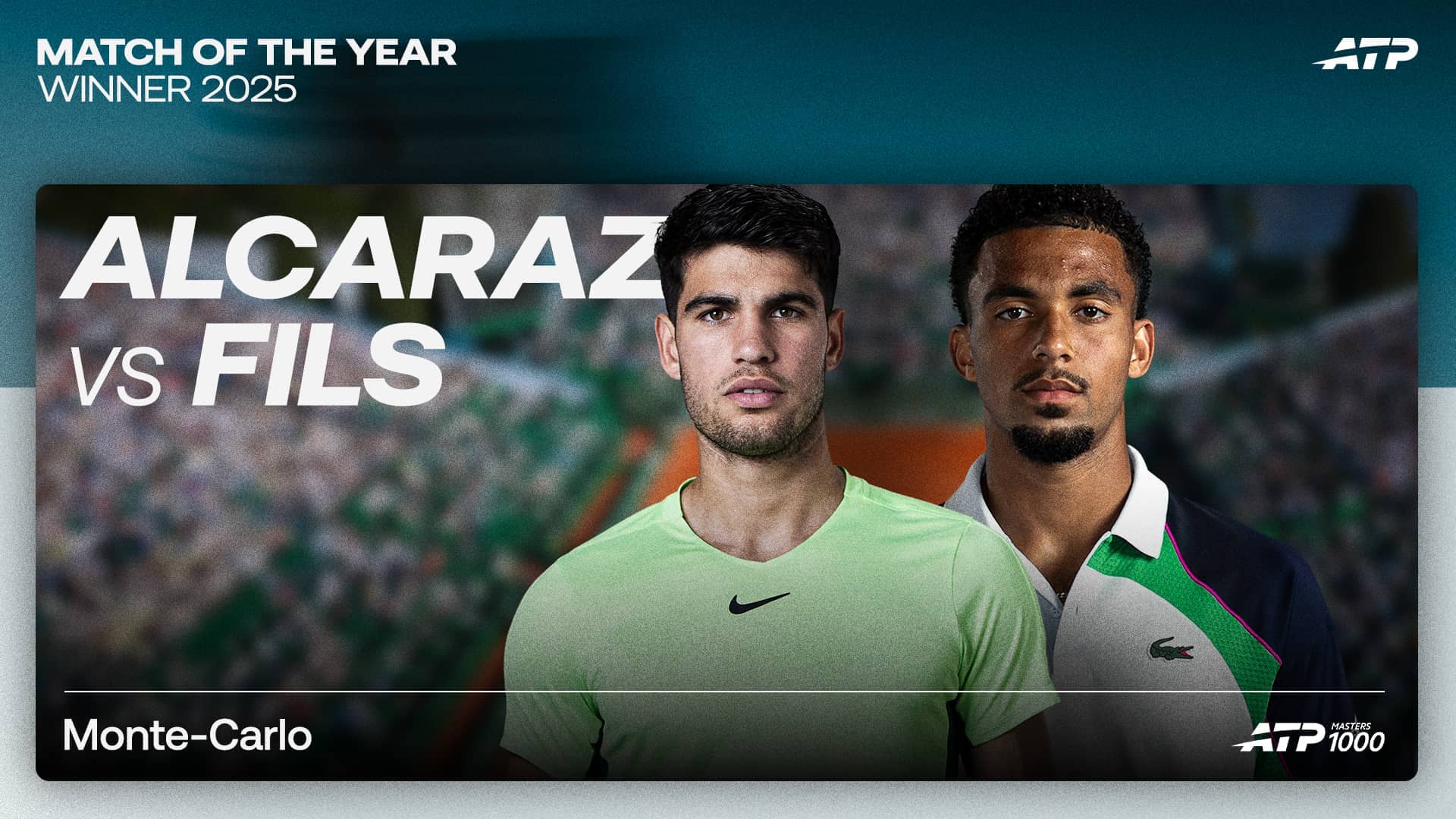
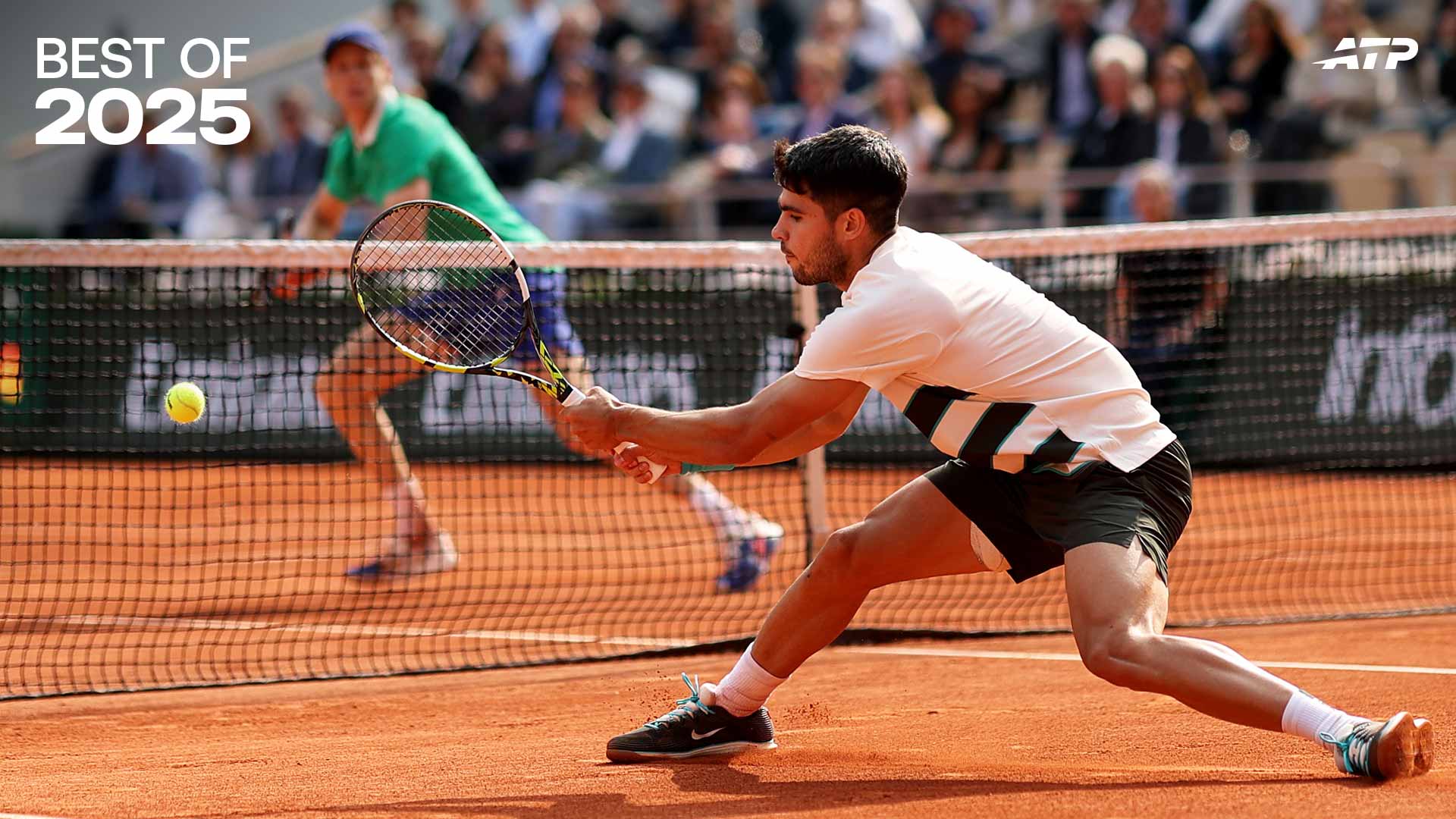
Alcaraz Conquers Every Surface in 2025

Carlos Alcaraz reclaimed his throne as tennis’s ultimate adapter, turning clay’s endurance tests, grass’s rapid shifts, and hard courts’ firepower into a year of unyielding dominance that edged out Jannik Sinner for year-end No. 1.
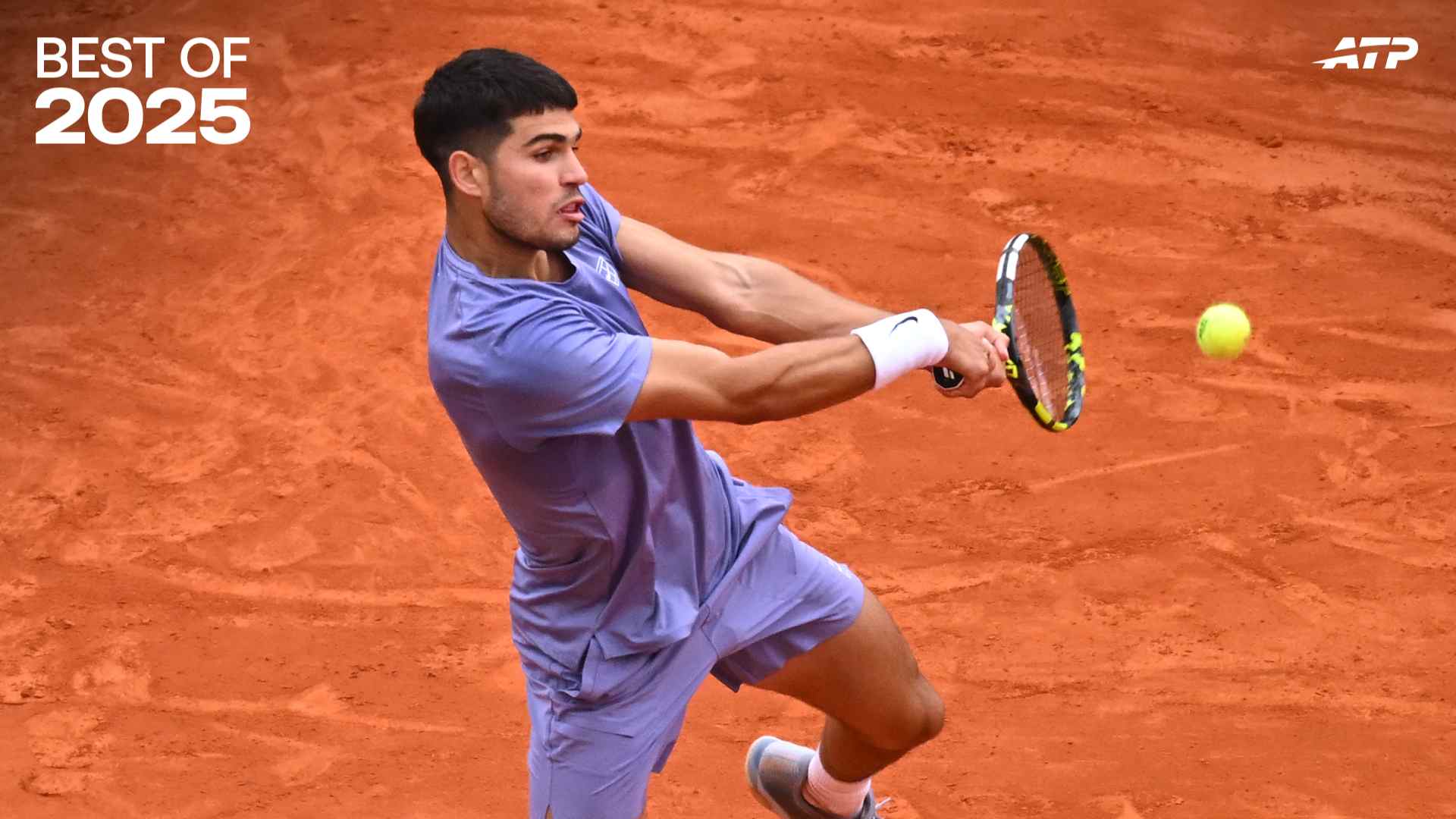
In the final throes of 2025, Carlos Alcaraz stood as the season’s unbreakable core, his all-surface command propelling him back to the ATP Year-End No. 1 presented by PIF after a two-year absence. The 22-year-old Spaniard led the ATP Win/Loss Index on clay and grass, blending explosive athleticism with tactical finesse to navigate a tour pulsing with rivalries and high-stakes drama. This wasn’t just statistical supremacy; it was a display of mental steel, where each surface’s unique rhythm tested and refined his game.
Clay demands relentless depth
Alcaraz’s clay campaign unfolded like a prolonged rally, his 22-1 record underscoring a winning percentage that no one matched, capped by an epic Roland Garros final where he edged Jannik Sinner in the Paris twilight, the crowd’s energy feeding his heavy topspin forehands that pinned opponents deep. He varied pace masterfully, mixing inside-in backhands with crosscourt bombs to force errors in extended exchanges, turning the red dirt’s grind into his personal arena. That victory over Sinner not only healed past defeats but set a tone of invincibility, as Alcaraz’s slide and recovery kept him steps ahead in every baseline duel.
Behind him, Sinner reached finals in Rome and Roland Garros, his flat returns and improved sliding adapting to the surface’s slower pace, though the trophies eluded him amid the mental tug-of-war. Lorenzo Musetti crafted his most cohesive clay year, weaving slice backhands and lobs to disrupt rhythms and climb the rankings with quiet precision. Alexander Bublik channeled altitude’s thinner air into titles at Gstaad and Kitzbuhel, his unorthodox spins and net rushes peaking with a quarterfinal run at the Paris major, injecting chaos into the field’s measured flow.
Alcaraz tallied a stunning 22-1 record on clay — including an unforgettable championship-match win over rival Jannik Sinner at Roland Garros.
Jack Draper, entering with only nine prior tour-level clay wins, rebuilt his game through deeper returns and better footwork, storming to the Madrid ATP Masters 1000 final and Rome quarters, each breakthrough chipping away at his outsider status on the dirt.
Grass rewards sharp instincts
Carrying Roland Garros fire into the green, Alcaraz stretched his streak to 24 matches with a second Queen’s Club crown, his serve-volley rushes and down-the-line slices exploiting the turf’s low skid to keep points short and decisive. At Wimbledon, he powered into a third straight final, the All England Club’s pressure cooker amplifying his quick recoveries, even as Sinner’s steady returns claimed the day—yet Alcaraz’s higher winning percentage reflected a mind wired for the surface’s fleeting opportunities. The defeat stung, but it fueled his resolve, turning grass’s unpredictability into a launchpad for harder battles ahead.
Taylor Fritz topped the grass wins with 13, his Stuttgart and Eastbourne titles forged from a crisp 1–2 pattern—wide serves followed by inside-out forehands—that carried him to Wimbledon’s semifinals, his net poaching thriving in the sun-dappled conditions. Bublik defended in Halle by ousting Sinner early at the ATP 500, his aggressive volleys shortening rallies and thriving on the crowd’s surprised cheers. Novak Djokovic etched a record 14th Wimbledon semifinal, his body serves and tactical drop shots preserving energy amid the younger surge, a reminder of experience’s quiet edge.
Hard courts fuel explosive rivalries
On hard courts, Sinner built on 2024’s brilliance with five of six titles, his Australian Open defense a masterclass in baseline control, deep returns absorbing pace before redirecting with flat precision to lock in the tour’s top winning percentage. The surface’s consistent bounce suited his efficiency, turning marathon schedules into calculated accumulations of points that kept him atop the rankings for months. Alcaraz lurked as the ultimate counter, snaring four trophies including the US Open, where an inside-out forehand in the final pried open the court and reclaimed World No. 1 from Sinner, the New York roar echoing his late push.
Valentin Vacherot‘s Shanghai run as World No. 204 became legend, toppling four-time champion Djokovic with varied depths and spins for the lowest-ranked ATP Masters 1000 title, then backing it with Paris quarters for the second-best hard-court percentage—a raw surge that electrified underdog narratives. Draper claimed his first Masters 1000 at Indian Wells, his enhanced serve holding firm in the desert’s heat, while Djokovic added career title No. 101 in Athens, tweaking his returns to blunt aggressive returns in the tour’s grueling close.
Indoors sharpens year-end focus
Under roofs, Sinner remained flawless at 15-0, sweeping Vienna, Paris, and the Nitto ATP Finals to push his indoor streak to 31 matches, his counterpunching and flat serves echoing perfectly in the enclosed hush, turning pressure into pure dominance. The year-end stage amplified every point’s weight, yet he absorbed it, his footwork a silent weapon that dismantled foes in tight confines. Alcaraz broke through with his first indoor title in Rotterdam and a Turin final, quicker adjustments to the pace rounding out his versatile arsenal.
Ugo Humbert and Casper Ruud each hoisted indoor hardware, their net play syncing with the faster conditions, while Felix Auger-Aliassime doubled up in Montpellier and Brussels, his one–two setups exploiting the roof’s contained tempo. As ATPTour.com’s annual ‘Best Of’ series rolls out reflections on rivalries, comebacks, and upsets, Alcaraz’s surface-spanning mastery hints at deeper layers in 2026, where adaptations will decide the next throne.