2025 Grand Slams Forge Unbreakable Spirits

The year’s majors pulsed with raw drama, from defensive stands on grass to desperate rallies on clay, as players unearthed resilience in the face of exhaustion and expectation.
As 2025 fades, ATPTour.com’s annual ‘Best Of’ series turns back to a season of fierce rivalries and stunning resurgences. Grand Slam courts became battlegrounds where mental edges sharpened amid packed schedules and roaring crowds. Five matches captured this intensity, blending tactical grit with emotional surges across grass, hard courts, and clay.
Defying barrages on Wimbledon‘s turf
Cameron Norrie sprawled on the grass of Court No. 1, lungs burning after a 15-ball rally capped his four-hour, 27-minute escape against Nicolas Jarry in Wimbledon’s fourth round. The British lefty soaked up 103 winners from the Chilean, who hammered flat groundstrokes that skimmed low on the quick surface, forcing Norrie deep into defense. He redirected pace with crosscourt counters, slipping a match point in the third-set tie-break but channeling the closed-roof energy to break and seal a 6-3, 7-6(4), 6-7(7), 6-7(5), 6-3 win, joining Andy Murray, Tim Henman, and Roger Taylor as the fourth British player to reach multiple Open Era quarterfinals there.
“Honestly I don’t know how I did that,” said Norrie. “Nico played better than me in both tie-breaks [that he won]. I had to keep fighting. I forgot to get my coach a birthday present today, so I had to get the win for him!”
This survival highlighted how home pressure fueled Norrie’s composure, turning a potential rout into a platform for deeper runs on grass that could reshape his season trajectory.
Navigating chaos in New York’s opener
Benjamin Bonzi gripped match point in the third set against Daniil Medvedev at the US Open‘s first round, only for a photographer’s court dash to derail everything on Louis Armstrong Stadium’s hard courts. The intrusion voided his first serve fault at 5-4, 40/30, drawing Medvedev’s protests and a five-minute frenzy from fans, whose roar mimicked the city’s endless buzz. Bonzi’s 6-3, 7-5 edge crumbled into a 6-7(5), 0-6 slide, but he steadied in the fifth with varied depths and inside-out forehands to snag a 6-4 decider, repeating his Wimbledon upset over the Russian mired in a 1-4 major slump.
“I gave all my heart on the court,” Bonzi said. “I’m very proud of myself, the scenario of the match, the match point in the third. it’s kind of crazy, this match. For me it’s like my best victory ever.”
Medvedev’s racquet tosses to the crowd betrayed his frustration, while Bonzi’s refocus amid the turmoil underscored the mental agility needed for underdogs to thrive early in the hard-court grind, potentially vaulting him toward top-50 stability.
Arthur Fils ripped away his shirt and flung it into the Suzanne-Lenglen crowd after grinding past Jaume Munar in Roland Garros‘s second round, a four-hour, 25-minute ordeal on the gripping clay. He pocketed the first two sets 7-6(3), 7-6(4) with sharp serves and crosscourt backhands that pierced Munar’s looping spins, but cramps struck hard after a locker-room pep talk, handing the Spaniard 2-6, 0-6. Down a break at 4-4 in the fifth, Fils unleashed aggressive inside-ins and drop shots to hold from 0/40 and break for a 6-4 finish, the home roar pulling him through physical collapse.
“It’s a funny story,” Fils told Tennis Channel after the four-hour, 25-minute victory. “After the end of the second set, I went back to the locker room to change my clothes and I saw [Gabriel] Diallo and he’s saying, ‘It’s a physical battle’! He told me, ‘It’s all right, you can still play five hours like this’. And I listen to him and say, ‘Yeah! I can still play five hours’! And then my coach came to give me the drinks and I tell him, ‘It’s okay, I can keep playing for five hours’! 20 minutes later, I was cramping.”
This raw triumph revealed how Parisian support bridged Fils’s endurance gap on clay, where the slow bounce demands relentless adaptation, setting him up for breakthroughs in a surface that rewards persistence over power.
Epic duels define Melbourne and Paris
Novak Djokovic taped his upper left leg after a medical timeout at 4-5 in the first set of his Australian Open quarterfinal against Carlos Alcaraz on Rod Laver Arena’s hard courts, refusing to let the hitch derail his pursuit of a 50th major semifinal. The 38-year-old, with over 1,300 tour-level matches and 24 Slam titles, countered the Spaniard’s explosive all-court bursts by redlining baseline one-twos and slice backhands that disrupted rhythm on the medium-paced surface. He dropped the opener 4-6 but leveled at 6-4, then dominated 6-3, 6-4 over three hours and 37 minutes, his former rival Andy Murray watching from the box after six months of coaching collaboration.
“It’s one of the most epic matches I have played on this court, on any court really,” said the 38-year-old Djokovic during his on-court interview at Rod Laver Arena.
Djokovic’s tactical shifts—mixing down-the-line passes with net approaches—exploited Alcaraz’s aggression, proving veteran savvy endures in Melbourne’s early heat, where experience often outpaces youth in high-stakes exchanges.
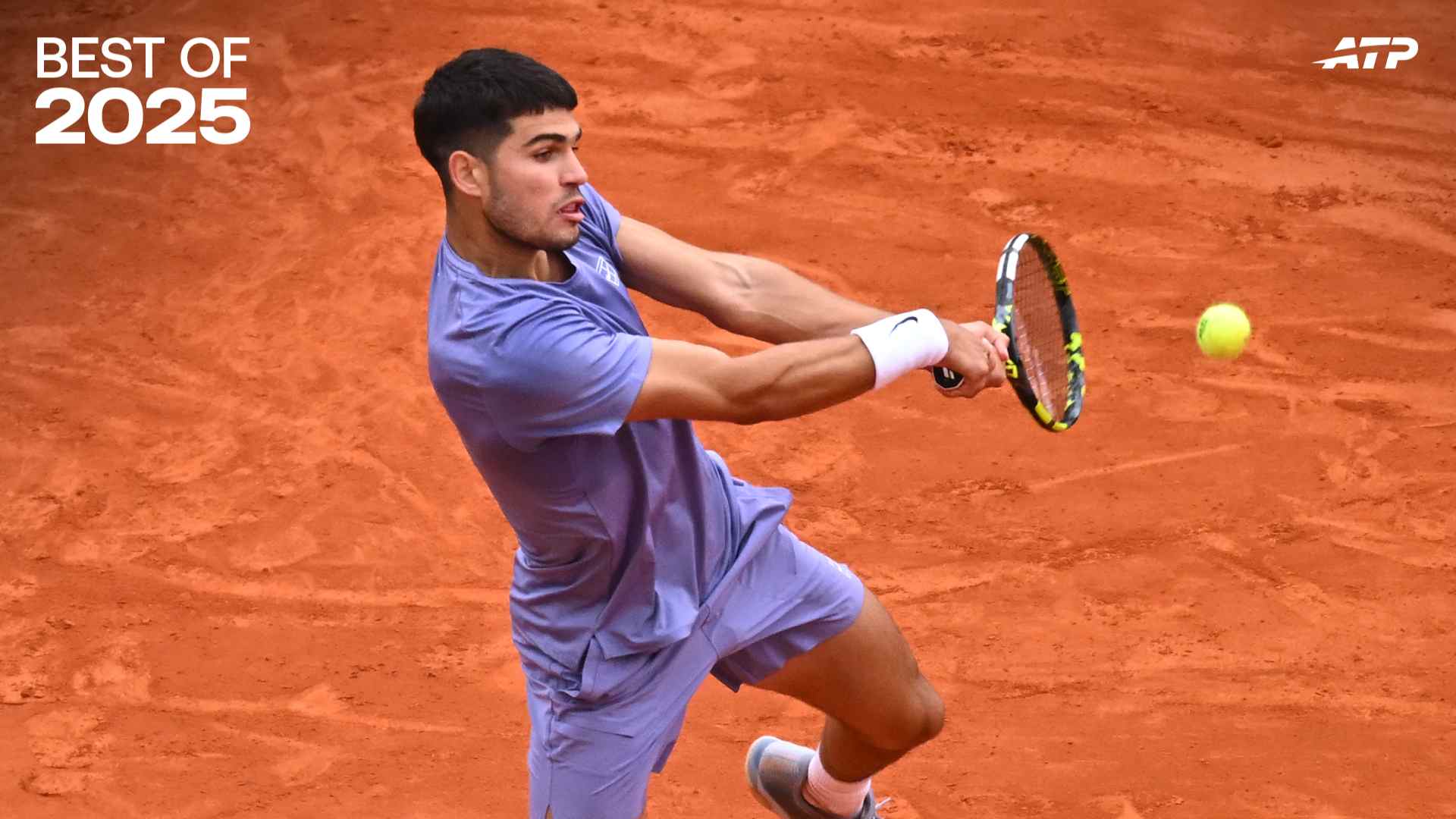
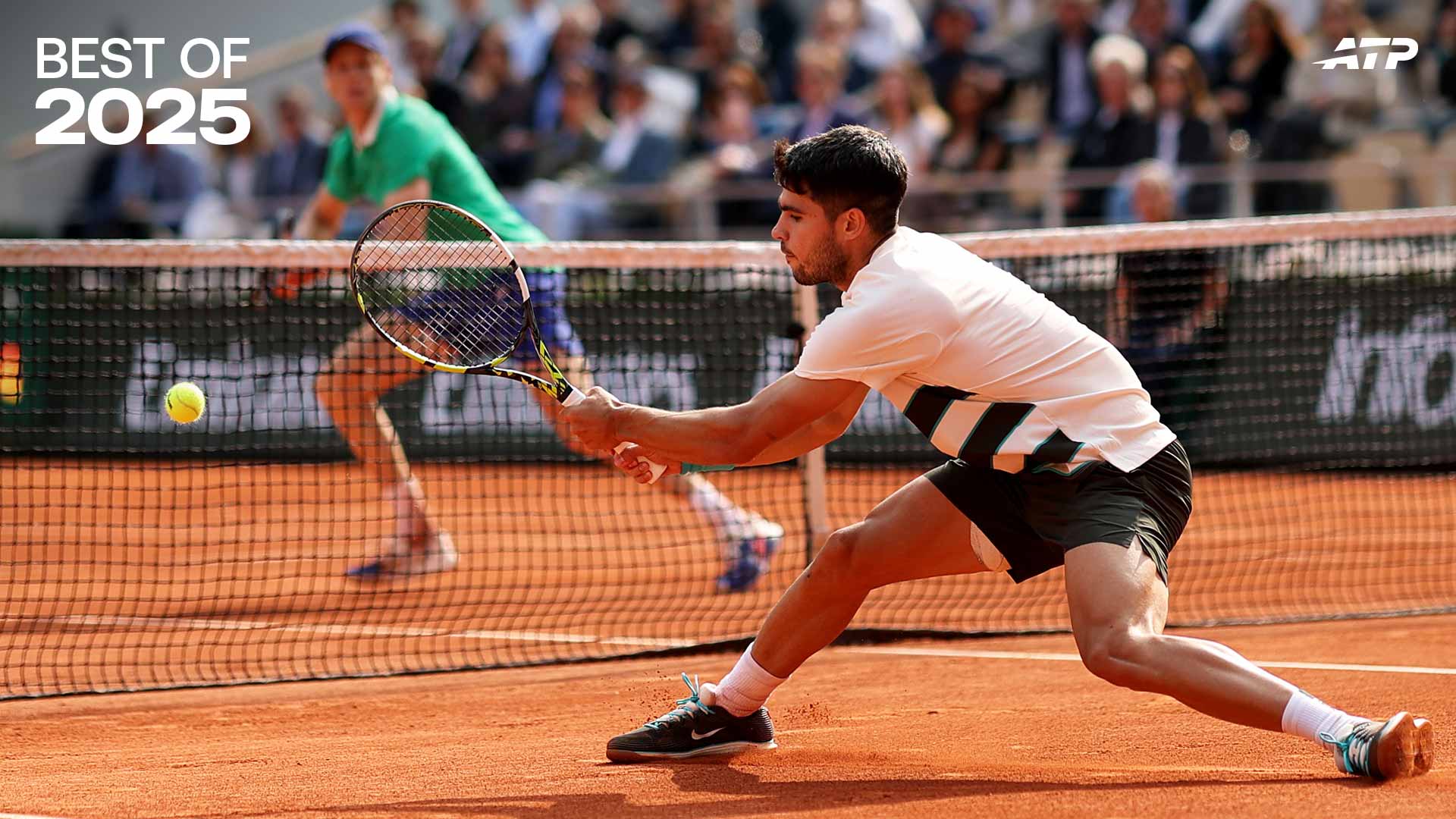
The season’s zenith unfolded in Roland Garros’s final, a five-hour, 29-minute odyssey where Alcaraz clawed from two sets down against Jannik Sinner on Court Philippe-Chatrier’s clay. Trailing 4-6, 6-7(4), the Spaniard stared down three championship points at 3-5, 0/40 in the fourth, holding with gritty underspin serves before breaking back to force a 6-4, 7-6(3) turnaround. Sinner’s flat returns and crosscourt depth kept the pressure vise-tight, but Alcaraz’s momentum flips—via heavy topspin forehands and varied slice approaches—intensified in the first fifth-set tie-break finale there, ending 7-6(10-2) on a forehand pass winner that dropped him to the dirt in awe.
“When the situations are against you, you have to fight and keep fighting,” Alcaraz reflected in his post-tournament press conference. “It is a Grand Slam final. it’s no time to be tired. it’s no time to give up. it’s time to keep fighting, trying to find your moment, your good place again, and just go for it. I think the real champions are made in situations when you deal with that pressure, with those situations, in the best way possible.”
As the third Open Era player to save title points en route to a Slam crown, Alcaraz’s rally not only etched this as tennis’s pinnacle but hinted at rivalries that will drive the next era, where clay’s demands forge unbreakable wills amid global tours.