Zverev questions slower courts tilting tennis toward Sinner and Alcaraz

Pushing through a toe injury in Shanghai, Alexander Zverev voices frustration over surfaces that seem designed to boost the top two stars, eroding the sport’s stylistic edges.
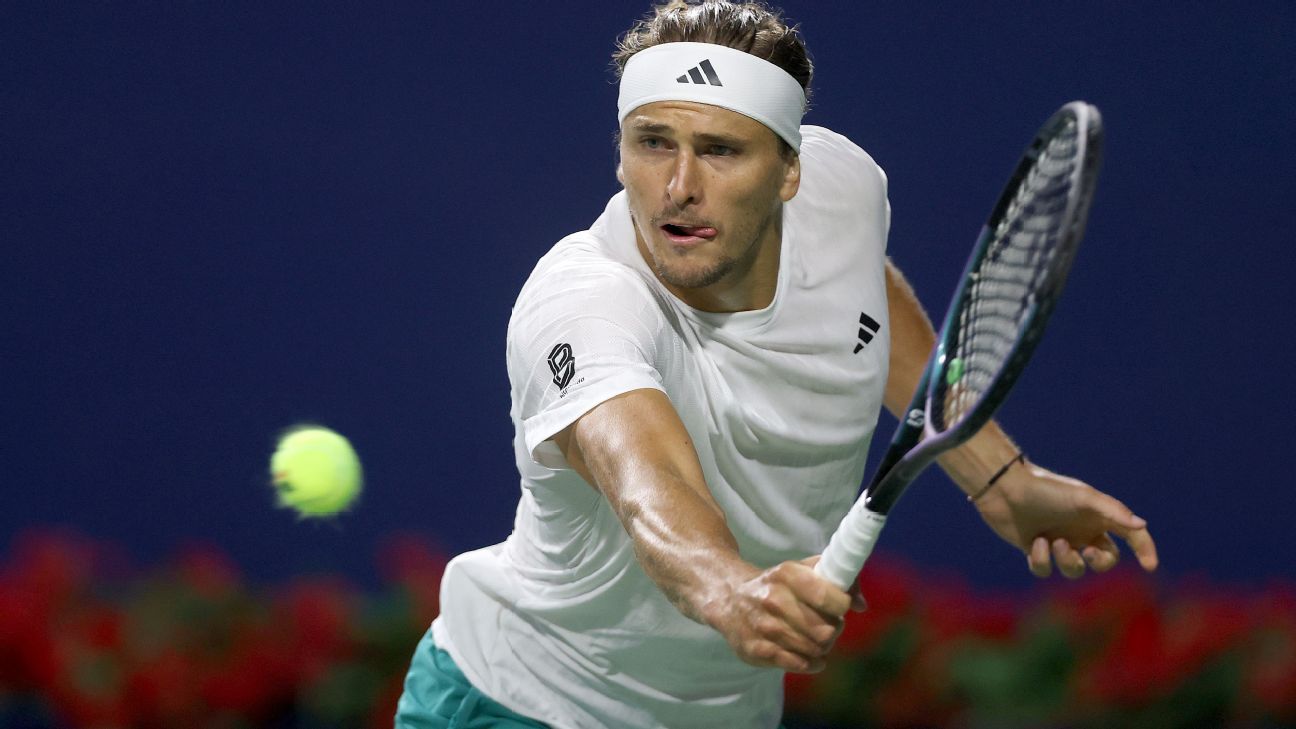
In the steamy confines of Shanghai’s Qizhong Forest Sports City Arena, Alexander Zverev grinded out a 6-4, 6-4 win over Valentin Royer, his baseline precision cutting through the humid air to secure another round at the Masters 1000. The world No. 3 absorbed the crowd’s energy, converting break points with deep crosscourt forehands that pinned his opponent wide, but a sudden wince at 5-4 in the second set halted the momentum. Treated courtside for a twisted toe, he returned with fresh tape and resolve, holding serve to close the match amid rising tension.
Injury amplifies deeper frustrations
Zverev’s limp emerged from an awkward landing during a routine serve, the pain sharp enough to draw concerned murmurs from the stands. He powered through, relying on flat backhands down-the-line to disrupt Royer’s rhythm, yet the scare echoed a season plagued by setbacks that have chipped at his confidence. Post-match, he reflected on the physical toll, his voice steady but edged with weariness.
“I landed funny on my toe, and after that I could barely do a step, so we’ll see what it is,” he said. “We will see if I will ever be healthy this year again, because it’s been a struggle, but I’m happy to be through.”
This vulnerability intertwined with broader discontent, as Zverev turned his gaze to the courts themselves, sensing a deliberate shift in the game’s fabric.
Slower surfaces favor baseline grinders
The German’s on-court interview laid bare his critique of decelerating hard courts, which he believes tournament directors engineer to suit Carlos Alcaraz and Jannik Sinner. These conditions extend rallies, rewarding their explosive retrievals and precise one–two patterns—serve into a heavy topspin approach—that thrive on extra ball hang time. Zverev, who favors quicker bounces for his aggressive inside-out forehands and net rushes, finds his style muted, forcing longer constructions from deeper positions.
“I hate when it’s the same, to be honest,” Zverev said. “I think the tournament directors are going towards that direction because, obviously, they want Jannik and Carlos to do well every tournament, and that’s what they prefer. Nowadays, you can play almost the same way on every surface. I don’t like it. I’m not a fan of it. I think tennis needs different game styles, tennis needs a little bit of variety, and I think we’re lacking that right now.”
His words, delivered under the arena lights, captured a player’s pushback against homogenization, where slice approaches and varied paces once defined matchups but now yield to endurance battles.
Top duo’s shadow looms large
Since June 2024, Alcaraz and Sinner have monopolized the No. 1 ranking, splitting this year’s four Grand Slams with clinical dominance—Sinner lifting the China Open trophy last week, Alcaraz the Japan Open before sidelining himself with a left ankle injury. Their absence or presence reshapes draws, pressuring chasers like Zverev to adapt on surfaces that amplify their strengths, from Alcaraz’s inside-in backhand winners to Sinner’s unerring crosscourt returns. The world No. 3 senses this tilt compressing opportunities for stylistic outliers, turning tournaments into tests of attrition.
As Shanghai’s later rounds beckon, Zverev’s resolve hardens, his toe taped but his critique ringing clear—a call to restore surface diversity that could unlock fresh rivalries and ease the mental strain on the tour’s resilient underdogs. With the ATP calendar compressing toward its climax, his voice hints at a brewing pushback, one that might redefine how the game evolves beyond the top two’s grip.