Zverev powers into Wimbledon final after Fery victory

Fresh off his French Open breakthrough, Alexander Zverev dismantled Arthur Fery’s surprising run and now faces the task of chasing a second straight major title against Jannik Sinner.
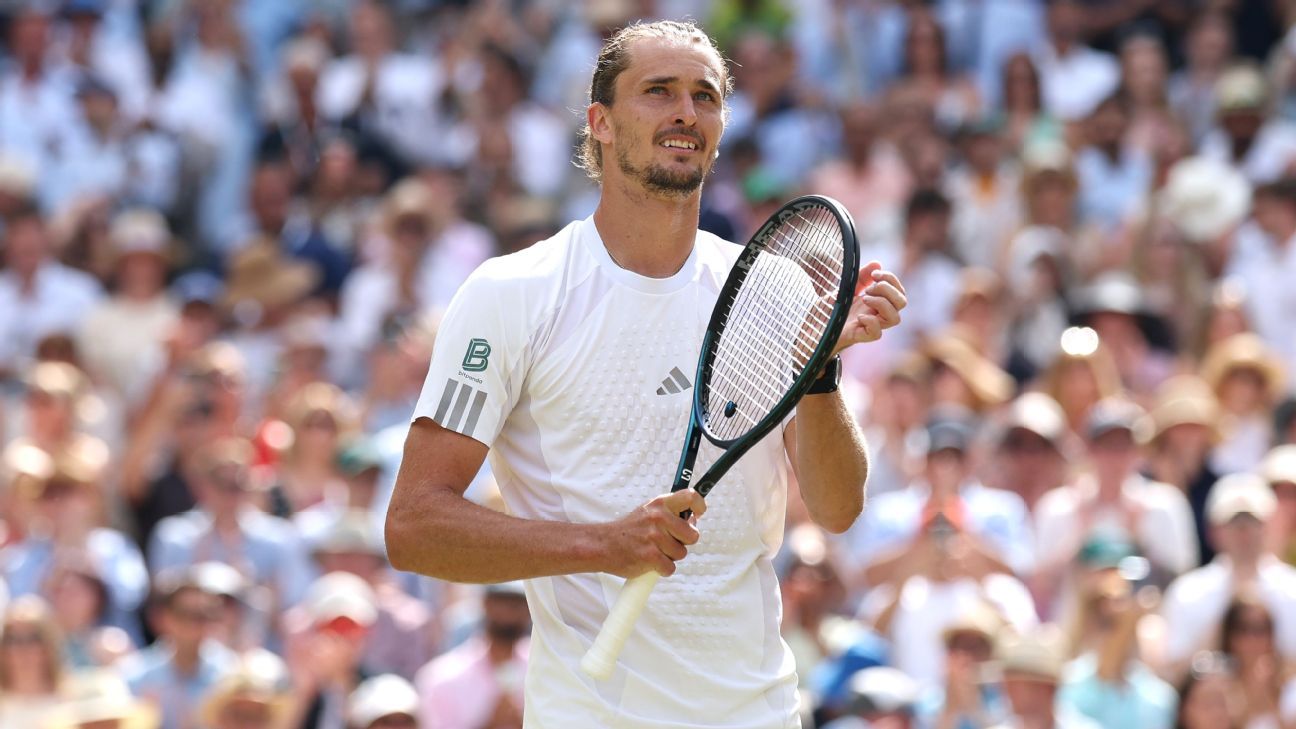
Alexander Zverev will contest a second consecutive Grand Slam final after overpowering British wild card Arthur Fery in straight sets at the All England Club. The 29-year-old German controlled the semifinal with a 7-6 (0), 6-2, 6-4 win that ended the local player’s run and set up a meeting with defending champion Jannik Sinner. Warm conditions and a light breeze shaped play on a day when serve placement proved decisive.
Confronting history on grass courts
Previous fourth-round exits had raised questions about Zverev’s movement on the faster surface. This fortnight those doubts faded behind a serve that reached 139 mph and a willingness to step inside the baseline on second balls. The 85-degree warmth forced constant recalibration of toss height and footwork, yet the German used the conditions to shorten points whenever possible.
In Sunday’s final Zverev will meet defending champion Jannik Sinner who beat seven-time Wimbledon winner Novak Djokovic 6-4, 6-4, 6-4. No man since 1968 has captured a second title at the very next event, and that statistic traveled with every practice session. Zverev spoke of keeping the same daily routine while trusting preparation over sudden external demands.
This Grand Slam has always been the one that I struggled with the most and all of a sudden I’m in the final of Wimbledon. We got one more match to go on Sunday and that’s what the focus is on.
The 114th-ranked Fery, who grew up five minutes from the All England Club, had aimed to become the first wild card to reach the final since 2001. Zverev absorbed the pro-Fery atmosphere without letting it dictate tempo, later noting that 99.99 percent of the stadium leaned the other way yet the support remained fair.
Serve patterns exploit grass speed advantages
The 6-foot-6 frame allowed Zverev to generate deliveries that skidded low and forced Fery into defensive positions from the opening game. Fery answered with serves near 120 mph, yet the 5-foot-9 returner struggled to find the same depth on the slick surface. An early double fault from the British wild card handed Zverev the first-set tiebreak at 7-6 (0), where flat first serves down the middle pinned Fery behind the baseline.
Once the opening set was secured, Zverev shifted to an aggressive 1–2 pattern that started with heavy slice serves and finished with inside-out forehands that pulled Fery wide. The crosscourt angle opened space down the line for the follow-up shot, a tactic less effective on the slower clay at Roland Garros. Temperature and breeze carried topspin shots slightly farther than on indoor courts, but Zverev kept the ball deep enough to limit Fery’s time.
Chair umpire Marijana Veljovic twice asked spectators to hold reactions until the end of points, yet the German never released control across the final two sets. When the match ended, Fery walked off to a standing ovation while Zverev reflected on the quality of the crowd.
Preparing for Sinner on Sunday
Becker, the three-time Wimbledon champion, wished Zverev “congratulations” in German on X: “Glückwunsch Sascha !!!,” using the player’s nickname. That message captured the historical thread for German players at the All England Club, where the last final appearance before this run came in 1995. Zverev has already shown he can reset expectations mid-tournament.
The schedule offers little recovery time, yet both finalists have spent the spring refining high-tempo baseline patterns that now transfer to faster courts. Zverev noted the need to believe in his own patterns rather than mirror the champion’s rhythm. Trusting the inside-out forehand and the one–two combination off the serve has become the mental anchor after the Roland Garros triumph. Two days remain before the final, where every tactical choice from the Fery match will be recalibrated against a taller, more experienced opponent.