WTA Finals preview: Gauff’s defense meets American firepower

In Riyadh’s arena, Coco Gauff chases a repeat as a resurgent U.S. contingent collides with global heavyweights, where hard-court tactics and late-season momentum will decide the year’s final champion.
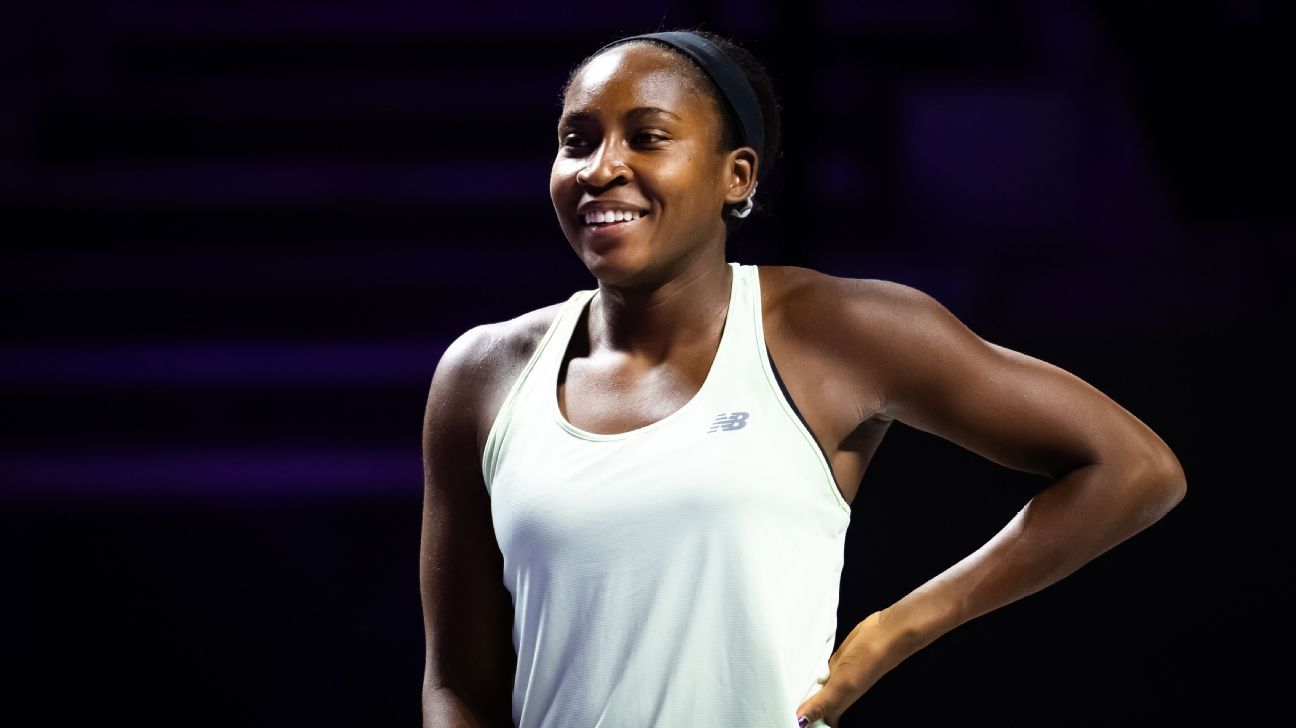
The 2025 WTA Tour delivered a season of commanding performances from established stars, breakthroughs by rising talents, and unexpected triumphs that kept fans on edge until the very end. Now, the spotlight shifts to Riyadh for the WTA Finals, where the elite eight singles players and eight doubles teams will battle for the year’s closing crown. Hosted somewhat controversially in Saudi Arabia, the event begins Saturday with round-robin matches across six days, culminating in semifinals and a November 8 final, all for a $15.5 million prize pool and up to 1,500 ranking points for undefeated victors.
Gauff rebuilds confidence for title defense
Coco Gauff enters as the defending champion, her journey marked by a second major singles victory at the French Open but shadowed by serve woes and a coaching change just before the US Open. The 21-year-old world No. 3 regrouped after a fourth-round exit in New York, training in Florida before a strong Asian swing that saw her reach the China Open semifinals and claim the Wuhan title without dropping a set, overcoming Jasmine Paolini in the semis and Jessica Pegula in the final. This late surge has restored her belief, positioning her to navigate the psychological weight of repeating—a feat last achieved by Serena Williams in 2013 and 2014.
In the Stefanie Graf Group with Aryna Sabalenka, Pegula, and Paolini, Gauff’s speed and crosscourt patterns will test against power baselines, her one–two combinations key to disrupting rhythms on the fast indoor hard courts. Americans fill half the singles field, the most qualifiers since 2003 and the largest competing contingent since 2002’s 16-player draw, when Serena Williams, Venus Williams, and Lindsay Davenport all withdrew due to injuries. This presence amplifies the stakes, blending national pride with individual arcs of resilience.
“This definitely gives me a lot more confidence going into the WTA Finals, after the way the mid-part of the season went for me, especially in New York,” Gauff said after Wuhan. “It gives me a lot of confidence to try to defend that title. Obviously, winning it last year, I know how tough it is to do, so I’m just going to take it match by match and hopefully I can end up with the trophy.”
Amanda Anisimova makes her debut at a career-high No. 4, fresh from her first major final at Wimbledon, a US Open runner-up finish, and 1000-level titles in Qatar and China, her flat groundstrokes and inside-in forehands thriving on hard-court pace. Pegula, in her fourth straight Finals after semifinals in New York and Beijing plus a Wuhan final, brings steady returns and improved net play, drawing on her 2023 runner-up experience to counter group foes with underspin backhands.
Madison Keys returns for the first time since 2016, the 30-year-old Australian Open champion rested after an early US Open exit but primed with explosive serves and down-the-line winners that could spark upsets in the Serena Williams Group alongside Iga Swiatek, Anisimova, and Elena Rybakina. Keys’ flat-hitting suits the surface’s low bounce, her potential to channel rest into deep runs underscoring the American blend of experience and firepower.
Sabalenka eyes first Finals triumph
Aryna Sabalenka has locked in her second straight year-end No. 1 ranking, holding a 1,675-point lead over Swiatek after her US Open victory and Wuhan semifinal upon returning from a break, making it impossible for the Pole to catch despite her Wimbledon title and Korea Open win that briefly narrowed the gap to under 3,000 points. The 27-year-old enters her fifth consecutive Finals seeking her first title after a 2022 final appearance, her season of Australian and French Open finals plus Wimbledon semis fueled by thunderous serves and inside-out forehands that dominate big stages. Even with the top spot secured, her hunger sharpens the focus on Riyadh’s tactical demands, where varying slice approaches could unsettle defenders like Gauff.
Swiatek, the 2023 champion, arrives eager to close strongly despite the rankings setback from Beijing’s round-of-16 exit and Wuhan’s quarterfinal loss, her heavy topspin and crosscourt counters poised to control tempo against Anisimova’s power or Keys’ aggression. Though reclaiming No. 1 eludes her this year, these matches serve as a prelude to 2026 rivalries, her one–two patterns pressuring backhands in early rallies to build leads. The global clash in groups promises intensity, with Sabalenka’s consistency meeting Swiatek’s depth on courts where precision trumps endurance.
Paolini and Rybakina earned their spots with late pushes; Paolini, the only player in both draws, reached Beijing and Wuhan semifinals after her Italian Open title and Cincinnati final, her versatile flat shots and drop shots adding variety after beating Gauff in prior encounters. Rybakina, the 2022 Wimbledon winner, overtook Mirra Andreeva by over 400 points last week via a Ningbo title and Japan Open semifinals, her clean striking and precise serves peaking amid personal challenges to probe angles down-the-line. Both bring rhythm into a format where momentum can propel underdogs forward.
Doubles duos chase repeat rarity
The doubles field mirrors singles’ drama, with Gabriela Dabrowski and Erin Routliffe defending their title after a US Open major win but facing momentum hurdles—a Beijing first-round loss together, plus Routliffe’s Wuhan second round with Leylah Fernandez and Dabrowski’s Tokyo quarterfinals with Sofia Kenin. Repeating remains rare, last done by Timea Babos and Kristina Mladenovic in 2018 and 2019, with Babos now eyeing a fourth crown alongside Luisa Stefani after their fourth final in Ningbo, their reflex volleys countering aggressive returns.
In the Martina Navratilova Group, Sara Errani and Jasmine Paolini arrive as French Open champions with three 1000-level titles including China, their quick poaches and Paolini’s court coverage adapting clay synergy to hard-court speed against Veronika Kudermetova and Elise Mertens’ baseline solidity or Su-wei Hsieh and Jelena Ostapenko’s lobs. Asia Muhammad debuts with Demi Schuurs after Indian Wells and Queen’s wins, their overhead smashes suiting the surface for American representation alongside Taylor Townsend’s second straight appearance.
The Liezel Huber Group pits Katerina Siniakova and Taylor Townsend, Australian Open winners with Dubai and a US Open final, against the defenders; Siniakova’s 2021 Finals success with Barbora Krejcikova pairs with Townsend’s July No. 1 doubles rise, her four titles in six finals plus singles US Open fourth round and French mixed final adding flair through net-rushing one–twos. Mirra Andreeva and Diana Shnaider bring youthful power, while the top pairs’ tactical adjustments—from crosscourt passing shots to varied serves—will decide advances, rewarding those who harness the season’s pressures into unified play. As the round-robin unfolds, these encounters in Riyadh’s charged atmosphere blend raw athleticism with strategic depth, foreshadowing bold shifts for the tour ahead.