Sinner repeats while Noskova breaks through on Wimbledon grass

The 2026 champions turned a compressed calendar into an edge on the fast lawns, where precise pattern changes decided the titles.
Wimbledon unfolded once more as the third tournament on the Grand Slam tennis circuit every year, taking place after the Australian Open and French Open but before the US Open. First held in 1877, Wimbledon takes place annually at the All England Lawn Tennis and Croquet Club in London. The 2026 edition ran from June 29 through July 12, squeezing recovery windows and forcing quick resets on a surface that punishes hesitation.
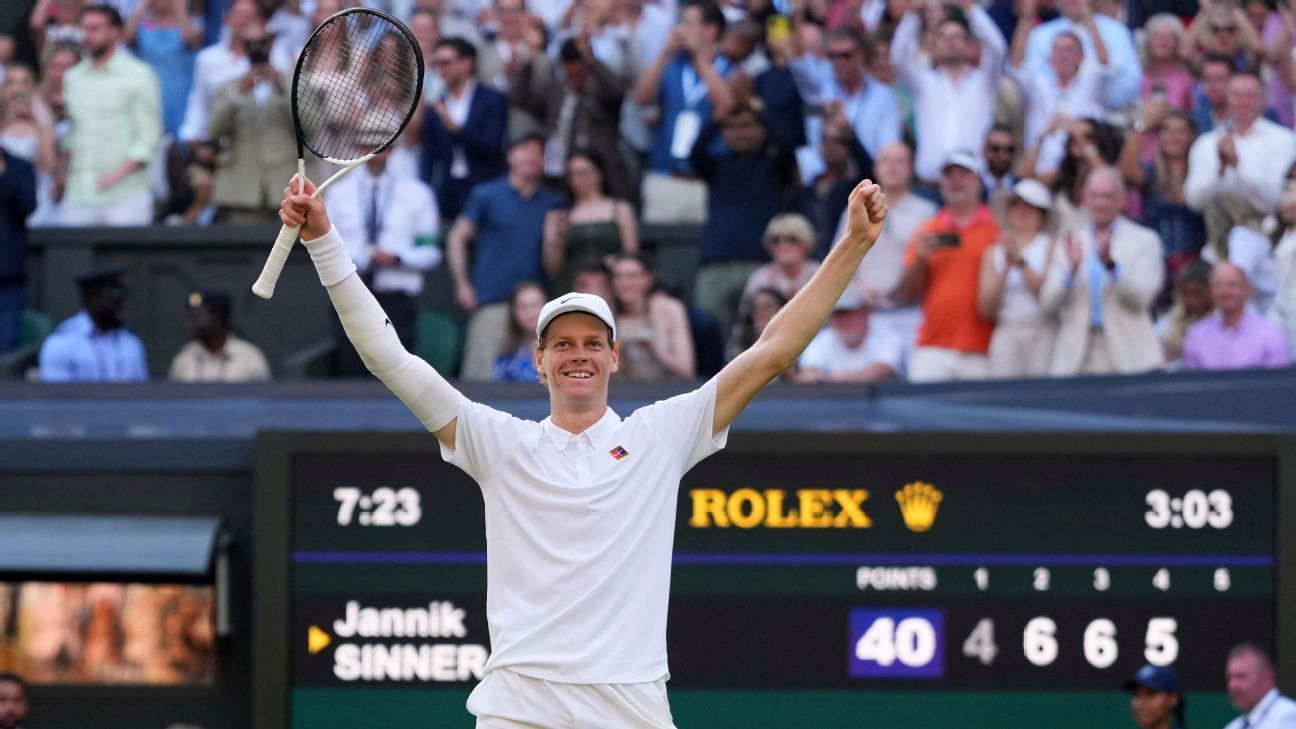
Sinner shifts patterns against Zverev power
Jannik Sinner arrived with the weight of back-to-back title defenses already on his shoulders after claiming the crown in 2025. He leaned on crosscourt heavy topspin to pull Alexander Zverev wide before stepping inside for down-the-line winners, a 1–2 sequence refined during the hard-court swing. The Italian reduced unforced errors on slice approaches, letting the grass slow Zverev’s first-strike attempts just enough for counterpunching opportunities.
Crowd murmurs rose each time Sinner changed direction mid-rally, turning defensive positions into offensive transitions. Surface considerations mattered most in the middle sets where Sinner mixed underspin to disrupt rhythm, forcing the German into higher error counts on second-serve returns. The adjustment paid dividends as rallies shortened on the faster courts.
Noskova disrupts Muchova timing on lawns
Linda Noskova defeated Karolina Muchova in the final, converting key inside-out forehands when the rallies stretched longest. She used aggressive inside-in forehands to take time away from Muchova, whose movement thrives on slower clay but required extra split steps here. The Czech player’s slice backhand kept balls skidding, limiting Muchova’s ability to set up her trademark variety.
Tactical shifts appeared in the second set when Noskova began serving wider on the ad side, opening crosscourt angles for her next ball. Matchup specifics favored the younger player once the rallies extended, as Noskova’s fitness allowed her to maintain depth while Muchova’s errors climbed. The final score reflected those small edges compounding across three sets.
Season arc shapes final-week resolve
Pressure builds across the spring swing. Roger Federer leads the all-time men’s field with eight victories while Martina Navratilova sits at the front of the women’s field with nine titles. Those records frame the expectations that followed every defending champion into London. Grass rewards adjustments under fatigue tennis schedules leave minimal margin once the European swing begins.
Players who tweak slice and underspin early in the fortnight gain an edge when legs tire. Noskova’s path featured similar tactical shifts against opponents who preferred flat exchanges. She absorbed pace on the return and redirected with inside-in angles that opened the court for her next ball. The crowd noise at the All England Club rose noticeably during these extended exchanges, adding another layer to the concentration required.
men’s and women’s tours both emphasize consistent results across the four majors. The 2026 champions had already logged deep runs at earlier events, leaving them with shorter recovery periods before the grass began. Their success hinged on recognizing when to shorten points rather than extending them against fresher legs. Historical parallels appear throughout the champions list.
Novak Djokovic collected multiple titles by varying serve placement and staying compact on the return. Carlos Alcaraz used the same surface to unleash aggressive inside-out patterns that overwhelmed earlier opponents. Each era’s winners adapted to the same mental demands that 2026 presented again. Further back, Bjorn Borg strung together five consecutive victories by maintaining rhythm on both wings.
Pete Sampras relied on serve-volley patterns that shortened points before fatigue set in. The list continues with names such as Rod Laver and Roy Emerson who balanced power and placement across multiple surfaces. Their stories illustrate how the psychological load compounds when a player reaches multiple finals in one season. More recent entries show the same pattern.
Andy Murray broke through by adding variety to his backhand slice. Serena Williams dominated by dictating with heavy crosscourt pressure that pinned opponents wide. Each champion managed the calendar’s demands while preserving enough mental freshness for the final weekend. The 2026 results extended that lineage.
Additional names from the record book reinforce the point. Martina Navratilova ’s nine titles came against fields that demanded constant tactical evolution. Roger Federer ’s eight crowns reflected an ability to reset between matches despite the cumulative toll. Today’s players face an even denser schedule, yet the same principles of recovery and pattern recognition remain decisive.
Looking ahead, the remaining majors will test whether the new champions can sustain the adjustments that worked on grass. The men’s and women’s tours move next to hard courts where different movement patterns dominate. Success there will depend on how well the lessons from London translate under fresh conditions. tennis updates flow through ESPN’s men’s and women’s hub pages covering breaking news and tournament previews.