Sinner eyes repeat while women’s draw stays wide open

Defending champion Jannik Sinner returns after Paris disappointment, yet the absence of his main rival leaves room for others while the women’s side offers no clear favorite on grass.
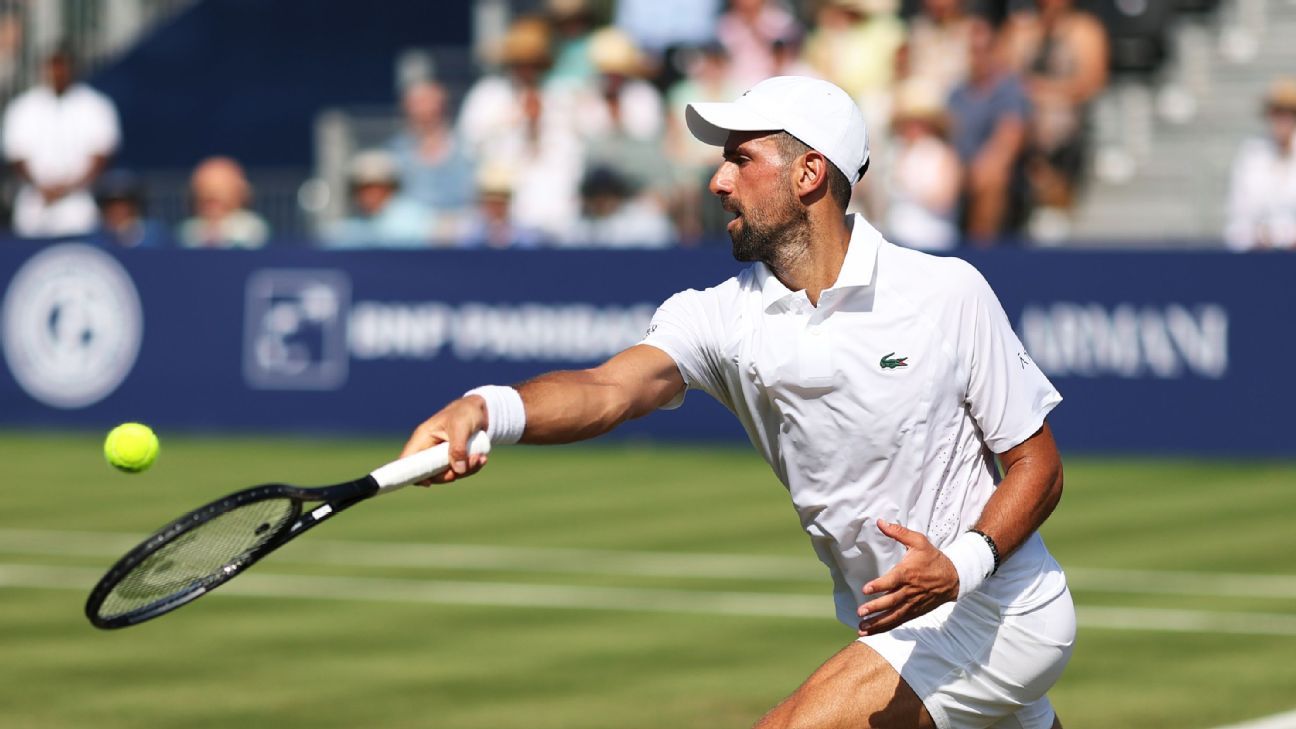
Wimbledon kicks off Monday with defending champions Jannik Sinner and Iga Swiatek in the field. With Carlos Alcaraz out of the tournament with injury, could Sinner pull off a repeat? Or will Novak Djokovic (4a27bb1c-2422-55c3-208b-9e9d8c1f30af) add that final record title to his résumé? The weight of a full year’s dominance presses on every player stepping onto the grass, where small mental slips can stretch into long sets under the open skies.
His early round exit in Roland Garros was a massive shock to the tennis world but I don’t think we’ll see that in back-to-back Grand Slams. Before RG, Sinner was so dominant on tour that players were struggling to take sets off him.
Season fatigue tests early resilience. Jannik Sinner (431a1bce-57de-2a02-8022-9f32b0f60efb) carries the clearest psychological arc after his early round exit in Roland Garros. That loss still echoes because it arrived at the peak of an otherwise unbreakable run. Experts note the Italian looked recharged in an exhibition hit, yet the memory of heat-induced fatigue lingers as temperatures climb again in week two. His one–two patterns and heavy crosscourt forehands will need to land with the same conviction that defined the spring swing.
Women’s field absorbs wide-open tension
On the women’s side the pressure narrative spreads across several contenders who have absorbed recent disappointments. Aryna Sabalenka arrives with a chip after Paris and Berlin, her transition game sharpened by work with Max Mirnyi. Jessica Pegula carries an “if not now, then when” mindset at 32, while Coco Gauff and Madison Keys seek to convert solid German grass results into deeper All England Club runs.
This is tough. There isn’t an obvious choice here, and none of the recent front-runners have had runaway success on grass thus far this season. Swiatek lost in the opening round of her lone tuneup event on the surface in Bad Homburg. D’Arcy Maine reluctantly backs Sabalenka for her proven major consistency, yet acknowledges the volatility that has touched Elena Rybakina and Mirra Andreeva. The absence of a single dominant grass force turns every early service hold into a statement of intent. Keys, with her proven grass résumé, could spring a shock if health holds through the draw’s middle rounds.
Bill Connelly swings toward Pegula, whose 8-6 Wimbledon history includes a strong 2023 surge. Her draw shares a quarter with Gauff, whose own recent All England record sits at four wins across multiple visits. The second-best odds of reaching the semifinals sit behind only Sabalenka at 46.1 percent, creating a tangible window for the American to translate baseline movement into net approaches that finish points quickly. Long-shot paths reveal hidden resolve. Simon Cambers highlights the two players in form on grass, Pegula and Madison Keys, with the latter’s experience offering the better chance of a surprise run. Novak Djokovic retains semifinal danger despite the half shared with Sinner. Ben Shelton, Frances Tiafoe and Tommy Paul have each honed grass-court games that reward first-strike tennis and tiebreak composure.
Serve patterns shape recovery windows
Pamela Maldonado favors Iga Swiatek (+750) because her projected path delays true power servers until late. The movement and return game that carried the Pole through clay should still disrupt opponents who prefer short points. Andre Snellings likes any American woman (+240) given the unique champion pattern since Serena Williams won in 2015 and 2016. Gauff (+1100), Pegula (+1200), Keys (+1400), Amanda Anisimova (+1300), Emma Navarro (+6000) and even Williams (+3500) all keep the group live. Snellings backs Jannik Sinner (-165) to defend, noting the Italian looked sharp in an exhibition during the London heat wave. Maldonado selects Novak Djokovic (+600) for a draw that keeps elite opponents until the semifinal. Rybakina (+600) earns Maldonado’s nod for her flat groundstrokes and serve built for grass. Sabalenka to reach the semifinal (+180) offers value because Andreeva and Karolina Muchova have never advanced past the quarterfinal here since 2021.
Round 1: Marin Cilic +4.5 games versus Daniil Medvedev appeals because the veteran’s serve can stretch matches into tiebreaks. Taylor Fritz to make the semifinal (+350) rests on his recent dominance over Alexander Zverev and proven mobility on the surface. Naomi Osaka at 30-1 carries first-strike upside if her serve percentage stays above 80. Donna Vekic to win (+4000) follows her Queen’s Club title, while Fritz (+2000) and Tiafoe (+4000) represent long-shot paths through a bottom half that rewards big serving and ugly wins. All odds via DraftKings Sportsbook as of time of publication. The psychological threads running through these picks show players balancing recent scars with the unique demands of grass, where quick transitions and mental resets decide who lifts trophies and who absorbs another near miss. Her transition game has become much more comfortable and that will be hugely important on the grass. Aryna Sabalenka (c91d133a-526a-ea8d-654c-7ef6915ad63b) enters with a refined approach after working with Max Mirnyi (dccd92f0-a954-4997-98b4-351c49345bf6) on net approaches. She now mixes inside-out forehands with shorter slice approaches that pull opponents wide before she closes. This adjustment shifts her from baseline rallies into one-two combinations that finish points faster on the low-bouncing surface. Sabalenka refines net approaches for grass. Her improved movement into the forecourt allows her to take time away from returners who prefer longer exchanges. On serve she varies placement between wide serves and body serves to set up crosscourt patterns that open the court. The result is fewer extended rallies and more opportunities to dictate with first-strike tennis. Jessica Pegula (63f9c1e5-14bd-003f-c269-31543931ad1d) benefits from a quarter that places her against opponents whose recent grass results sit below her own. She holds an 8-6 career mark at the All England Club yet four of those victories arrived during her 2023 run. Tennis Abstract projects her semifinal odds at 46.1 percent, second only to Sabalenka after their recent grass meeting. Pegula constructs points with heavy crosscourt groundstrokes that exploit the wider doubles alleys on grass. She follows aggressive inside-in forehands with slice backhands that skid low and force defensive replies. This sequence keeps her inside the baseline and reduces the number of defensive slides required on the slick surface. Coco Gauff (ca44c2b0-9dea-ab40-2541-b50a4442ff8e) and Madison Keys (63d63db4-882a-e1c0-6866-76a42b089c46) share the same section yet both carry modest historical results beyond the fourth round. Pegula’s ability to close points with compact swings gives her a measurable edge in shorter exchanges that grass tends to produce. Sinner manages heat and recovery cycles. Jannik Sinner returns after an early round exit in Roland Garros that exposed vulnerabilities to prolonged heat exposure. He has since competed in an exhibition under similar temperatures and maintained clean execution on serve and forehand patterns. The cooler first-week forecast in London reduces immediate risk while his team monitors second-week climbs into the high seventies. His baseline game relies on heavy topspin that bites into the grass and creates awkward bounce angles for returners. Sinner mixes flat serves down the middle with wide kick serves to disrupt rhythm before stepping inside the baseline for inside-out forehands. This 1–2 pattern limits opponents to defensive positions and preserves his own movement economy across longer matches. Novak Djokovic waits in the same half yet must navigate a semifinal path that likely includes Sinner. Djokovic still generates the most effective slice backhand on the tour and uses it to change direction mid-rally. His experience allows him to absorb pace and redirect down-the-line when opponents overcommit to crosscourt exchanges. Ben Shelton (2358bec1-f6f0-3540-a37e-13bc322d2c08) occupies the opposite half and carries grass momentum from Stuttgart. His serve reaches speeds that compress return windows and force hurried footwork. Shelton follows big first serves with flat forehands that penetrate the court before opponents settle. Taylor Fritz (6493155f-cacc-7aa5-ba78-d952efa4c652) faces Jack Draper in an early test of serve dominance. Fritz has won seven straight meetings against Alexander Zverev (fd06b6ea-593b-d5b3-da2b-767ec3e4232c) including a recent grass semifinal. His ability to win tiebreaks through consistent first-serve percentages positions him for deep runs when margins stay tight. Pegula leverages draw odds for semifinal push. Bill Connelly selected Pegula partly because her German grass results translate better than recent form from other contenders. She faces no immediate power server in the opening rounds and can build rhythm through controlled baseline exchanges. The 32-year-old recognizes this as a window where consistent execution outweighs raw ranking position. Elena Rybakina (ae8f3eaf-8166-d650-d429-6200edef59fd) remains a threat despite uneven recent results. Her flat groundstrokes and high first-serve percentage create short points that suit the surface. Rybakina rarely needs extended rallies and instead relies on precise placement that limits defensive recovery time. Mirra Andreeva (734dd570-209d-349d-8de8-7ce7c9206163) arrives as French Open champion yet holds limited grass history beyond the quarterfinal stage. The shift from clay to grass demands quicker directional changes and shorter swing paths that she has not yet refined under match pressure. Donna Vekic (6bd0bac4-145f-3e8b-5662-5400e42ef102) enters after a Queen’s Club title that sharpened her timing on low balls. She has reached six grass finals across her career and uses that familiarity to construct points around her own serve placement rather than reacting to opponents. Frances Tiafoe (f901758a-d8f2-442c-9cd3-44513fcbf31e) carries a 7-1 grass record this season and defeated Fritz in the Halle final. His improved movement allows him to cover the wider angles created by grass bounces while maintaining aggressive return positioning. Tommy Paul (8965d2eb-1419-a6e6-5d3f-573b8b0bc565) and other Americans have developed reliable grass games through repeated exposure. Their collective ability to win ugly points in tiebreaks adds variance to an already open draw where small tactical edges accumulate over five sets. Marin Cilic (d24f948a-481d-75c9-9c3c-855364317760) faces Daniil Medvedev (469710ae-79d9-770e-e3b7-d71e5148642c) in a first-round matchup where veteran serve patterns can extend sets. Cilic’s experience on grass allows him to force tiebreaks even against superior baseline consistency from the younger player. Naomi Osaka (4b888d90-ad54-6a80-8830-39cfcad473a1) returns with strong first-serve percentages above 80 percent in recent events. Grass amplifies the value of that statistic by shortening points and rewarding immediate aggression on second balls. Amanda Anisimova (223cc423-bf69-2077-800f-c38d0d1e79f7) and Emma Navarro (b55981dd-e99e-fcab-a794-57cf7be56e4d) add depth to American options while Serena Williams (cc4fbfff-5162-cb94-e0aa-500d3227a300) brings historical context at +3500. Each player’s path hinges on adapting swing length and footwork speed within the first week. Karolina Muchova (cc2cea69-f75c-09ea-f698-55b98e0a5b97) has not advanced past the first round since 2021 and faces the same surface transition challenge as Andreeva. Her variety works best when she can mix slice and topspin without rushing directional changes. The rankings math favors players who reach semifinals without facing multiple top-five opponents early. Sabalenka holds the clearest path in her quarter while Sinner controls the opposite side through consistent execution rather than raw power alone. The grass rewards players who recalibrate footwork and shot selection within the first two rounds. Her transition game has become much more comfortable and that will be hugely important on the grass. Aryna Sabalenka (c91d133a-526a-ea8d-654c-7ef6915ad63b) enters with a refined approach after working with Max Mirnyi (dccd92f0-a954-4997-98b4-351c49345bf6) on net approaches. She now mixes inside-out forehands with shorter slice approaches that pull opponents wide before she closes. This adjustment shifts her from baseline rallies into one-two combinations that finish points faster on the low-bouncing surface. Sabalenka refines net approaches for grass. Her improved movement into the forecourt allows her to take time away from returners who prefer longer exchanges. On serve she varies placement between wide serves and body serves to set up crosscourt patterns that open the court. The result is fewer extended rallies and more opportunities to dictate with first-strike tennis. Jessica Pegula (63f9c1e5-14bd-003f-c269-31543931ad1d) benefits from a quarter that places her against opponents whose recent grass results sit below her own. She holds an 8-6 career mark at the All England Club yet four of those victories arrived during her 2023 run. Tennis Abstract projects her semifinal odds at 46.1 percent, second only to Sabalenka after their recent grass meeting. Pegula constructs points with heavy crosscourt groundstrokes that exploit the wider doubles alleys on grass. She follows aggressive inside-in forehands with slice backhands that skid low and force defensive replies. This sequence keeps her inside the baseline and reduces the number of defensive slides required on the slick surface. Coco Gauff (ca44c2b0-9dea-ab40-2541-b50a4442ff8e) and Madison Keys (63d63db4-882a-e1c0-6866-76a42b089c46) share the same section yet both carry modest historical results beyond the fourth round. Pegula’s ability to close points with compact swings gives her a measurable edge in shorter exchanges that grass tends to produce. Sinner manages heat and recovery cycles. Jannik Sinner returns after an early round exit in Roland Garros that exposed vulnerabilities to prolonged heat exposure. He has since competed in an exhibition under similar temperatures and maintained clean execution on serve and forehand patterns. The cooler first-week forecast in London reduces immediate risk while his team monitors second-week climbs into the high seventies. His baseline game relies on heavy topspin that bites into the grass and creates awkward bounce angles for returners. Sinner mixes flat serves down the middle with wide kick serves to disrupt rhythm before stepping inside the baseline for inside-out forehands. This 1–2 pattern limits opponents to defensive positions and preserves his own movement economy across longer matches. Novak Djokovic waits in the same half yet must navigate a semifinal path that likely includes Sinner. Djokovic still generates the most effective slice backhand on the tour and uses it to change direction mid-rally. His experience allows him to absorb pace and redirect down-the-line when opponents overcommit to crosscourt exchanges. Ben Shelton (2358bec1-f6f0-3540-a37e-13bc322d2c08) occupies the opposite half and carries grass momentum from Stuttgart. His serve reaches speeds that compress return windows and force hurried footwork. Shelton follows big first serves with flat forehands that penetrate the court before opponents settle. Taylor Fritz (6493155f-cacc-7aa5-ba78-d952efa4c652) faces Jack Draper (ad748b23-89bf-3a17-ed66-f592fd6f2b0b) in an early test of serve dominance. Fritz has won seven straight meetings against Alexander Zverev (fd06b6ea-593b-d5b3-da2b-767ec3e4232c) including a recent grass semifinal. His ability to win tiebreaks through consistent first-serve percentages positions him for deep runs when margins stay tight. Pegula leverages draw odds for semifinal push. Bill Connelly selected Pegula partly because her German grass results translate better than recent form from other contenders. She faces no immediate power server in the opening rounds and can build rhythm through controlled baseline exchanges. The 32-year-old recognizes this as a window where consistent execution outweighs raw ranking position. Elena Rybakina (ae8f3eaf-8166-d650-d429-6200edef59fd) remains a threat despite uneven recent results. Her flat groundstrokes and high first-serve percentage create short points that suit the surface. Rybakina rarely needs extended rallies and instead relies on precise placement that limits defensive recovery time. Mirra Andreeva (734dd570-209d-349d-8de8-7ce7c9206163) arrives as French Open champion yet holds limited grass history beyond the quarterfinal stage. The shift from clay to grass demands quicker directional changes and shorter swing paths that she has not yet refined under match pressure. Donna Vekic (6bd0bac4-145f-3e8b-5662-5400e42ef102) enters after a Queen’s Club title that sharpened her timing on low balls. She has reached six grass finals across her career and uses that familiarity to construct points around her own serve placement rather than reacting to opponents. Frances Tiafoe (f901758a-d8f2-442c-9cd3-44513fcbf31e) carries a 7-1 grass record this season and defeated Fritz in the Halle final. His improved movement allows him to cover the wider angles created by grass bounces while maintaining aggressive return positioning. Tommy Paul (8965d2eb-1419-a6e6-5d3f-573b8b0bc565) and other Americans have developed reliable grass games through repeated exposure. Their collective ability to win ugly points in tiebreaks adds variance to an already open draw where small tactical edges accumulate over five sets. Marin Cilic (d24f948a-481d-75c9-9c3c-855364317760) faces Daniil Medvedev (469710ae-79d9-770e-e3b7-d71e5148642c) in a first-round matchup where veteran serve patterns can extend sets. Cilic’s experience on grass allows him to force tiebreaks even against superior baseline consistency from the younger player. Naomi Osaka (4b888d90-ad54-6a80-8830-39cfcad473a1) returns with strong first-serve percentages above 80 percent in recent events. Grass amplifies the value of that statistic by shortening points and rewarding immediate aggression on second balls. Amanda Anisimova (223cc423-bf69-2077-800f-c38d0d1e79f7) and Emma Navarro (b55981dd-e99e-fcab-a794-57cf7be56e4d) add depth to American options while Serena Williams (cc4fbfff-5162-cb94-e0aa-500d3227a300) brings historical context at +3500. Each player’s path hinges on adapting swing length and footwork speed within the first week. Karolina Muchova (cc2cea69-f75c-09ea-f698-55b98e0a5b97) has not advanced past the first round since 2021 and faces the same surface transition challenge as Andreeva. Her variety works best when she can mix slice and topspin without rushing directional changes. The rankings math favors players who reach semifinals without facing multiple top-five opponents early. Sabalenka holds the clearest path in her quarter while Sinner controls the opposite side through consistent execution rather than raw power alone.