Stan Wawrinka’s Final Season Burns with Competitive Fire

At 40, the Swiss veteran rejects a gentle farewell, launching his 25th ATP Tour year with a gritty United Cup upset that echoes his prime battles against the elite.
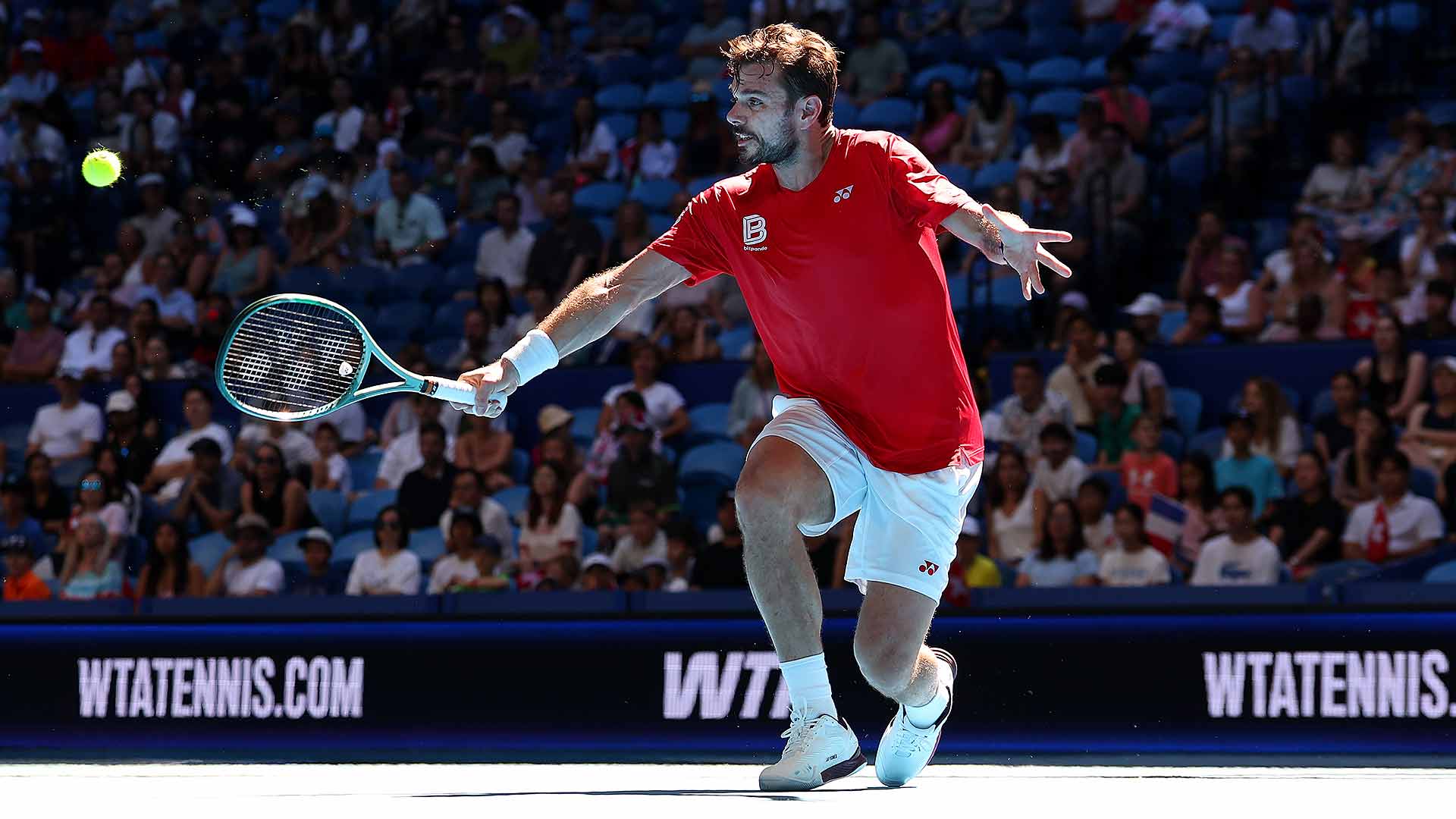
In Perth’s relentless heat, Stan Wawrinka extended a rally into the third-set tiebreak, his one-handed backhand slicing down the line to clinch a three-hour, 18-minute upset over Top 30 Frenchman Arthur Rinderknech. The 40-year-old rallied from a set down, his heavy topspin forehand forcing errors in the baking conditions of the United Cup. This 583rd career win marked the start of his 25th and final season, a declaration that 2026 will test limits rather than savor goodbyes.
The Swiss competitor, now ranked 157 after 29 ATP Challenger matches in 2025, eyes a Top 100 return at age 40. His approach mixes crosscourt returns with inside-out forehands, absorbing power before countering with slice backhands to disrupt rhythm. Longtime coach Magnus Norman watches the fire that fueled three straight Grand Slams from 2014 to 2016.
“I’m good with my decision to announce this is my last year, but I’m not doing a year just to say goodbye,” Wawrinka said. “I’m a competitor. I want to push my limit, I want to still fight against good players. I want to still win matches. I want to try to be back at the Top 100 at 40 years old.
Grinding through challengers sharpens the edge
Wawrinka thrives on the tough lifestyle, pushing physical and mental boundaries whether in a Napoli Challenger crowd or a major arena. The emotion of competition pulses the same on small courts as center stages, where his passion for the fight overrides the venue. Norman notes how last year’s Challenger grind rebuilt that edge, preparing for 2026’s varied surfaces from hard courts to clay.
His one-handed backhand, a weapon across eras, adapts with underspin to counter flat hitters or topspin loops on slower bounces. In Perth, he varied serve placement—kick serves wide followed by approach shots—to conserve energy against Rinderknech‘s baseline power. This tactical patience, honed over two decades, turns pressure into propulsion as rankings points beckon early in the year.
The final season’s schedule starts with team events like the United Cup, building momentum toward individual pursuits. Each win layers psychological armor, silencing doubts about twilight years while honoring the competitor who maximized every opportunity. Clay swings ahead will test those adjustments, where high-bouncing forehands demand precise redirection.
Reliving slams that forged unbreakable resolve
From Melbourne Park’s hard courts in 2014 to the red clay of Roland Garros in 2015 and the roaring US Open inside Arthur Ashe Stadium in 2016, Wawrinka’s majors etched a legacy of clutch play. His 2014 Australian Open triumph over Rafael Nadal marked a turning point after a five-set heartbreaker against Novak Djokovic the prior year. That shift built resilience, now fueling his farewell push.
The 2015 French Open final against Djokovic delivered an iconic around-the-net topspin backhand winner from deep behind the baseline, breaking serve in the third set. Wawrinka saw the gap and went for it, the shot’s precision amid high stakes echoing his current mindset. Childhood ties to the tournament, watching from nearby Switzerland on clay courts, make it his favorite memory.
Before the 2016 US Open final, Norman’s emotional words in the locker room brought tears, releasing tension as the referee called them out. This vulnerability steadied Wawrinka for the four-set win, where crosscourt angles targeted Djokovic’s backhand in prolonged rallies. Such moments highlight the mental fortitude that Grand Slam champions possess, born into handling pressure.
His Monte-Carlo Masters title in 2014 over Federer showcased clay-court duels, absorbing pace with slice before redirecting winners. The 2015 Roland Garros quarterfinal upset of the Swiss en route to the title jammed forehands high, exploiting positioning. These tactical pivots, from 1–2 patterns on hard to extended baseline exchanges on clay, resurface in 2026’s challenges.
Facing eras past and the big two ahead
Against the Big Three, Wawrinka’s 12-63 record—3-19 versus Nadal, 3-23 against Federer, 6-21 over Djokovic—hides 3-1 in Slam finals. Nadal’s high forehands into the backhand, plus lefty serves on clay, demanded constant pressure deflection with crosscourt angles. Yet wins like the 2014 Australian Open quarters, saving match points with down-the-line passes in a 9-7 fifth over Djokovic, proved his prime danger.
In the 2016 US Open, hard-court speed amplified flat forehand bombs, while net approaches disrupted returns. Norman recalls Wawrinka’s baseline winners from two to three meters back, serving and moving with physical strength in big moments. That poise, handling situations that overwhelmed others, defines the champion within.
Now, Wawrinka views the rise of Carlos Alcaraz and Jannik Sinner as the new era’s dominance, their level above the field for years. He predicts their grip on titles, though not every one, with longevity key to records like Djokovic’s over 15 years. Against Alcaraz’s explosive inside-out forehands, slice backhands could slow tempo; Sinner’s flat hitting on hard demands quicker decisions.
Off court, Norman praises the humility that treats ballkids and No. 1s equally, sustaining their partnership through wins and losses. With 16 titles and three Slams, Wawrinka carries that normalcy into matches, where competition’s thrill remains unchanged. As 2026 unfolds—from Australian hard courts to European clay and grass sprints—each rally builds toward a Top 100 climb, turning finality into one last surge of tactical fire and unyielding spirit.