Alcaraz and Djokovic Collide for Australian Open Glory

Carlos Alcaraz meets Novak Djokovic in the Australian Open men’s final on January 31, 2026, where belief battles experience amid physical tolls and tactical chess. Youth seeks a career Grand Slam; the veteran eyes a record 25th major.
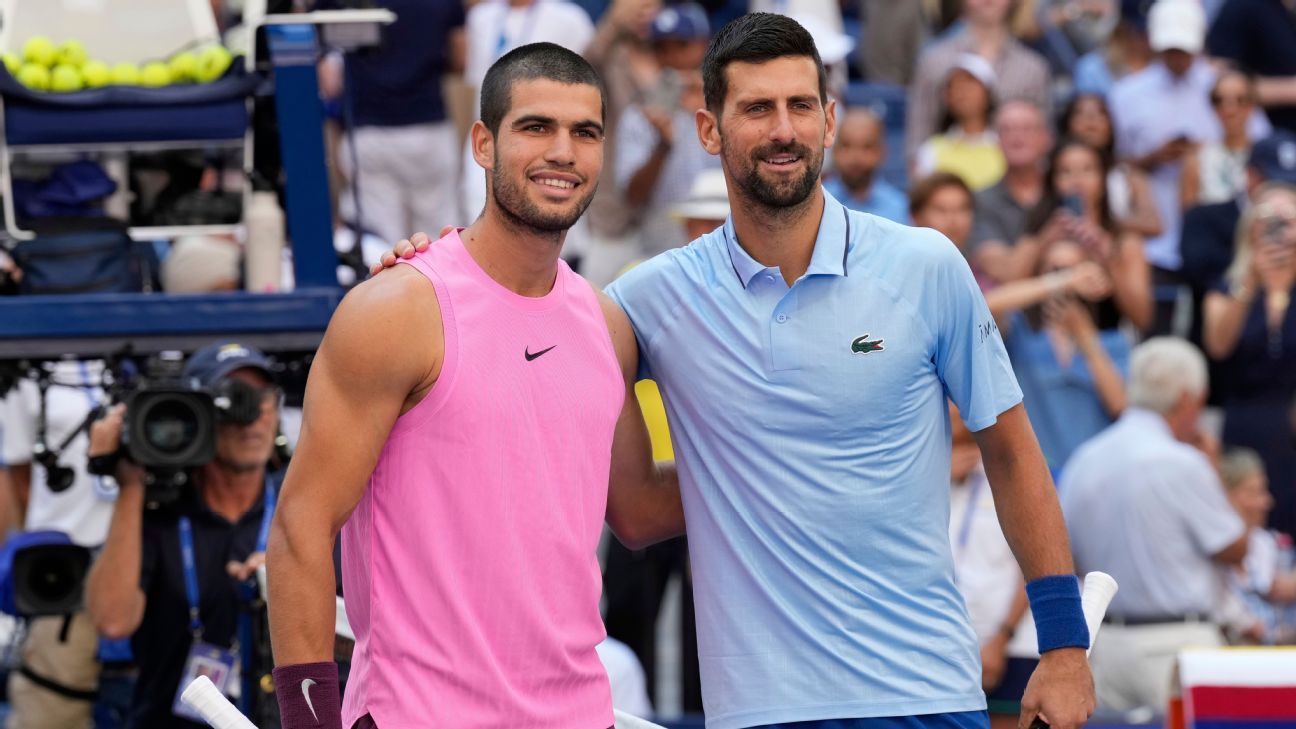
In the humid night air of Rod Laver Arena, Carlos Alcaraz and Novak Djokovic prepare to extend their storied rivalry into the Australian Open men’s final. The world No. 1 has carved through the draw with straight-set efficiency until a punishing five-hour, 27-minute semifinal against Alexander Zverev left him cramping and spent, yet victorious. At 22, he chases the distinction of becoming the youngest man to claim all four majors, while the 38-year-old No. 4 seed aims to defy time with a 25th Grand Slam, his undefeated record in these finals hanging in the balance.
“Believing, believing, all the time.”
Alcaraz’s words after that grueling win capture the unshakeable mindset that has defined his run. He dispatched his first five opponents without dropping a set, conserving energy on Melbourne’s medium-paced hard courts where his remodeled serve—borrowed from Djokovic’s playbook—lands with heavier topspin to set up aggressive patterns. Now, facing the greatest returner ever, he must sustain those first-serve percentages to blunt returns and launch inside-out forehands that stretch the baseline.
Belief powers Alcaraz’s relentless fight
The Spaniard’s edge lies in his refusal to yield, turning physical lows into momentum shifts. In the semifinal, he vomited courtside and battled cramps through the third set, yet rallied from a 3-5 deficit in the fifth to seal the upset. This resolve mirrors the mental steel long associated with his opponent, but at 22, Alcaraz brings fresher legs despite the marathon effort—four fewer hours on court than some might expect, yet the toll demands quick recovery.
Tactically, variety disrupts the rhythm that Djokovic craves. Alcaraz thrives by mixing paces: a loopy topspin forehand followed by a flat crosscourt backhand, pulling the Serb side to side and forcing early fatigue. Unlike Jannik Sinner’s straight-line power in the semifinal, which Djokovic absorbed, Alcaraz’s directional changes—inside-in to the body, then down-the-line—could unsettle the backhand and exploit reduced split-step quickness after four hours of sliding.
His serve has been the secret weapon, winning points outright at higher rates to escape pressure and dictate one–two combinations. On this grippy surface, where low-bouncing underspin skids and heavy balls climb, shortening points early avoids the energy drain that swings pendulums toward veterans in five-set epics. If he channels that belief into ending rallies swiftly, the crowd’s roar for the young challenger might amplify his athletic bursts, turning defense into jaw-dropping winners at the net.
Djokovic ignites with aggressive revival
The Serb’s semifinal against Sinner showcased a return to lion-hearted form, saving 16 of 18 break points over four hours to dethrone the two-time defending champion. After a subdued quarterfinal where he dropped the first two sets to Lorenzo Musetti, Djokovic animated himself into ruthlessness, his serve placements precise enough to win 86% of first-serve points in the second set and 77% in the fourth. That allowed free-swinging forehands, ripping inside-ins that echoed his prime on these hard courts.
Recovery looms larger for the 38-year-old, whose body has carried him through 24 majors but now bears visible strains from the week. Yet history suggests he transforms fatigue into fuel, as in last year’s quarterfinal here: dropping the first set amid injury, then dictating with groundstrokes and risky down-the-line shots to pressure Alcaraz into errors. Protecting his serve in clutch moments—replicating that semifinal clutch—will be key, limiting break chances and outlasting rallies where his elastic defense redirects pace back with underspin slices.
The head-to-head tilts 5-4 in his favor, bolstered by hard-court wins that highlight adaptation over youth. He doesn’t need to outhit the Spaniard every exchange but must stay the aggressor, getting animated to draw the Melbourne crowd behind his underdog narrative. Slipping into quarterfinal passivity for even a set could cede ground, but sustaining that intensity promises to turn big points into legacy-defining stands, much like his Olympic gold clinch against Alcaraz last summer.
Recovery and execution tip the scales
Both arrive battered: Alcaraz from the third-longest match in tournament history, Djokovic from dethroning Sinner despite his own struggles. Sunday’s final tests who rebounds sharper on a surface that rewards sliding prowess and tactical patience, with the night session’s faster conditions potentially favoring Alcaraz’s speed in extended exchanges. Mentally, Djokovic’s familiarity with this stage—never losing an Australian Open final—provides an edge, thriving when stakes peak and the air thickens with tension.
Alcaraz must avoid reinventing his game, simply unleashing his best: heavy topspin to climb the Serb’s backhand, drop shots to draw him forward, and crosscourt angles to cover more ground early. The world No. 1’s consistency all fortnight, dismissing letdowns with straight-set dominance until the end, positions him as favorite, his youth granting quicker adaptation to the physical grind. Yet Djokovic’s experience in wire-to-wire battles whispers of miracles, his 24-title haul a reminder that he elevates when history calls.
As the ball flies under the arena lights—inside-out winners clashing against down-the-line counters—the psychological arcs converge. Alcaraz’s season of breakthroughs meets Djokovic’s defiance of age, their paths intertwined by a rivalry that has already reshaped the sport. Whichever claims the trophy, the final’s echoes will ripple through tennis, defining narratives of belief, endurance, and the unyielding pursuit of greatness. For deeper insights into this showdown, explore the full ESPN analysis here.