Djokovic and Alcaraz Chase Immortality in Melbourne

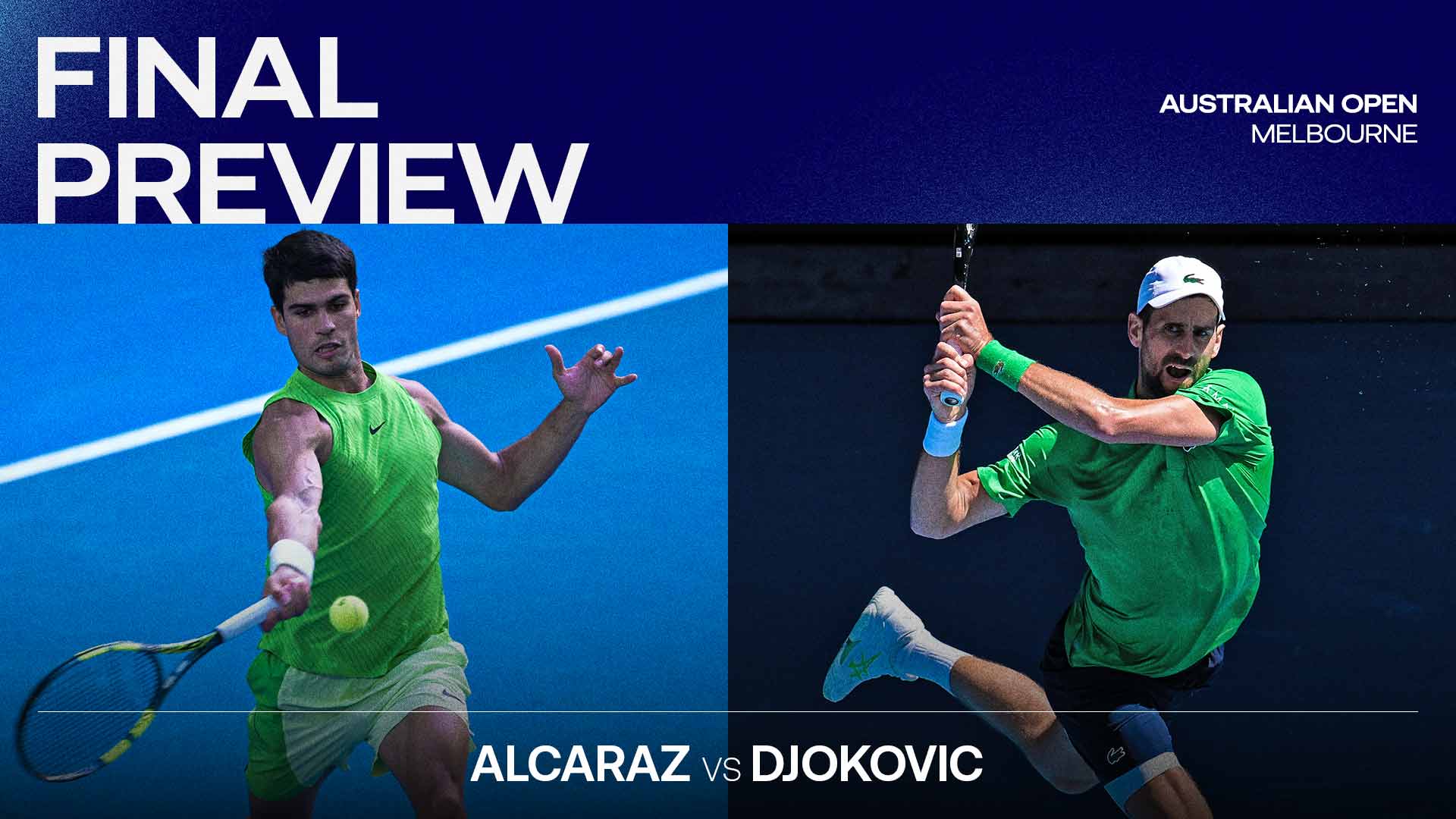
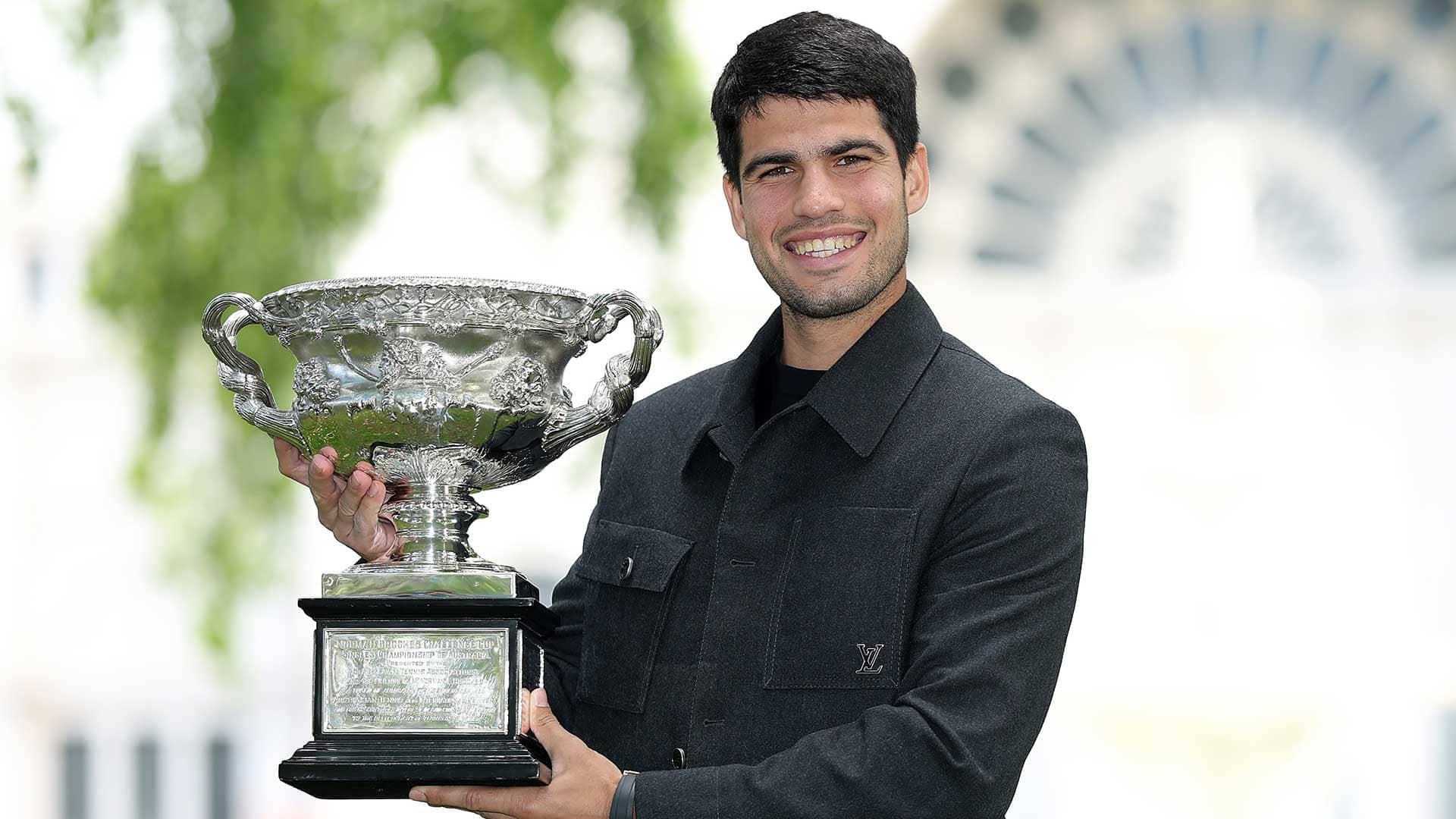
Novak Djokovic and Carlos Alcaraz collide in the Australian Open final, a battle where experience meets explosive youth after grueling semis, with a Career Grand Slam and record majors on the line under Rod Laver’s glare.
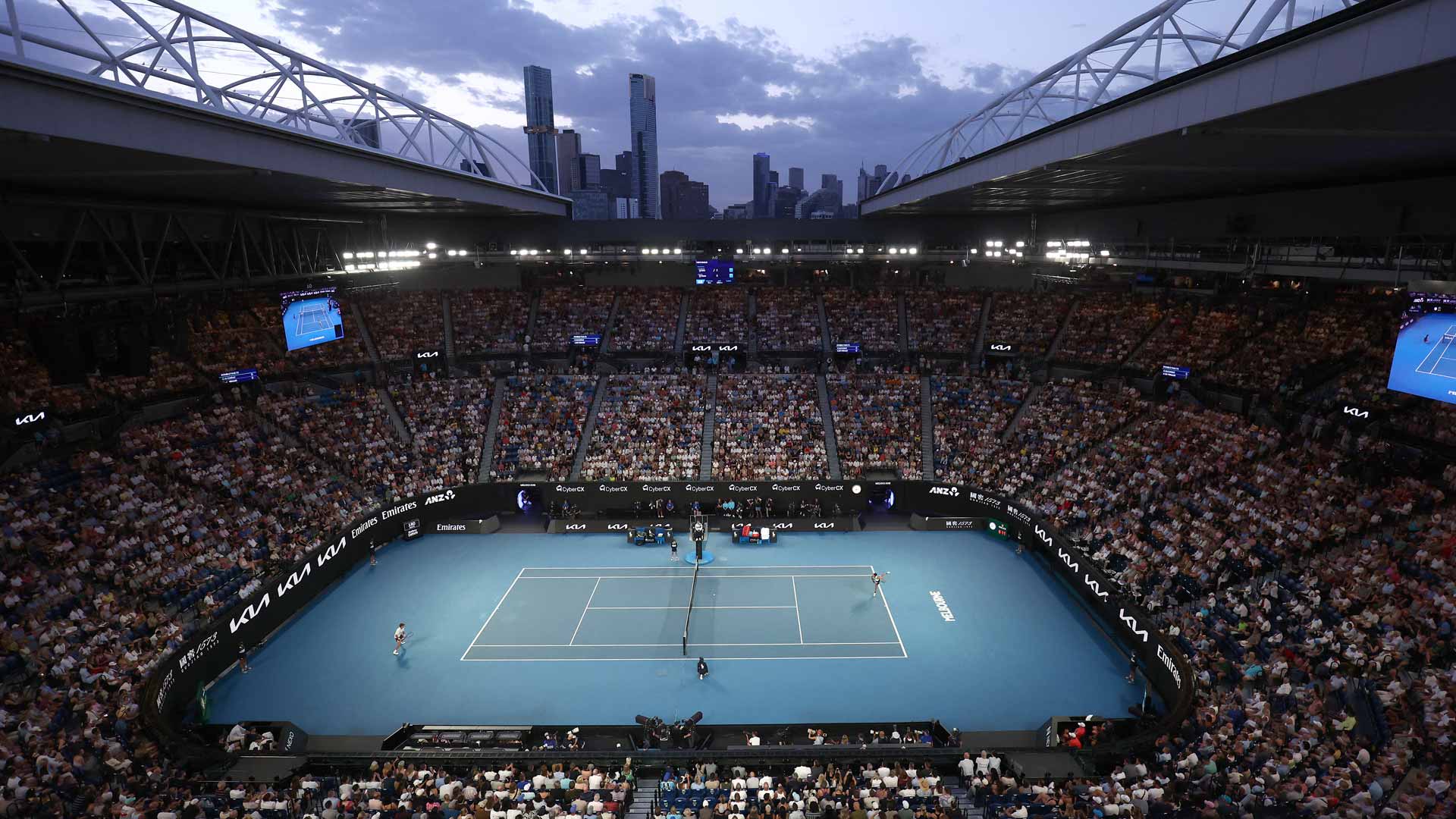
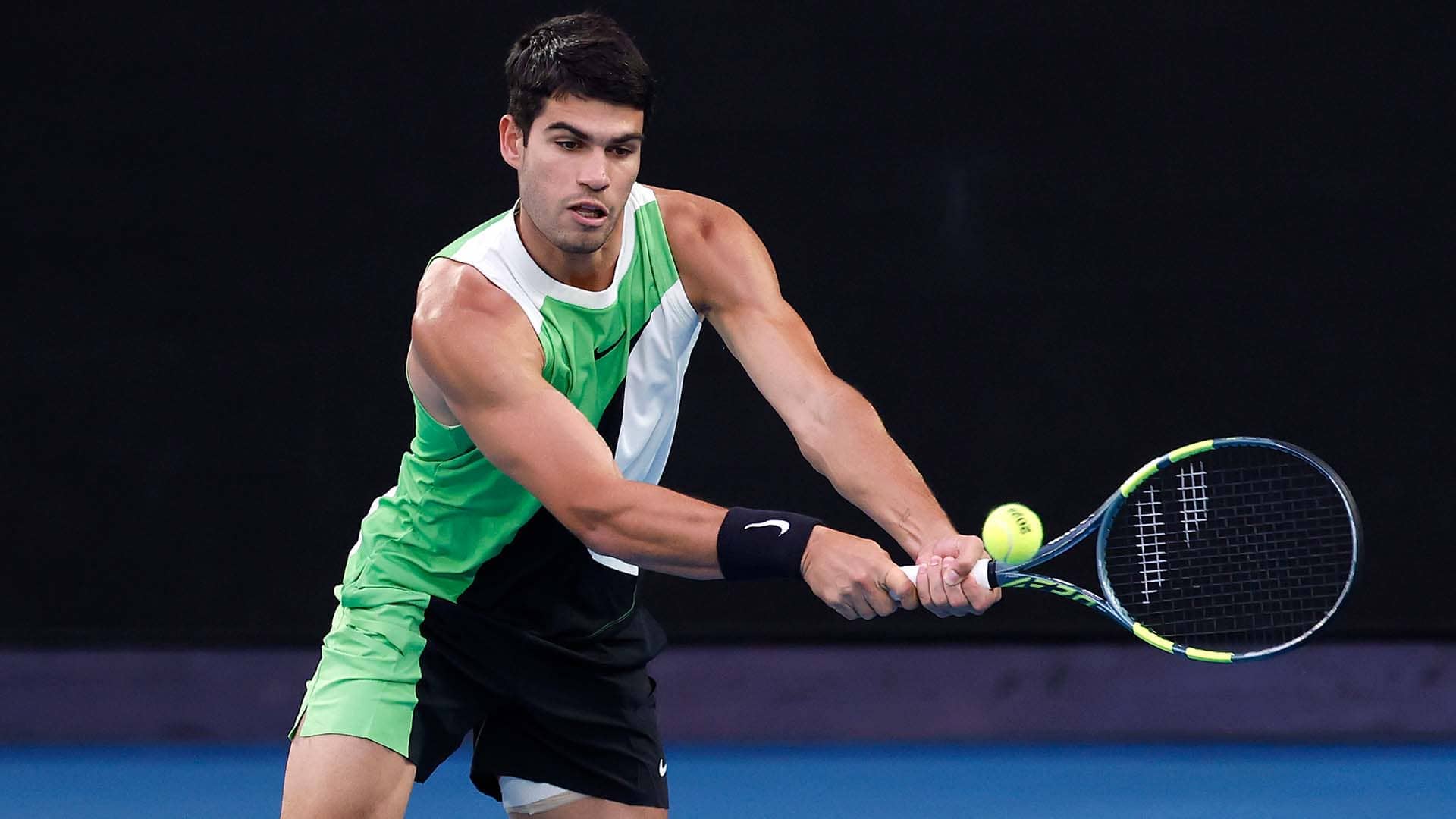
Under the pulsing lights of Rod Laver Arena, Novak Djokovic and Carlos Alcaraz step onto the court for a showdown that bridges tennis eras. At 38, Djokovic eyes his 11th Australian Open title and 25th major, while the 22-year-old Alcaraz hunts the Career Grand Slam on these unforgiving hard courts. Their rivalry, etched in five major meetings, promises baseline wars and mental duels as Melbourne’s crowd holds its breath.
Both arrived drained from Friday’s endurance tests. Alcaraz outlasts Zverev in record 5h27 SF marathon against Alexander Zverev, grinding through five hours and 27 minutes of crosscourt rallies and down-the-line passes—the longest semifinal in tournament history. Djokovic defeats Sinner in five-set classic over Jannik Sinner in four hours and nine minutes, his defensive slices and inside-out forehands turning the tide in a match that exposed every crack in his armor.
“I want to thank all the doubters,” Djokovic said post-match, his words cutting through the arena’s echo.
Marathon paths forge sharper edges
The semis left visible scars, with Alcaraz‘s legs heavy from Zverev‘s flat serves and Djokovic nursing a back that has carried him through decades. Yet these battles honed their games: Alcaraz’s one–two punch now slices through defenses quicker, while Djokovic’s return positioning anticipates every heavy topspin. Recovery becomes the silent weapon, deciding who first unlocks the other’s serve in this final.
Crowd energy surges with every point, the arena’s roar amplifying the tension as both players scan for weaknesses. Alcaraz’s explosive inside-in forehands could exploit Djokovic’s movement, but the Serb’s net approaches and underspin backhands counter with precision. How much prize money will the champion earn? The AU$3 million purse adds fuel, but it’s the psychological reset that truly stakes the night.
Rivalry ignites in major deciders
Djokovic leads their head-to-head 5-4, including a four-set quarterfinal win over Alcaraz here last year, but the Spaniard owns three of five major clashes. They clashed in the Wimbledon final in 2023 and 2024, both claimed by Alcaraz’s blistering crosscourt winners that dismantled Djokovic’s baseline fortress. This marks their third Slam final, where mental fortitude turns patterns into breakthroughs.
Alcaraz vs Djokovic: The Rivalry traces their evolution from cautious foes to unrelenting forces, with each match layering new tactics. Djokovic’s heavy topspin forehand pins Alcaraz deep, forcing errors in extended rallies, while the younger man’s speed pulls impossible angles. On the Australian Open‘s medium-fast surface, quick feet and bold returns will dictate the flow, echoing the semis’ chaos.
Sunday clash under arena lights
The final starts at 7:30 p.m. local time—3:30 a.m. ET, 9:30 a.m. CET—on Sunday, January 31, 2026, as Melbourne awakens to this generational tilt. Djokovic’s pursuit of 25 majors hangs like a deep lob, testing if age dulls his instincts. Alcaraz, top seed, battles to prove his hard-court mastery endures, his game a blend of power and finesse ready to claim the crown.
Expect tactical shifts mid-set: Djokovic targeting short balls to draw Alcaraz forward, the Spaniard responding with 1–2 combinations that stretch the court wide. The winner doesn’t just lift the trophy; they redefine the sport’s horizon, carrying momentum into a year of endless circuits. In this cauldron, every inside-out laser and defensive scramble writes the next chapter.