Alex Eala’s Melbourne Exit Signals Serve Overhaul

A commanding start against Alycia Parks unravels into defeat at the 2026 Australian Open, leaving the 20-year-old Filipina to sharpen her game amid national expectations.
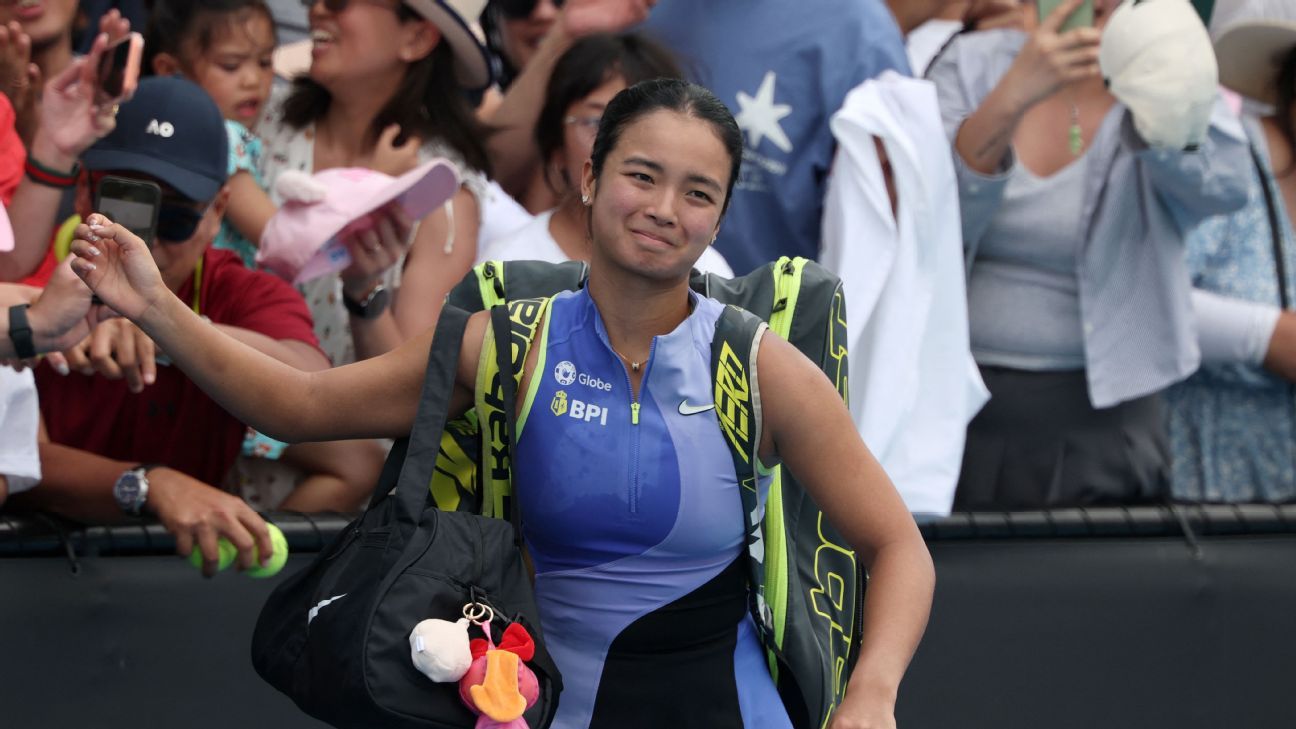
The Melbourne heat pressed down on Court 6, where Alex EalaAlex Eala bounded out with the quiet fire of a player who knows the eyes of a nation track her every move. At 20, after a 2025 that rocketed her into the top 50, this fourth Grand Slam felt like the proving ground for her blend of grit and grace. Yet against 99th-ranked American Alycia ParksAlycia Parks, the match twisted from promise to cautionary tale, her returns carving through the first set before her own delivery faltered under the mounting tempo.
Opening Surge Crumbles to Power
Eala’s returns in the opener sliced like a warning, claiming 60.6% of Parks’ first serves—20 out of 33 points—to hand over a 6-0 bagel that silenced the outer-court murmurs. She stepped inside the baseline, chipping underspin crosscourt to jam the American’s rhythm, while Parks scraped by on just 27.8% of her own first-serve returns, a meager 5 from 18. The Filipina’s footwork turned defense into disruption, her inside-out forehands redirecting pace with the precision that defined her breakout year.
But as the second set dawned, Parks unlocked her arm, firing 12 aces to Eala‘s lone one, her flat serves booming down the T and wide to the deuce side. Eala, pushed back, looped topspin replies that hung too long in the Plexicushion bounce, inviting down-the-line winners that flipped the script. The decider sealed a 6-0, 3-6, 2-6 defeat, her third first-round Slam exit underscoring how thin the line grows between control and chaos on these hard courts.
Serve Reliability Holds the Key
To climb past these early traps, Eala must forge her serve into a sharper tool, blending variety to counter the big hitters now populating her draw. Her single ace here betrayed a reliance on placement over pop, leaving her vulnerable when Parks’ one–two punches opened the court for aggressive forehands. Coaches will push for kick serves wide to the backhand, mixing slice seconds that skid low to disrupt returns and buy time for her topspin baseline game.
Flashbacks to her 2025 US Open stunner over then-No. 14 Clara Tauson reveal the blueprint: there, she absorbed heavy balls with deep underspin lobs before unleashing inside-in winners, holding through tense games on faster indoor surfaces. Replicating that poise demands serve tweaks—flatter first balls to the body jamming opponents, followed by crosscourt seconds that force stretches. As top-50 pressure mounts, with rivals dissecting her patterns, these adjustments could turn holds into momentum breakers, especially against power like Parks’ relentless pace.
Home Crowds Fuel the Comeback
Beyond tactics, Eala’s burden lightens and lifts in the roar of Filipino support, flags waving thick around Melbourne Park as fans snaked lines near Rod Laver Arena for her debut. Her Slam runs have etched the Philippines into tennis lore, a trailblazer inspiring academies where kids drill crosscourt backhands under humid skies. This visibility, while heavy, ignites her—transforming outer-court solitude into shared resolve that echoes through every rally.
The inaugural Philippine Women’s Open beckons next, a home-turf stage where adoring stands could reset her arc on slower hard courts suiting her rally construction. Here, free from neutral-ground intensity, she can test serve evolutions, varying spin to blunt regional foes who know her angles too well. After 2025’s deep WTA probes that honed her transitions, this loss sharpens focus: blending return aggression with hold authority to sustain three-set grinds, her forehand drives signaling a contender owning her rise. As the tour swings to clay, Eala’s path weaves resilience into strokes, honoring a nation’s faith with breakthroughs that feel inevitable.