Fortunes Forged in Melbourne’s Crucible

As the Australian Open 2026 ignites Rod Laver Arena, a record A$111.5 million prize pool sharpens every forehand and tests the mental grit of stars like Jannik Sinner and Carlos Alcaraz in the season’s opening inferno.
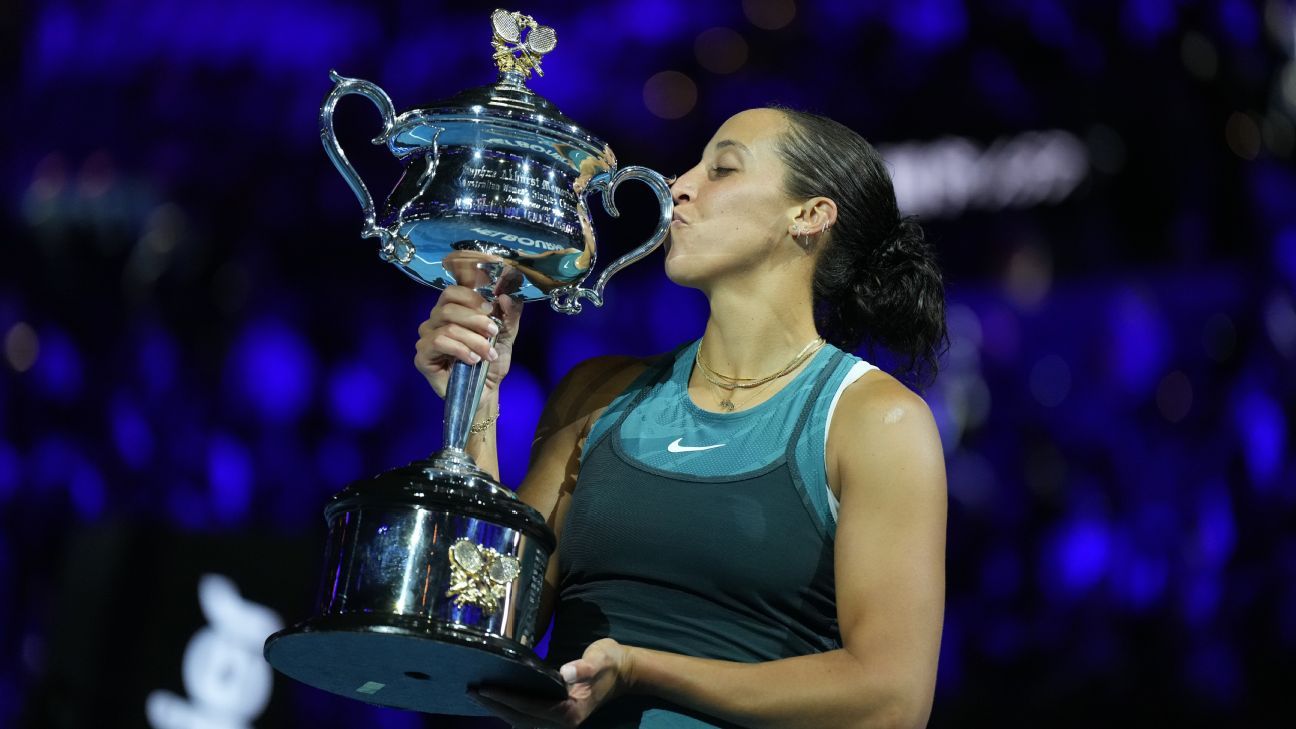
The Australian Open 2026 prize money swells to unprecedented heights, drawing the world’s elite to Melbourne’s hard courts where the first Grand Slam of the year promises not just trophies but life-altering sums. Players step onto the plexicushion surface, their serves cracking under the summer sun, aware that a deep run could eclipse a season’s earnings in days. This record pool, the highest ever offered down under, transforms routine rallies into high-stakes gambles, with the winner’s A$4.15 million (US$2.79 million, GBP£2.07 million) dangling as the ultimate lure amid the crowd’s electric hum.
Rewards climb with each advancing round
First-round victors secure A$150,000, a modest cushion that allows qualifiers to swing freely, perhaps firing down-the-line returns to unsettle seeded opponents still shaking off jet lag. By the second round, A$225,000 rewards those who adapt to the court’s moderate bounce, mixing crosscourt groundstrokes with occasional net approaches to build early confidence. The third round’s A$327,750 marks a pivot where endurance kicks in, as survivors deploy heavy topspin to push back against aggressive baselines, the Australian heat amplifying every drop of sweat.
Fourth-round earnings hit A$480,000, compelling players to refine their one–two patterns—big serves followed by inside-in forehands—to conserve energy in lengthening matches. Quarterfinalists pocket A$750,000, a threshold that heightens psychological tension, with favorites like Carlos Alcaraz channeling explosive speed into inside-out redirects to dominate from the backline. Semifinalists claim A$1.25 million (US$840,000, GBP£620,000), forcing tactical shifts like underspin slices to disrupt power games, while the runner-up’s A$2.15 million (US$1.45 million, GBP£1.07 million) tempts those on the cusp of glory.
Historical rises trace equality’s hard-fought path
In 1970, the disparity stung: women earned just A$700 for a title, while men took A$3,400, fueling draws laced with unspoken resentment amid grass-court volleys that demanded quick reflexes. The Australian Open restored equal prize money in 2001, with A$830,500 going to Andre Agassi and Jennifer Capriati, a step that eased some mental divides as hard courts began favoring consistent topspin over pure net play. By 2002, Thomas Johansson and Jennifer Capriati shared A$1 million, their triumphs highlighting how rising stakes sharpened serves, turning aces into assets under growing scrutiny.
Andre Agassi paired with Serena Williams for another A$1 million in 2003, her booming groundstrokes evolving to exploit the surface’s grip. Roger Federer and Justine Henin claimed A$1.2 million in 2004, Federer’s fluid motion weaving inside-in winners through tighter defenses. Marat Safin joined Serena Williams at the same amount in 2005, while 2006 saw Roger Federer with Amelie Mauresmo at A$1.28 million, emphasizing precise placement to control rally tempo.
Novak Djokovic broke through in 2008 alongside Maria Sharapova for A$1.4 million, his elastic defense turning slices into opportunities that wore down foes. Rafael Nadal powered to A$2 million with Serena Williams in 2009, crosscourt grinding a blueprint for endurance battles. Roger Federer and Serena Williams split A$2.2 million in 2010, followed by Novak Djokovic and Kim Clijsters in 2011 at the same figure, where deep returns neutralized big serves in humid conditions.
Novak Djokovic and Victoria Azarenka earned A$2.3 million in 2012, rising to A$2.43 million in 2013 for the duo, as baseline mastery rewarded those who varied spin to counter the plexicushion’s speed. Stan Wawrinka and Li Na took A$2.65 million in 2014, Wawrinka’s heavy forehands carving paths through packed draws. Novak Djokovic with Serena Williams hit A$3.1 million in 2015, a surge reflecting packed arenas where crowd energy fueled aggressive one–two setups.
Novak Djokovic and Angelique Kerber claimed A$3.4 million in 2016, Kerber’s counterpunching thriving on precise footwork. Roger Federer and Serena Williams pocketed A$3.7 million in 2017, Federer’s backhand slice a weapon for mid-match resets. Roger Federer with Caroline Wozniacki took A$4 million in 2018, while Novak Djokovic and Naomi Osaka shared A$4.1 million in 2019, Osaka’s power serves echoing through night sessions.
Rebound and rivalries redefine the chase
The 2020 peak of A$4.12 million went to Novak Djokovic and Sofia Kenin, just before COVID-19 slashed the 2021 winner’s share to A$2.75 million for Novak Djokovic and Naomi Osaka, a drop that tested resolve amid empty stands and health worries, their down-the-line passes carrying the weight of uncertainty. Recovery accelerated: Rafael Nadal and Ashleigh Barty split A$2.875 million in 2022, Novak Djokovic with Aryna Sabalenka A$2.975 million in 2023. Jannik Sinner and Aryna Sabalenka claimed A$3.15 million in 2024, Sinner’s flat-hitting precision minimizing errors in tiebreaks.
Last year’s A$3.5 million crowned Jannik Sinner and Madison Keys, her flat groundstrokes slicing through defenses on the predictable hard courts. The 2026 edition’s winner’s share stands 19% higher than 2025 and A$1.4 million above 2021, surpassing pre-pandemic levels after five years of steady climbs within a total A$111.5 million pool (US$74.9 million, GBP£57.5 million). Tennis Australia confirmed these figures, equal for men and women, as the circuit’s top talents arrive with baselines honed for the heat.
2025 proved a windfall, with Carlos Alcaraz topping ATP earnings at US$21.36 million, his rival Jannik Sinner close at US$19.12 million, and Aryna Sabalenka leading WTA at $15.01 million—sums that rank Alcaraz fifth and Sabalenka second all-time. These hauls intensify the psychological push into Melbourne, where a semifinal run could buffer the tour’s grind, blending Alcaraz’s speed with Sinner’s composure. For viewing from the UK, explore Australian Open 2026: How to watch in the UK, schedule, more, or see Ranking the best American tennis players as the 2026 season begins and Who has won the most Grand Slam titles? With confirmation that this year’s competition will have the highest prize pool ever offered down under, every practice rally pulses with the promise of turning resilience into riches on these sun-scorched courts.