Venus Williams’ Record-Breaking Run Meets Late Collapse

At 45, Venus Williams rewrote Australian Open history in Melbourne, only for Olga Danilovic’s fierce comeback to snatch victory in a gripping first-round battle.
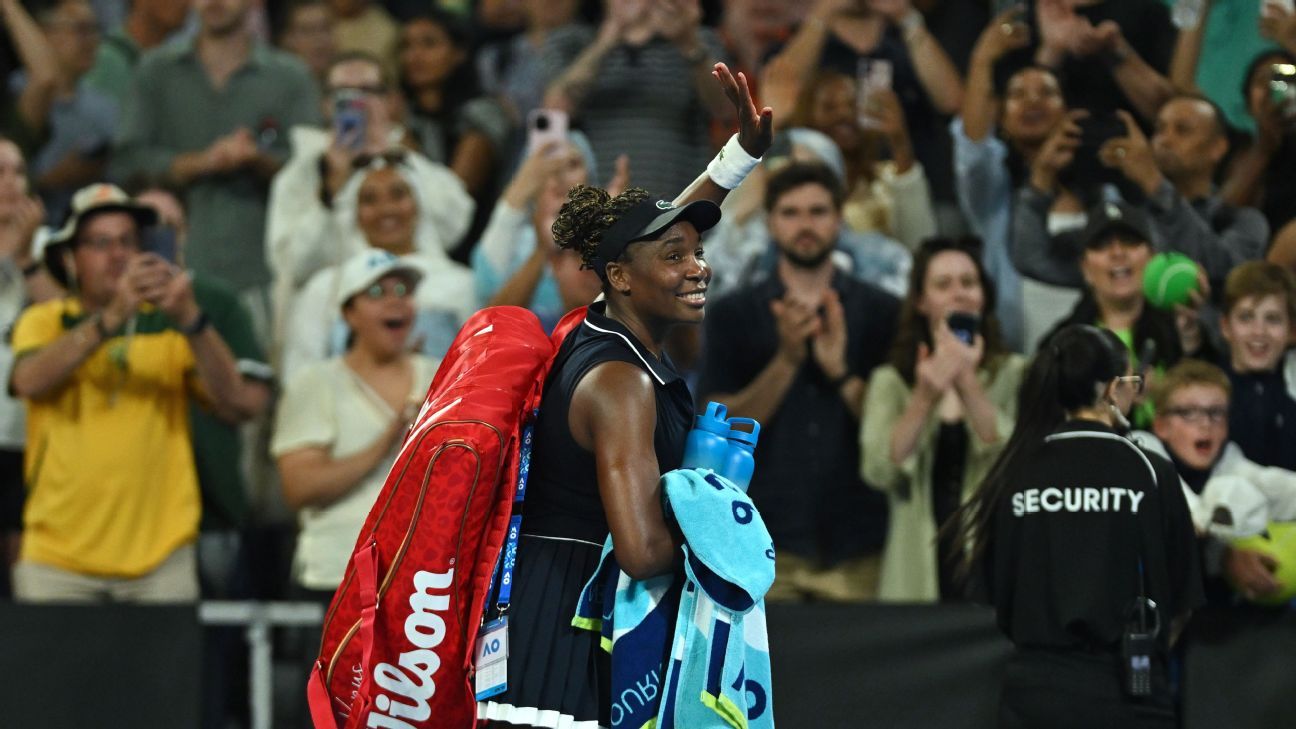
MELBOURNE, Australia—Venus Williams stepped onto John Cain Arena, instantly becoming the oldest player to contest a singles match at the Australian Open. At 45, ranked No. 576 on a wild-card entry, she carried the scars of a five-match losing streak into this comeback, her sole win last year in Washington a faint spark amid the grind. The air hummed with nostalgia as she faced Olga Danilovic, the 22-year-old Serb hungry for her first major upset, on courts where the plexicushion surface rewards both patience and power.
Seizing control with veteran patterns
Williams claimed the first set in a tight 7-6 (5) tiebreak, her heavy topspin forehands pinning Danilovic deep and forcing hurried crosscourt replies. She mixed kick serves wide to the backhand with inside-out winners, disrupting the younger player’s rhythm on the warming hard courts. The crowd’s cheers swelled, feeding her resolve as she broke early in the second set to level the match, her slice approaches drawing errors and echoing the tactical smarts of her prime.
Married last December to Italian Andrea Preti, Williams drew on fresh personal energy to counter the physical toll, holding serve with subtle variations that kept Danilovic guessing. At 17, she had debuted here in 1998, reaching the quarterfinals in her fourth Grand Slam; now, decades later, every point tested that enduring fire. Danilovic absorbed the pressure initially, but Williams’ court coverage turned defense into opportunities, the arena’s energy mirroring her unyielding push.
The decider’s brutal momentum shift
Up two breaks at 4-0 in the third, Williams seemed destined for triumph, her inside-in forehands carving sharp angles that left Danilovic lunging. The psychological edge tilted her way, visions of finally conquering this tournament—elusive despite finals losses to Serena in 2003 and 2017—fueling her drive. But Danilovic ignited, reeling off six straight games with aggressive down-the-line backhands and a one–two punch that neutralized Williams’ topspin loops.
In the penultimate game, Williams served for 14½ minutes, saving two break points with deep crosscourt returns before the third broke her, fatigue etching lines on her face under the Melbourne sun. The crowd’s roar faded to tense murmurs as Danilovic closed out 6-4, her fresher legs and bolder returns flipping the hard court’s quick pace to her advantage. Williams’ body language shifted from coiled intensity to quiet acceptance, the match’s tempo exposing the raw edge between experience and youth.
Endurance echoes beyond the scoreline
Though the 6-7 (5), 6-3, 6-4 defeat stings, Williams’ mere presence affirms her seven-time major legacy, a beacon for late-career battles on unforgiving surfaces. Danilovic advances, her poise signaling the tour’s rising talents, but this clash lingers as a study in mental marathons where every rally chips at resolve. As the Australian Open unfolds, Williams’ story inspires, hinting at more wild-card fights and the timeless pull of chasing peaks down under.