Venus Williams eyes French Open return at 45

Defeated in Madrid but undeterred, the 45-year-old legend plots a clay-court comeback at Roland Garros, shaking off a 10-match skid with renewed focus on the red dirt.
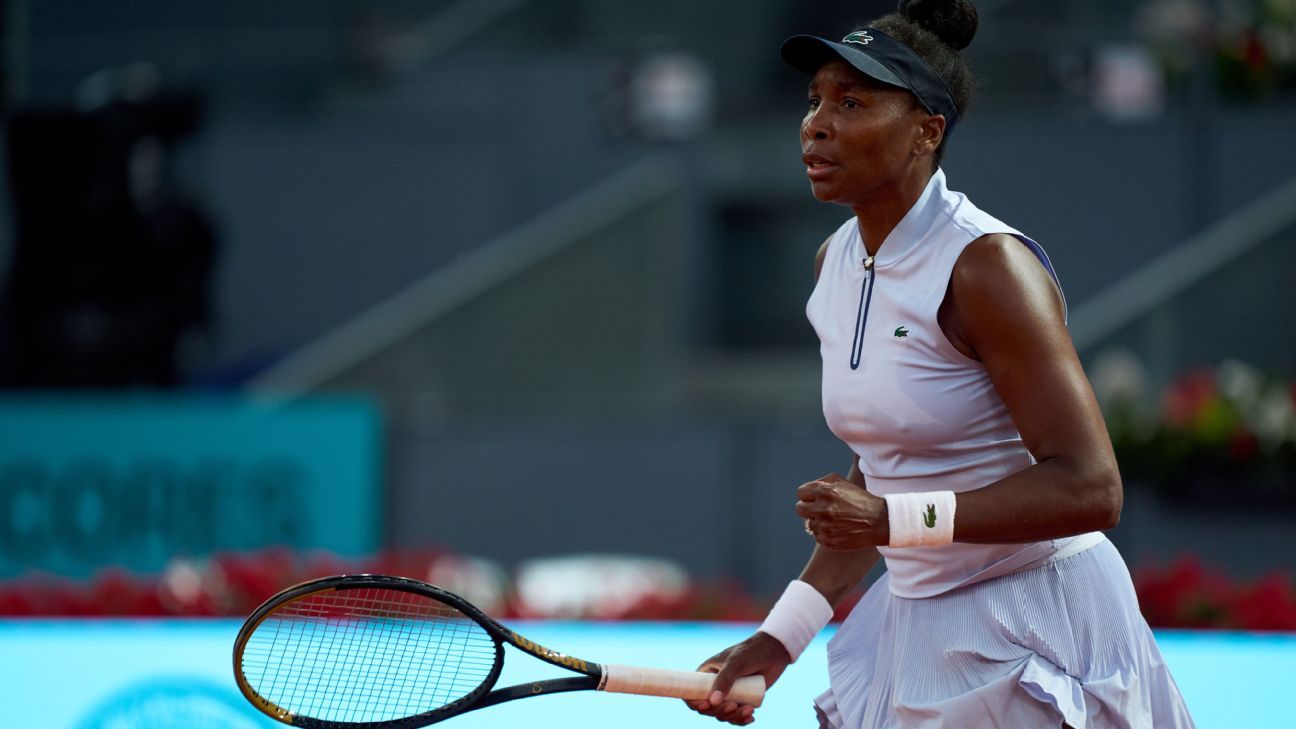
In the sun-dappled clay courts of Madrid, where the red dust clings to every slide and shot, Venus Williams stepped back into the fray, her presence a reminder of eras past. At 45, the seven-time Grand Slam champion absorbed a 6-2, 6-4 loss to a surging young opponent, extending her singles losing streak to 10. Yet in the quiet aftermath, she spoke of Roland Garros, the French Open next month, as a canvas for revival on a surface she once commanded with looping topspin and unyielding power.
This defeat came against Kaitlin Quevedo, the 20-year-old Spaniard who channeled home-crowd fire into her first WTA 1000 main-draw victory. Williams, absent from Madrid for five years, felt the clay’s grip anew, her heavy groundstrokes tested by Quevedo’s quick retrievals and crosscourt counters. The match highlighted the tactical demands of the dirt: slower bounces that favor extended rallies, where Williams’ inside-out forehands occasionally carved winners but often invited deeper returns.
“Yeah, I mean, to get my feet dirty, this was a great start,” she said in her post-match news conference at the Madrid Open. “I’m not able to play Rome, I have other commitments, unfortunately, so I’m really super sad about that, actually. My husband is Italian, so we feel sad that we can’t be there. So we would love to keep it going on the clay.”
Adjusting to clay’s patient rhythm
Williams began her clay practice mere weeks after Miami, a deliberate shift after years dominated by hard-court speed. Her last clay outing was the 2021 French Open, where she fell in the opener to Ekaterina Alexandrova, underscoring the adjustments needed for the surface’s higher bounce and sliding footwork. In Madrid, she leaned into one-two patterns—serve followed by a deep crosscourt forehand—to open angles, but the dirt dulled her pace, turning potential aces into second-chance returns.
The crowd’s murmurs built with each exchange, their energy a blend of reverence and anticipation as Williams mixed slice backhands to vary the tempo. Quevedo‘s inspired play disrupted her rhythm, the young player’s down-the-line backhands sniping key points in longer games. At this stage, every session on clay rebuilds not just muscle memory but the mental edge to endure the grind.
Facing youth amid the streak
This year has tested Williams relentlessly, with straight-set exits in Auckland, Hobart, the Australian Open, Austin, Indian Wells, and now Miami trailing into Madrid. Her most recent tour win arrived against Peyton Stearns in the round of 16 at a WTA 500 event in Washington last July 2025, a spark now dimmed by the skid. Quevedo’s triumph, her second at tour level and the mark of the youngest Spanish player to win a main-draw match here, amplified the generational clash, her flat groundstrokes forcing Williams to bend low and reset.
Williams held serve sporadically, her experience flashing in net approaches that evoked her prime, yet the clay’s endurance test exposed the physical toll. The Spaniard post-match radiated disbelief and joy, her words capturing the moment’s weight. As Williams absorbs these lessons, the math of rankings and momentum looms, each point a step toward reclaiming ground.
“I was so surprised,” Quevedo said. “I didn’t know that was going to happen. I’m just really happy that I was able to play against such a legend on this amazing court for the first time. It was a privilege, and I’m just really happy to be here.”
Toward Roland Garros’ red challenge
Skipping Rome tugs at personal strings—her husband’s Italian roots make the absence poignant—but Madrid serves as the primer for Paris. The French Open’s heavier topspin battles will demand even more: inside-in forehands to wrong-foot foes, underspin slices floating deep to disrupt baselines. Williams embraces the surface’s fun, its call for patience over power, a fit for her game when dialed in.
Crowd applause in Madrid carried nostalgia, urging her through lulls as she worked drop-shot disguises and footwork drills in practice. At 45, this pursuit transcends wins; it’s defiance against doubt, turning clay’s nuances into a stage for inspiration. With Roland Garros a month away, her resolve sharpens, the red dirt poised to witness whether experience can reignite the fire.