Vacherot topples hobbled Djokovic in Shanghai

Under Shanghai’s glare, Valentin Vacherot turns a semifinal into legend, outlasting Novak Djokovic’s grit to edge closer to a family final that defies the odds.
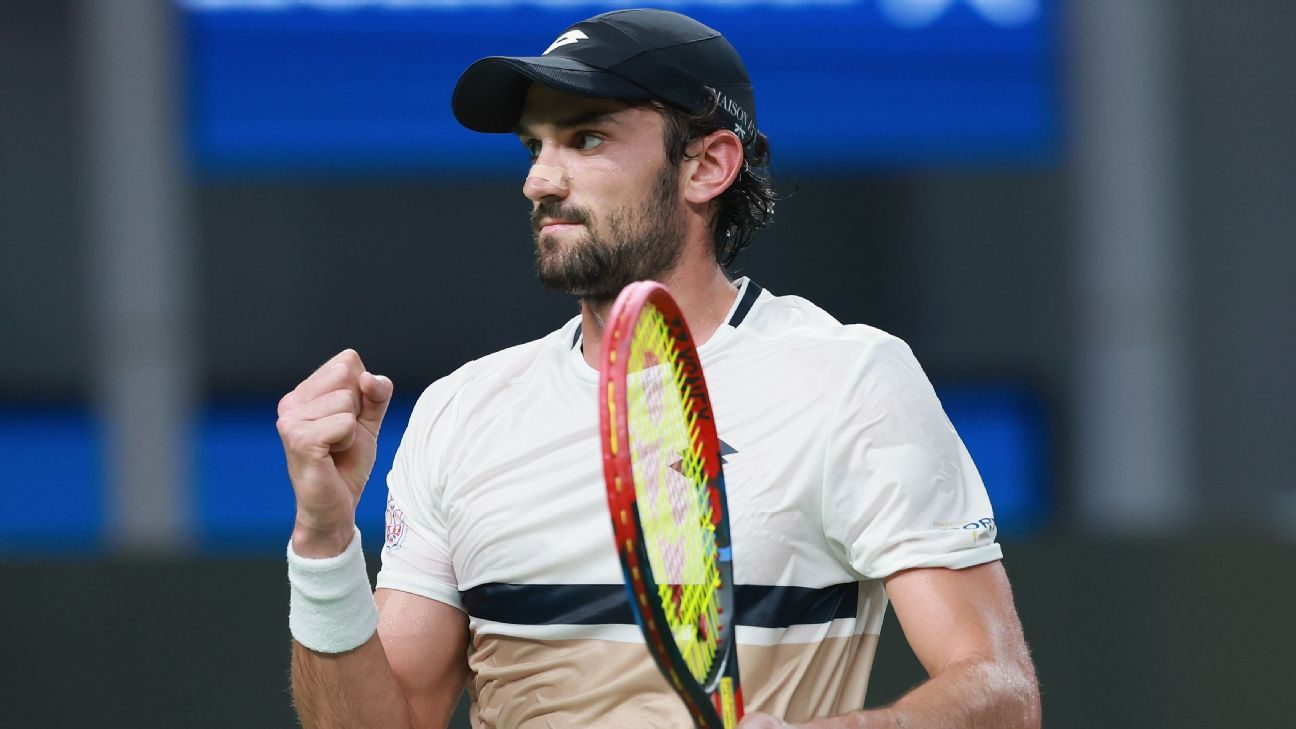
In the charged atmosphere of Qizhong Forest Sports City Arena, Valentin Vacherot carved out the upset of his life, defeating a limping Novak Djokovic 6-3, 6-4 to storm into the Shanghai Masters final. The 26-year-old from Monaco, ranked 204th and entering as a qualifying alternate, rode a wave of career-best form on these medium-fast hard courts, where every point carried the weight of late-season stakes. Djokovic’s visible struggle with a sore hip shifted the match’s tempo early, allowing Vacherot to dictate with deep returns and probing crosscourt forehands that tested the Serb’s range.
Djokovic fights through physical toll
The 38-year-old arrived burdened by a grueling year, his hip flaring after 4-3 in the first set, prompting a medical timeout that halted play amid rising tension from the crowd. He claimed just one point over the next two games, his usual explosive coverage reduced to cautious steps on the slick surface, where Vacherot’s inside-out forehands opened the court wide. Frustration etched Djokovic’s face as his serve lost bite, the one–two patterns disrupted by returns that hugged the baseline, turning defensive lobs into opportunities for down-the-line winners.
“Is this real? I don’t know,” Vacherot said moments after defeating the 24-time Grand Slam champion. “To have Novak on the other side of the court was, first of all, an unbelievable experience for me.”
Vacherot, drawing from his Texas A&M collegiate days, maintained a steady rhythm, mixing flat groundstrokes with occasional underspin slices to disrupt Djokovic’s rhythm and force errors in extended rallies. The 90-minute battle saw the underdog hold serve under pressure, his poise amplifying as spectators’ murmurs turned to cheers, sensing the shift in momentum on a night when endurance trumped legacy.
Vacherot builds on breakout momentum
Seizing the openings from Djokovic’s discomfort, Vacherot broke twice in the second set with clinical returns, his forehands carving sharp angles that the Serb couldn’t retrieve without straining his hip further. The hard courts’ predictable bounce suited his flat-hitting style, allowing him to construct points patiently, varying depths to keep Djokovic guessing in baseline exchanges that stretched beyond ten shots. This victory, capping a week of quiet upsets against higher seeds, infused Vacherot with a confidence that echoed through his post-match glow, transforming an alternate’s wildcard entry into a contender’s path.
The crowd’s energy swelled with each hold, feeding the Monegasque’s focus as he navigated the psychological edge of facing a titan, his returns neutralizing the serve that has defined so many triumphs on these surfaces. As recovery loomed, Vacherot’s thoughts turned to the final, his improbable run now a blueprint for how tactical discipline can bridge rankings gaps in tennis’s unforgiving endgame.
Cousin clash heightens final stakes
A family twist awaits if Arthur Rinderknech upends 16th-seeded Daniil Medvedev in the other semifinal, pitting the Frenchman’s powerful serves against the Russian’s baseline resilience in a matchup primed for grinding rallies. Vacherot lit up at the prospect, blending personal bonds with professional drive on courts that have already claimed a giant. “I will do some recovery of course, but I will not miss it,” he noted, eyes fixed on a potential bloodline battle that could crown his Shanghai surge.
Medvedev’s tactical depth will challenge Rinderknech’s aggression, much like the exchanges that wore down Djokovic, setting up a final rich with narrative if the cousins collide. For Vacherot, this week pulses with possibility, his poise under pressure a reminder that Shanghai’s hard courts reward the prepared, propelling underdogs toward horizons once unimaginable.