Vacherot claims Shanghai crown in family showdown

From qualifier obscurity, Valentin Vacherot surges to his maiden ATP title, toppling cousin Arthur Rinderknech in a final laced with personal stakes and tactical brilliance under Shanghai’s glaring lights.
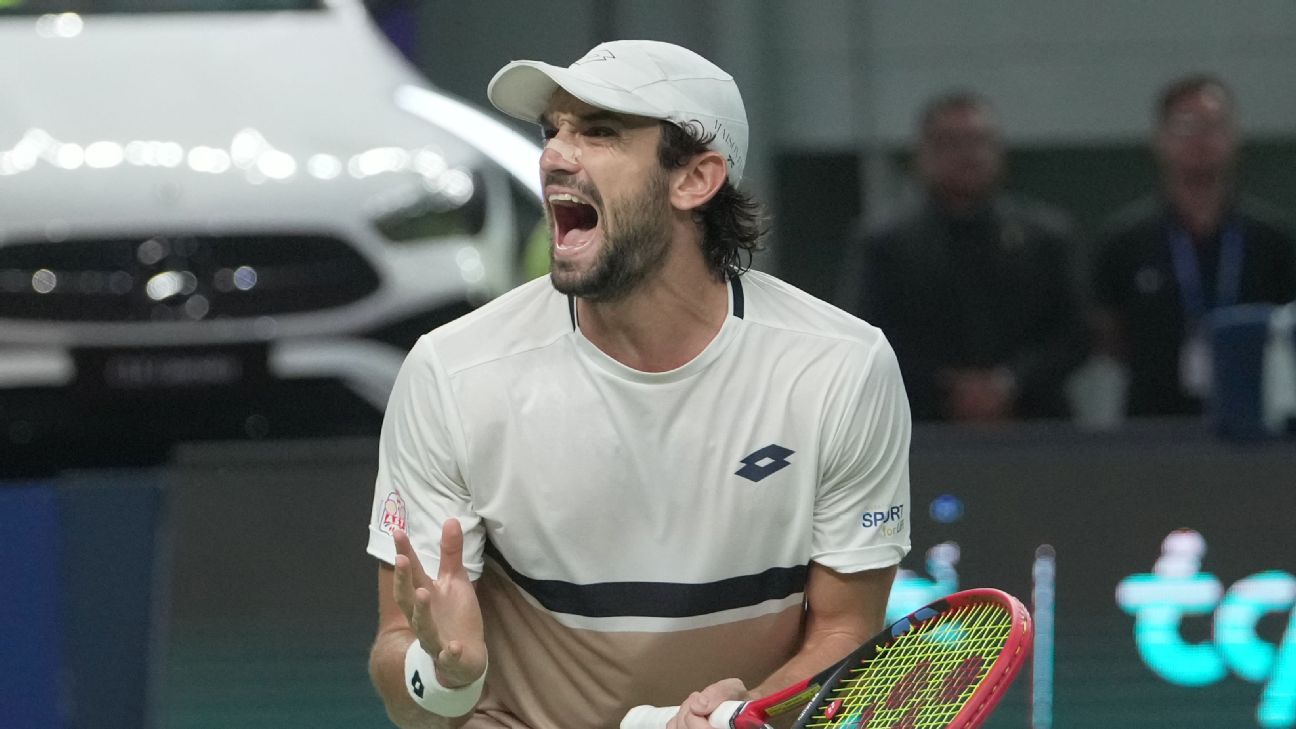
In the sweltering embrace of Shanghai’s Qizhong Forest Sports City Arena, Valentin Vacherot scripted a career-defining upset on October 12, 2025. The 26-year-old Monegasque, seeded at No. 204, outlasted his cousin Arthur Rinderknech 4-6, 6-3, 6-3 to capture the Shanghai Masters, marking the first title of his professional journey after a week of improbable victories from the qualifying rounds. As the lowest-ranked champion in ATP Masters 1000 history and the first from Monaco, he turned the hard courts into a stage for redemption, blending raw emotion with surgical precision amid the crowd’s electric hum.
Path forged through upsets and resolve
Vacherot’s odyssey began in the qualifiers, where the medium-paced hard courts demanded unyielding focus, each match chipping away at the doubts from a season marked by erratic results and endless circuits. His breakthrough came in the semifinals, stunning 24-time Grand Slam champion Novak Djokovic with a mix of deep returns and opportunistic forehands that exploited the Serb’s rare off moments, the victory sending ripples through the arena as fans sensed a fairy tale unfolding. Across the net in the final stood Rinderknech, the 30-year-old Frenchman who had just dismantled four-time major finalist Daniil Medvedev, the 2021 U.S. Open champion, in a semifinal grinder that highlighted his baseline tenacity on the same unforgiving surface.
This familial clash carried extra weight, their only prior meeting a 2018 Futures event won by Rinderknech, now amplified by professional pressures and shared heritage. Vacherot drew on the psychological scaffolding built all week, transforming inner turmoil into outward poise as the humid air thickened with anticipation. Rinderknech, too, navigated his own hurdles, his semifinal triumph a testament to resilience, yet facing kin introduced a layer of restraint that tested both men’s mental edges from the opening serve.
Serve dominance flips the script
Rinderknech struck first, clinching the opening set 6-4 with a booming ace that drew applause from a spectator section where Roger Federer observed quietly, evoking tennis’s enduring lineages. Vacherot reset swiftly, varying his serve to target the Frenchman’s backhand and opening the court for crosscourt rallies that stretched his opponent wide, the second set falling 6-3 as his forehand gained venom and the crowd’s cheers built a rhythmic pulse. In the decider, he snatched an early break on the hard courts’ true bounce, then faltered on four break points in the fifth game, a lapse that might have cracked lesser resolve after months of near-misses.
Rinderknech seized the moment with a three-minute medical timeout, receiving treatment for his back and left shoulder, the pause intensifying the arena’s tension as Vacherot paced, channeling deep breaths to sustain his surge. Resuming play, the Monegasque unleashed a serving clinic, firing three straight love holds that amassed 15 consecutive points, his kick serves climbing high off the surface to force defensive replies and lobs. This tactical pivot, emphasizing placement and depth over sheer pace, mirrored the week’s adjustments that had elevated him from underdog to frontrunner, the hard courts now rewarding his precision with mounting momentum.
Down-the-line winner seals breakthrough
By the eighth game, Vacherot’s streak broke on an unforced error, but Rinderknech, serving to stay at 5-3 and 15-40, could only delay the inevitable with a desperate slice that saved one match point. Vacherot responded with a blistering forehand winner down the line, wrong-footing his cousin to seal the 6-3 set and the match, collapsing in disbelief before rushing the net for a heartfelt embrace. The victory, etched in the annals as Monaco’s first Masters 1000 crown, washed away a season’s frustrations in a torrent of confetti and roars.
He then sprinted to his team box, enveloping coach Benjamin Balleret—his half-brother and a former player whose career highlight was a 2006 Monte Carlo Masters loss to Federer—in a lingering hug that bridged their shared Monaco roots and Vacherot’s turbulent path. Balleret’s steady counsel had anchored him through the qualifiers’ grind, and now, with the trophy aloft, the brothers savored a milestone that hinted at untapped potential. As Vacherot eyes the horizon, this Shanghai conquest promises to reshape his trajectory, proving that tactical acuity and familial fire can conquer any ranking divide.