Kostyuk rejects IOC shift while chasing Wimbledon final

The Ukrainian twelfth seed carries layered pressure from Paris and Kyiv into her semifinal against Noskova, refusing to ignore the Olympic ruling on Russia.
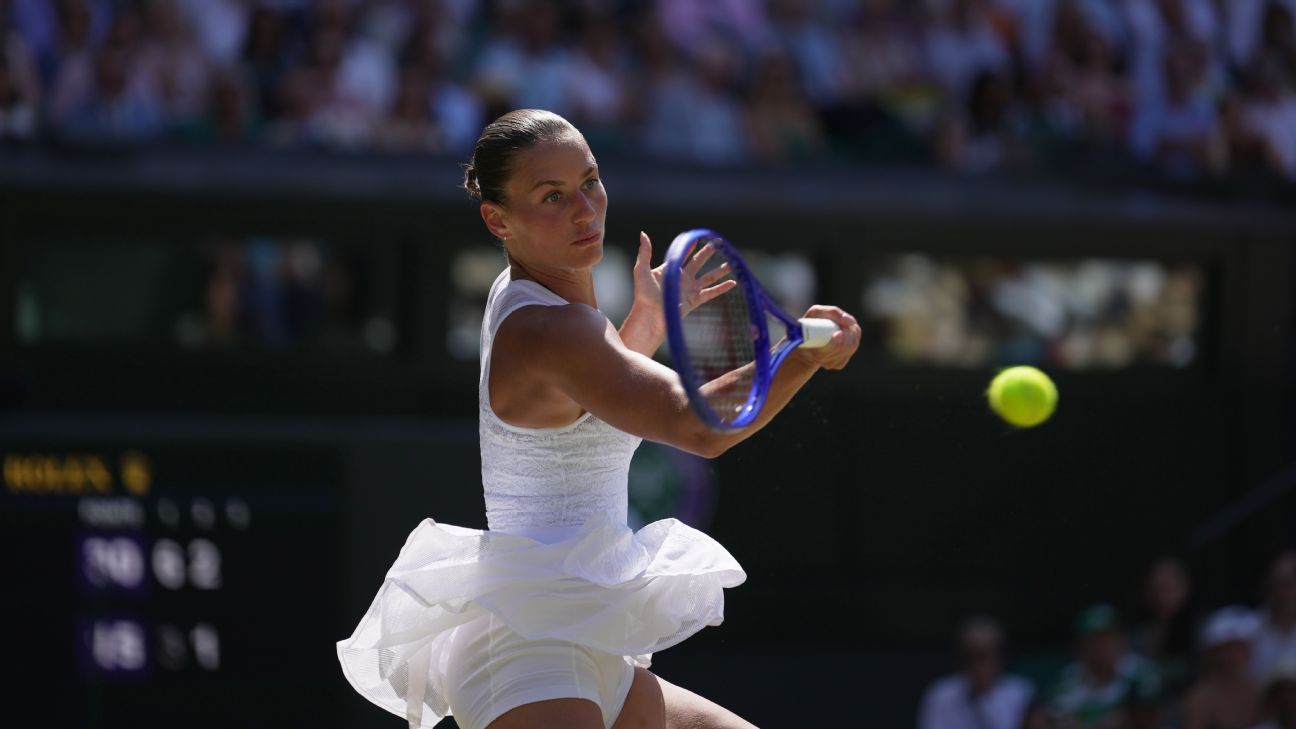
After advancing to her first Wimbledon semifinal the Ukrainian twelfth seed has shouldered an entire season of layered demands that stretch far beyond the grass courts of SW19. Marta Kostyuk has balanced point-by-point focus with the heavier weight of events thousands of kilometres away while mixing heavy crosscourt drives with occasional inside-out forehands to stretch opponents and seize control after even opening sets.
Pressure builds from Paris to London
The psychological thread runs straight from her French Open semifinal loss to Mirra Andreeva, where the two skipped the customary handshake that has become routine between Ukrainian and Russian players. That defeat arrived after a strong clay swing yet set the tone for a grass stretch marked by the same refusal to compartmentalise completely. Kostyuk has described nights when news from Kyiv intruded on her routine, including an 11-hour drone and missile attack that killed at least 21 civilians and another strike that damaged residential streets 5 kilometres from her parents home.
Through it all she has maintained the same pre-match rituals, reviewing patterns such as one-two combinations that worked on Centre Court while acknowledging the difficulty of shutting out distant realities. Her approach has been to absorb the schedule without letting external noise alter shot selection or tempo on court. She has spoken of trying to stay aware yet not allow the events to influence her too much, a balance that has carried her through four rounds already this fortnight.
Grass adjustments sharpen transition game
The twelfth seed has sharpened her transition game on the slick grass, favouring lower slice backhands that skid and force opponents into defensive positions rather than allowing them clean swings. She mixed crosscourt heavy topspin with sudden inside-in changes of direction during her quarterfinal win over Jasmine Paolini, keeping rallies short and preventing extended baseline exchanges. Her one-two combinations have evolved on the surface, with a wider first-serve target that opens the court for the follow-up inside-out forehand rather than the higher-risk down-the-line attempts she leaned on at Roland Garros.
Against the quicker bounce she has shortened her backswing on returns, taking the ball earlier to neutralise pace and push opponents behind the baseline before they can dictate. Those adjustments matter when she steps out against Linda Noskova of Czechia, a player whose flat ball striking can exploit any hesitation on slower reactions. The draw has left no Russian singles players in the tournament, so her path to a potential first Wimbledon final runs through the Czech right-hander whose aggressive returns could punish any second-serve vulnerability.
In the other semifinal American Coco Gauff faces Karolina Muchova, another contest where surface speed favours players who can vary height and depth on short notice. She is the second woman from Ukraine to reach the semifinals at Wimbledon; Elina Svitolina did it in 2019 and 2023, losing both times. Rankings points at stake add pressure: a win here would lift her inside the top ten and improve seeding math for the hard-court swing that follows.
IOC ruling stirs renewed Olympic focus
International Olympic Committee’s decision to provisionally lift its ban on Russia and recommend that individual sports drop the neutral status for athletes drew an immediate response from the player. Kremlin on Wednesday welcomed the IOC’s decision as an important step toward reinstating the rights of Russian athletes, yet Kostyuk sees the move as removing necessary guardrails that protected competitive equity since the war between Russia and Ukraine broke out in 2022. My thoughts are that it’s terrible. I think it’s very, very far from fair play for all the countries involved here, not just for Ukraine. I 100% don’t agree with this decision. ... I just want to go out there and hopefully beat every single Russian I play in the Olympics.
She voiced that stance right after her quarterfinal win over Jasmine Paolini, a match where she mixed heavy crosscourt drives with occasional inside-out forehands to stretch the Italian and seize control after an even opening set. The stance aligns with her broader refusal to treat the current moment as ordinary, even as she competes at a career-high level on grass. The 24-year-old has kept her tactical clarity, blocking out the noise to maintain point-by-point discipline on a surface that rewards clean decision-making over raw power. Looking forward, the semifinal against Noskova offers a fresh test of whether the accumulated mental load can be converted into the cleanest possible tennis.