U.S. Hosts Hungary in Billie Jean King Cup Playoff Push

The American women, chasing a return to form after recent stumbles, welcome a surging Hungarian team to home courts in November, where every rally carries the weight of national revival.
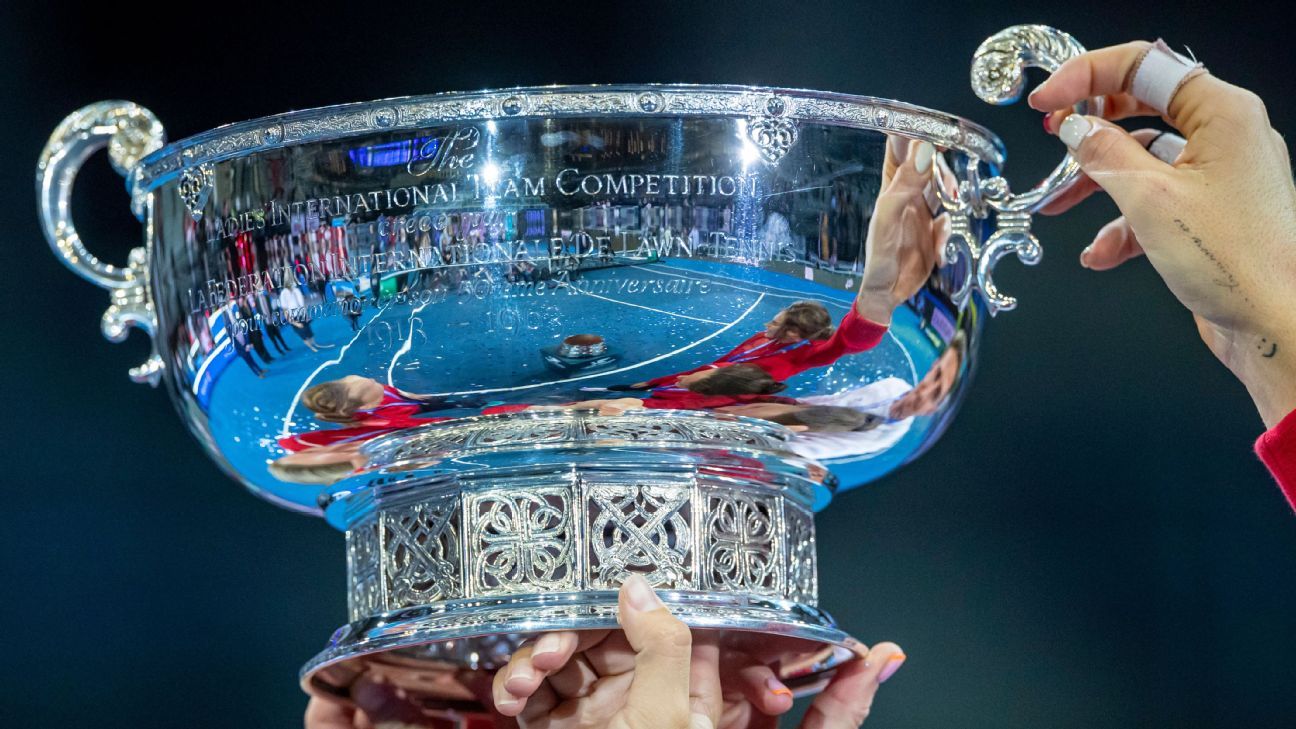
In the charged atmosphere of a November showdown, the United States women’s team prepares to host Hungary in the Billie Jean King Cup playoffs, a critical step toward reclaiming their dominant legacy. The record 18-time champions, still smarting from a 3-1 qualifying loss to Belgium this month, eye this home tie as a launchpad for resurgence in team tennis. With the crowd’s energy as an extra weapon, the Americans aim to channel depth and precision against an opponent fueled by fresh triumphs.
Hungary’s upset momentum builds
Hungary enters with quiet confidence, bolstered by Anna Bondár, a Billie Jean King Cup regular whose Thursday upset over No. 7-ranked Elina Svitolina at the Madrid Open marked a milestone. It was the first time a Hungarian woman toppled a top-10 player since Timea Babos defeated Coco Vandeweghe in 2018, signaling a shift in the team’s baseline firepower. Bondár’s heavy topspin and inside-out forehands could stretch the U.S. defense on indoor hard courts, forcing returns that test consistency in crosscourt exchanges.
The visitors’ strategy might lean on aggressive 1–2 patterns, using her momentum to disrupt American serves and extend rallies into pressure points. This infusion of belief transforms Hungary from underdogs into a unit capable of tactical surprises, where slice defenses counter deep balls and down-the-line passes exploit gaps. As the tie unfolds, expect the psychological edge to tilt with each converted break, amplifying the home crowd’s roar.
American depth seeks home control
The U.S. squad, drawing from top-20 talent, plans to neutralize threats through matchup savvy, pairing grinders against Bondár‘s power to prolong points and induce errors. Hosting provides a buffer for rotations, preserving energy with varied serves—perhaps a slice out wide followed by a heavy inside-in forehand—to disrupt Hungarian rhythms. After reaching the final last year for the first time since 2018, this playoff victory would propel them toward the 2027 qualifiers, avoiding a slide to regional play.
Tactics will hinge on surface familiarity, where indoor conditions reward quick adjustments and net approaches to shorten points against aggressive returns. The emotional undercurrent runs deep, with players weaving individual grit into collective resolve amid the season’s toll. Victory here isn’t just advancement; it’s a statement of poise under pressure, setting the tone for a broader campaign.
Global draw heightens the drama
Thursday’s playoff pairings add layers to the international stakes, with France hosting Australia in their first encounter since the 2019 final, where the French edged out a win in Perth through varied spins and crosscourt depth. Brazil welcomes 2023 champion Canada, pitting flair against precision on home clay that favors topspin loops, while Poland meets Sweden, Japan faces Argentina, Thailand takes on Switzerland, and Slovenia battles Indonesia. Each tie demands adaptation—underspin to counter flat hitters, one–two combos to break baseline stalemates—where winners join the 2027 qualifiers alongside Belgium, defending champion Italy, Britain, Kazakhstan, Spain, the Czech Republic, Ukraine, and automatic qualifier China as host.
For the U.S., this home stand against Hungary pulses with redemption’s promise, where tactical chess meets unyielding spirit. As November approaches, the focus sharpens on unified purpose, turning potential pitfalls into pathways forward in women’s team tennis.