Seeds crack under Tokyo’s hard-court glare

In the electric hum of the Japan Open, Frances Tiafoe and Denis Shapovalov battle elusive serves and mounting defeats, their outbursts and quiet fades marking a season’s deepening strain.
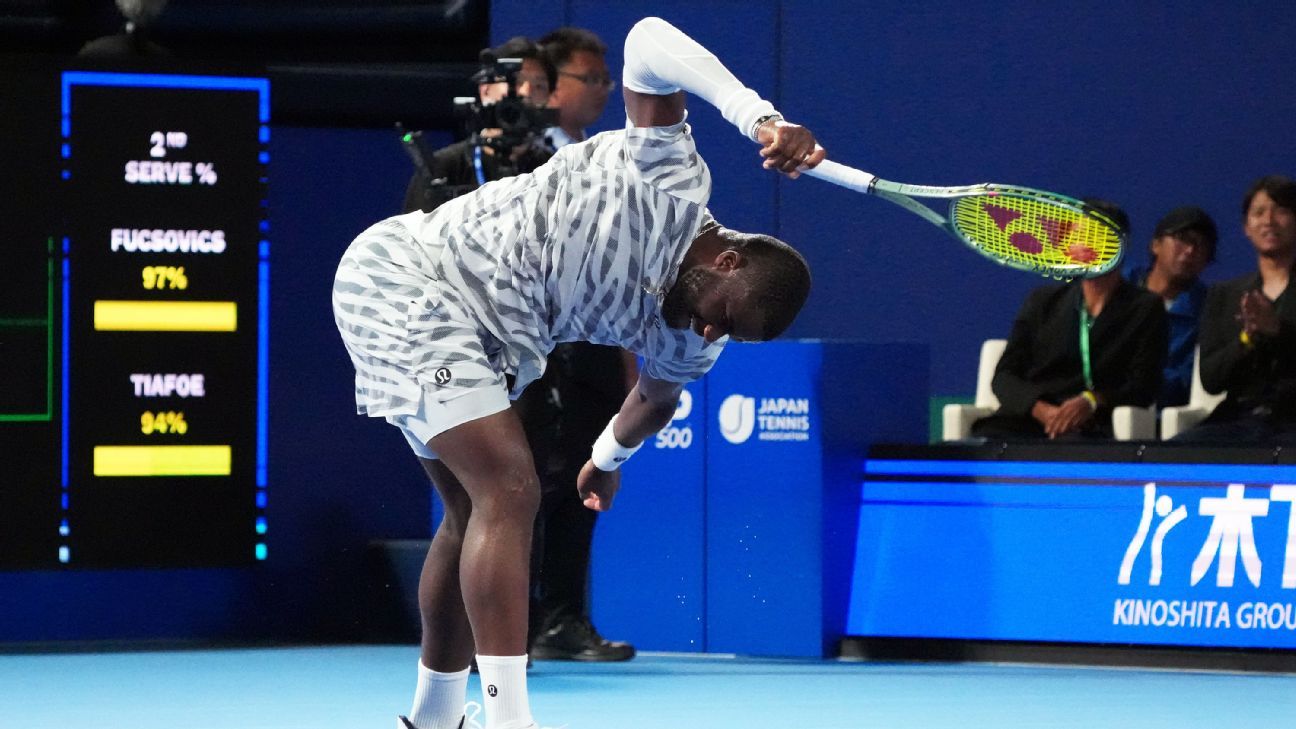
Full screen
The hard courts at Ariake Coliseum shimmered under Tokyo’s floodlights, their swift pace amplifying every misstep in the Japan Open’s opening salvos. Rackets sliced through humid air, but for two seeded contenders, the evening carried the weight of unraveling form, turning potential triumphs into stark reckonings. Frances Tiafoe, the eighth seed, watched his qualifier foe exploit vulnerabilities, while across the draw, Denis Shapovalov confronted a defender who turned aggression into exhaustion. These upsets rippled through the tournament, a reminder that Tokyo’s unforgiving surface spares no one chasing redemption.
Fucsovics advanced with tactical poise, his flat groundstrokes thriving on the venue’s speed, setting up a second-round clash with either Jordan Thompson or Brandon Nakashima. For Tiafoe, the outburst signals a need for mechanical tweaks before the Asian swing intensifies, where every point rebuilds or erodes the path to year-end resurgence.
Tiafoe’s frustration erupts on serve
From the baseline, Tiafoe’s duel with qualifier Marton Fucsovics hinged on a first serve that deserted him amid the hard court’s crisp bounce. He seized the opener 6-3 with aggressive inside-out forehands that stretched the Hungarian wide, yet his delivery faltered at 52 percent effectiveness, inviting deep crosscourt returns that disrupted his rhythm. Fucsovics pounced in the second set, blending steady baselines with underspin slices to force a 6-1 collapse, the American’s errors mounting like shadows lengthening over the court. As the decider stretched to 5-5, the toll of Tiafoe’s fourth straight loss—after a third-round exit to Jan-Lennard Struff at the US Open and twin defeats in Davis Cup qualifying against the Czech Republic—pressed down. Now slipped to 29th in the rankings, he clawed back only for Fucsovics to clinch it with a forehand winner down the line. In that raw moment, Tiafoe smashed his racket against the surface, the frame splintering in a thunderous release that hushed the crowd, his inner storm breaking free.it’s tough when the serve isn’t there, but you fight through it.