Australian Open 2026 Contenders Ranked from Favorites to Surprises

Melbourne’s hard courts await as Jannik Sinner and Aryna Sabalenka lead the 2026 Australian Open favorites, but underdogs like Learner Tien and Victoria Mboko lurk with breakout potential in a field defined by rivalries and tough draws.
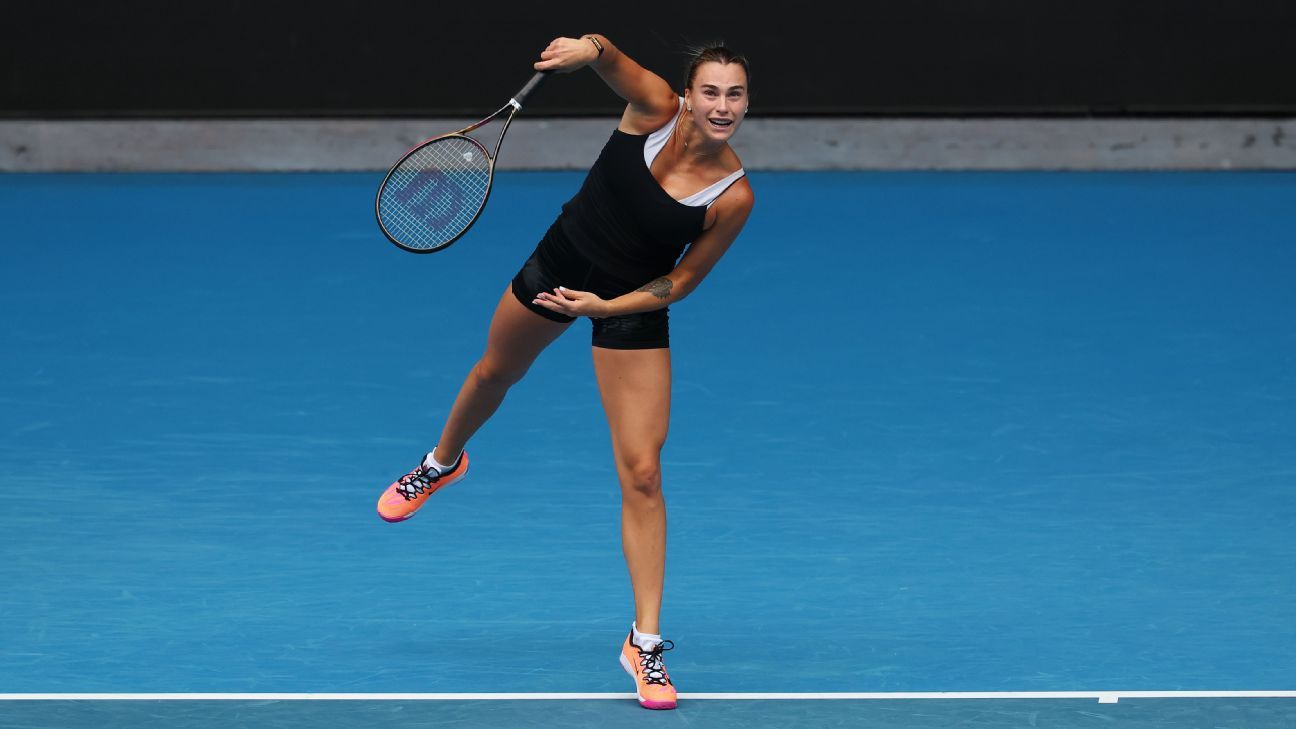
The first Grand Slam of 2026 ignites in Melbourne this weekend, where the men’s and women’s hierarchies feel sharper than ever. Jannik Sinner and Carlos Alcaraz dominate the ATP, with Sinner unbeaten at 32-0 against non-Alcaraz opponents across his last five majors. On the WTA side, Aryna Sabalenka rules hard courts like Iga Swiatek owns clay, her two losses in six Slams there underscoring a grip that even extended to beating Swiatek on her preferred surface last year.
Alcaraz boasts six Slam titles before turning 23 in May, outpacing the combined three majors won by Novak Djokovic (4a27bb1c-2422-55c3-208b-9e9d8c1f30af) and Roger Federer at that age. Sabalenka enters as world No. 1 after 63 wins in 2025, including a second straight US Open where she dropped just one set. Yet Slams breed chaos, turning clear paths into tests of nerve under the relentless Aussie sun.
Nothing’s guaranteed during a fortnight, however, and even if we think we know how the Australian Open will end, each Slam gives us a unique ride -- and countless secondary storylines.
Bill Connelly of ESPN outlines the top 20 noise-makers, blending DraftKings odds with Tennis Abstract probabilities to spotlight tactical edges and draw pitfalls. Sinner tops the list at -120 odds and 52.6% chance, his blistering deep groundstrokes and court-center resets evoking Andy Murray‘s defense fused with offensive punch. He converts more first serves than any big hitter, but seven losses in nine to Alcaraz remain his riddle, though a recent 7-6, 7-5 Tour Finals win in Riyadh via ace-heavy serving hints at progress.
Sinner chases perfection against rival pressure
His draw favors him, with eight straight wins over Ben Shelton looming in the quarters, where Sinner’s heavy topspin crosscourts can stretch the American’s lefty power wide. Retrieval turns corners into counters, his inside-in forehands landing flat and deep to force errors before opponents reset. Every point feels scripted for the two-time defending champ, yet Alcaraz’s chaos in a potential final tests if Sinner can dictate without flinching.
Alcaraz follows at +180 odds and 33.6% probability, his 2025 resurgence—10 finals in 11 events after a slow start, including French Open glory and a four-set US Open over Sinner post-targeted drills—sets up a career Slam pursuit. He’s never passed Melbourne’s quarters despite two titles each at the other majors, now without longtime coach Juan Carlos Ferrero, with whom he surprisingly parted ways in December. A quarterfinal against Alex De Minaur or Alexander Bublik demands his explosive inside-out forehands to exploit the low bounce.
Alcaraz rebuilds amid coaching uncertainty
The Spaniard’s one-two pattern—serve into drop-shot backhand—thrives on hard-court speed, but De Minaur’s footwork could drag rallies long, exposing any early rust. Post-Wimbledon break sharpened his Sinner game, manhandling the Italian in New York, yet this void adds mental weight as he eyes semis against the Italian. Momentum from late 2025 suggests he channels doubt into his trademark fire, turning Melbourne’s tempo to his advantage.
Sabalenka sits at +185 odds and 33.3% implied win, her Brisbane tuneup flawless—no set past 5-all—easing her into a draw softened by Elena Rybakina and Swiatek’s clustering. She reached finals in seven of 10 hard-court events last year, her power serve-volleys skidding low to jam returns. Semis against Coco Gauff test her inside-in bombs against the American’s reach, but her throne feels secure.
Sabalenka powers through favorable paths
After Australian and French finals losses plus Wimbledon semis in 2025, she avoided a barren great year with that US Open roll, her flat forehands forcing weak replies for putaways. The crowd’s pulse in Rod Laver Arena amplifies her roar, yet avoiding a repeat of that pressure-cooker demands sustained aggression. Her quarter against Jasmine Paolini allows early rhythm-building, positioning her for a deep charge.
Swiatek ranks fourth at +500 odds and 10.0% chance, her 62 wins including a Wimbledon masterclass—two games dropped in the final rounds—but hard courts expose clay biases after no finals there last year. United Cup defeats to Gauff and Belinda Bencic signal tweaks needed for her spin-heavy loops against flat hitters. A fourth-round clash with Naomi Osaka, then Rybakina in quarters, pits her underspin slices against power serves on this surface.
Gauff, +700 and 9.9%, enters at 21 with a 2024 semis here, her French Open title and three 1000 finals marking highs despite a 10.3% double-fault rate—worst among top-50. She’s 3-2 lifetime against Sabalenka and Swiatek, including a 2026 United Cup edge over the Pole, but must tame that serve to fuel her speed in crosscourt exchanges. A dream second-round with 45-year-old Venus Williams, post-upset of Olga Danilovic, recalls their famous 2019 Wimbledon battle, stirring nostalgia amid her quarterfinal vs. Mirra Andreeva.
Rybakina at +800 odds and 12.8% boasts 2022 Wimbledon and 2023 Aussie final runs, her serve elite behind only Osaka’s, but 2025 swung wildly—top-10 exit in April after coach split, then reunion and 11-of-12 wins to claim Tour Finals with four top-five scalps. Flat groundstrokes thrive on Melbourne’s pace, setting up a titanic quarter vs. Swiatek where her down-the-line backhands slice through spin. When locked in, she’s top-three caliber, her quarter easing a semi push.
Novak Djokovic, 38 and 10-time Aussie winner with 24 Slams, plays selectively—13 events in 2025 yielding four semis and 27-4 in his last six—building form mid-draw despite five straight Sinner losses and an Alcaraz US Open semis rout. His one-two serve-forehand remains lethal, masking speed dips with placement. At +2500 odds and 0.6% chance, a quarter vs. Lorenzo Musetti or Taylor Fritz tests veteran guile.
Osaka, +3000 and 1.7%, two-time Aussie champ, surged post-2024 return with Montreal finals and US Open semis sweeping Gauff, her serve back elite. Illness limited her to four wins since, but top-20 return signals readiness for a fourth-round vs. Swiatek. Her flat power could disrupt the Pole’s rhythm early.
Madison Keys, +3000 and 1.2%, claimed her first Slam in a 2025 Aussie final epic over Sabalenka, sparking a 16-match streak to No. 5, but faded to 19-14 after with no August wins. January hints recovery, yet beating Jessica Pegula and Amanda Anisimova for semis pressures her flat game.
Daniil Medvedev, three-time Aussie finalist, hit 65% wins and 1-4 Slams in 2025—worst since 2017—but rebounded post-top-15 drop with 16-of-19 matches and two titles, now No. 12. At +3000 and 1.2%, his elastic defense absorbs in Zverev’s quarter, a semi-friendly zone vs. Alexander Zverev. Felix Auger-Aliassime in fourth round challenges his counterpunching.
Zverev, +3500 and 2.4%, three-time semis and 2025 finalist, missed No. 1 shot amid clay stumbles, his serve and suffer-ball tough to crack at 4-11 vs. top-10 last year. A quarter vs. Auger-Aliassime demands consistency to reverse top-five woes (1-6). His baseline endurance suits the draw’s openness.
Amanda Anisimova (223cc423-bf69-2077-800f-c38d0d1e79f7), +900 and 6.7%, emerged as 2025’s tale with 47 wins and 4-4 vs. Sabalenka, Swiatek, Gauff, rebounding from Wimbledon’s 6-0, 6-0 final loss to the Pole with a US Open final run. Her backhand—perhaps the tour’s best—rips crosscourt winners, no Melbourne past fourth round but game complete vs. Pegula in quarters.
Mirra Andreeva (734dd570-209d-349d-8de8-7ce7c9206163), 18 at +1600 and 5.0%, Slam heir since pro debut, won Dubai and Indian Wells early 2025 but injuries sank her late (six-of-10 losses). Adelaide final restarts strong, her all-court finesse primed for Gauff quarters fireworks.
Pegula, +4000 and 5.0%, grinds Slams extremely—four early exits but two semis and a final past two years—beating Sabalenka and Gauff lately, 3-0 over Anisimova. At 31, her quarter decides all or nothing.
Jasmine Paolini (1cb6cc14-00ad-6c8b-301e-aa8adc243503), +5000 and 2.6%, two 2024 finals led to 46 wins and No. 7 high, but five straight top-10 losses and seven-of-13 overall dent vs. Sabalenka quarters.
Taylor Fritz (6493155f-cacc-7aa5-ba78-d952efa4c652), +6000 and 0.6%, shores weaknesses but knee issues and 3-4 2026 start cloud, Musetti or Auger-Aliassime early tests his baseline duels.
Alex De Minaur (b44d8a17-3923-7f78-455a-9c7ca03388f4), +6500 and 1.0%, sixth-ranked speedster 25 points from top-five, quarters in five-of-seven recent Slams including 2025 here, but 0-18 vs. Sinner-Alcaraz caps. Bublik in fourth round suits his hustle.
Victoria Mboko, +3500 and 1.0%, 19-year-old ITF dominator (five early 2025 titles) jumped WTA with French/Wimbledon wins and Montreal over Gauff, Rybakina, Osaka, plus Hong Kong title. Adelaide final sets fourth-round power vs. Sabalenka.
Learner Tien, +15000 and 0.2%, big-game with 4-3 top-10 past year, upsets of Zverev/Medvedev fueled top-30 rise; Joao Fonseca‘s back clears youth path vs. Auger-Aliassime third round.
Dark horses abound: Karolina Muchova (2021 semifinalist, +5000), Elina Svitolina (2025 quarterfinalist, +6500), Elise Mertens (2018 semifinalist, +10000), Emma Navarro (2025 quarterfinalist, +10000), Paula Badosa (2025 semifinalist, +13000), Lorenzo Sonego (2025 quarterfinalist, +13000), Karen Khachanov (2023 semifinalist, +15000), Tommy Paul (2023 semifinalist, +15000), Anastasia Pavlyuchenkova (2025 quarterfinalist, +15000), Stefanos Tsitsipas (2023 finalist, +15000), Sofia Kenin (2020 champion, +20000), Dayana Yastremska (2024 semifinalist, +25000), Marin Cilic (2018 finalist, +30000), Karolina Pliskova (2019 semifinalist, +30000), Stan Wawrinka (2024 champion, +30000), Venus Williams (bb2deb63-4fce-9e10-80e8-e16590139fb3) (two-time finalist, +30000), Magda Linette (2023 semifinalist, +50000), Marta Kostyuk (+3500), Clara Tauson (+4000), Barbora Krejcikova (+5000), Liudmila Samsonova (+5000), Leylah Fernandez (+6000), Emma Raducanu (+8000), Linda Noskova (+10000), Iva Jovic (+15000), Tereza Valentova (+15000). These paths promise upsets where mental edges and surface tweaks decide who claims the Daphne Akhurst and Norman Brookes trophies.