Abdo takes helm as Tiley departs Tennis Australia

The switch brings commercial experience from rugby league into an organization balancing Australian Open success against the need for deeper year-round player pathways across varied surfaces.
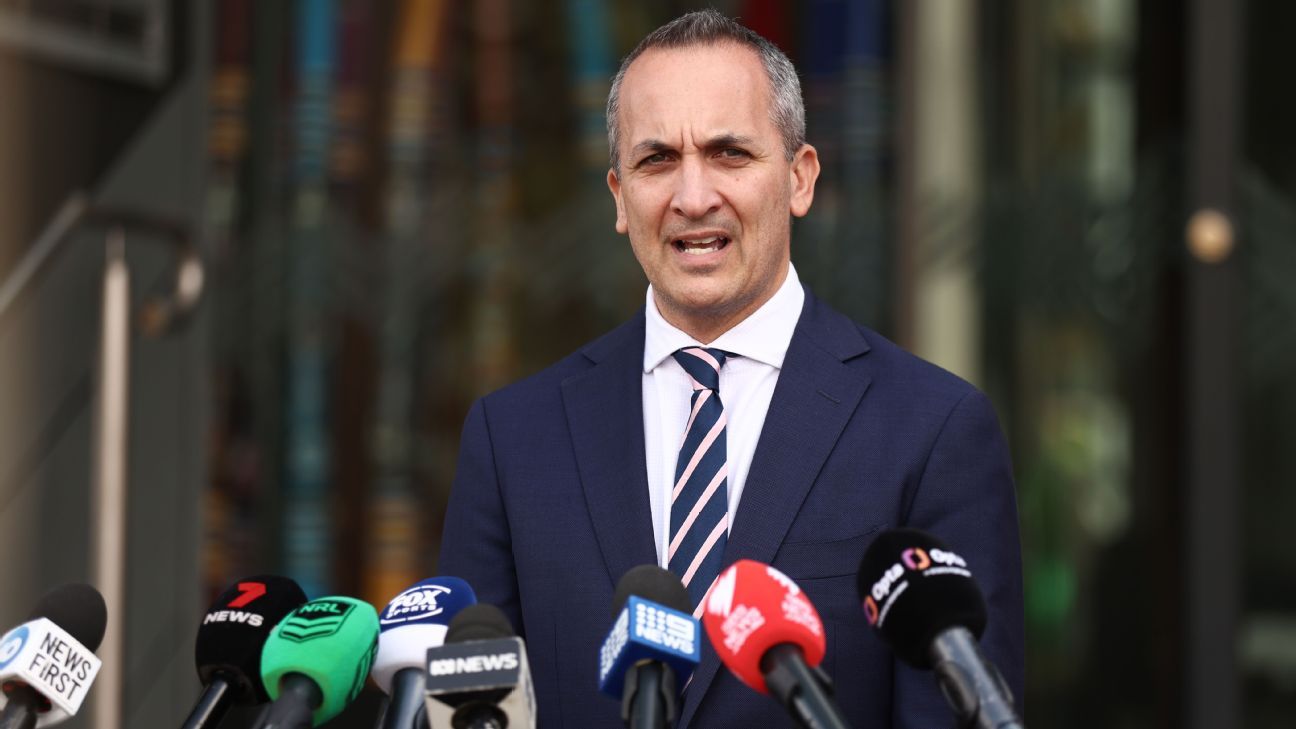
Tennis Australia has hired Andrew Abdo from the National Rugby League to replace Craig Tiley as chief executive officer. The move arrives at a moment when the sport must convert one high-profile fortnight into consistent depth across the full season.
Tiley announced in February he was quitting his roles as Australian Open tournament director and Tennis Australia CEO to join the U.S. Tennis Association, which runs the U.S. Open. He had become the Australian Open’s tournament director in 2006 and oversaw its expansion to a 15-day event, breaking attendance and revenue records. He became the CEO of Tennis Australia in 2013.
“Tennis Australia has a unique role in Australian sport. The Australian Open is already one of the leading sporting events in the world. The opportunity is to keep evolving it – as a global event, as a fan experience, and as a platform that brings more people into the sport.”
Expansion legacy meets commercial discipline
Abdo, who is also from South Africa, has been working with Australia’s NRL since 2013, initially as chief commercial officer and, since 2020, as CEO. He played a pivotal role in the league navigating the COVID-19 pandemic and its expansion and development. Tennis Australia said a global recruitment search attracted more than 150 candidates and Abdo stood out for his record of leadership in a high-profile national league.
The selection signals intent to apply league-style revenue strategies to a sport whose marquee event already draws massive crowds yet still needs stronger infrastructure outside that window. Early signals suggest he will apply data-driven scheduling and sponsorship models honed in rugby league to lengthen the competitive runway for domestic prospects.
Pathways beyond the fortnight face scrutiny
Tennis is one of the nation’s most popular sports, and participation is growing, Tiley said in a statement. A great group of players performing at the highest level and a world-class team developing the next generation of talented players and coaches now pass to new oversight. Australian tennis great Pat Cash, the 1987 Wimbledon champion and two-time Davis Cup winner, urged Abdo to prioritize player development at the grass roots of the game Down Under.
Can an NRL commercial exec fix the heart and soul of Oz tennis? I wish Andrew the best of luck, Cash wrote in a social media post questioning the strength of the national pathways to the elite level. The Australian Open is a major commercial success that has continued to expand and innovate, but Cash wants the sport’s national organizers to pay more attention to the 49 other weeks to the year. Abdo inherits both the revenue engine and the obligation to convert that engine into consistent training environments, coaching pipelines, and surface-specific preparation that keeps young players competitive on clay, grass, and indoor hard courts alike.
Calendar demands test long-term resilience
The first Grand Slam slot brings its own tempo, with players arriving after limited preparation time and facing immediate high-stakes matches on hard courts. Abdo inherits an operation already tuned to that early-year intensity, yet the broader challenge involves fostering depth so that results do not hinge on a handful of established names. Internal conversations have centered on how to sustain momentum across the full year rather than concentrate energy solely on that fortnight.
The psychological weight of maintaining that pipeline while the calendar presses forward from Melbourne each January now shifts squarely onto Abdo’s shoulders. Abdo has spoken of the chance to evolve the event further, yet observers note the real test lies in translating commercial discipline into consistent on-court progress for emerging Australians. The season-long rhythm of preparation, recovery and adjustment will test whether the new executive can ease the accumulated pressure on development structures.