Sinner’s Subtle Shifts Challenge Alcaraz’s Grip

Jannik Sinner defends his Australian Open crown with tweaks honed from a stinging US Open loss, injecting variety to counter Carlos Alcaraz’s head-to-head edge in their intensifying rivalry.
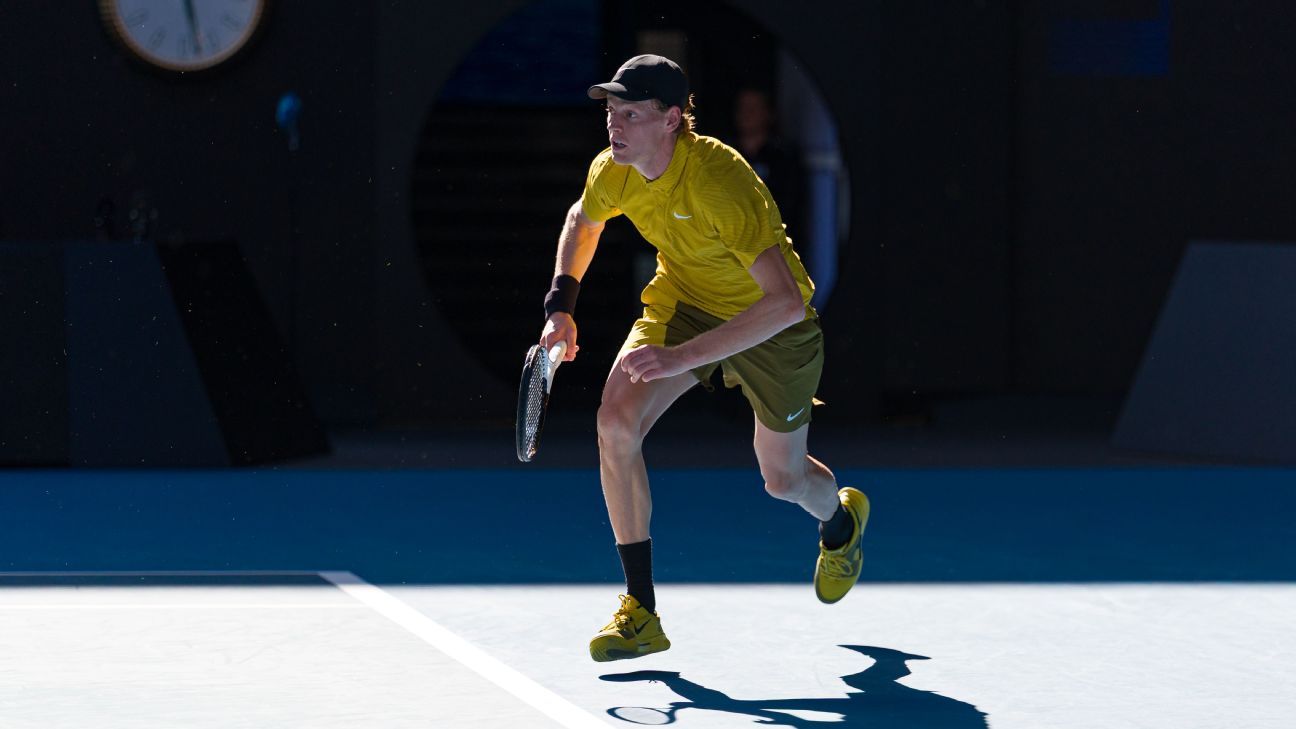
In Melbourne’s rising heat, Jannik Sinner arrives as the two-time defending champion, his 2025 triumphs—two majors claimed and a championship point lost in another—still echoing through the draw. Carlos Alcaraz casts a long shadow, their matchup locked at 10-6 in the Spaniard’s favor, with seven of the last nine going his way until Sinner’s Wimbledon upset snapped the streak. The US Open final defeat last September laid bare the Italian’s predictability against such flair, sparking an offseason pivot toward unpredictability on these hard courts.
Sinner’s baseline power, once a relentless force, demanded evolution to match Alcaraz’s all-court chaos. Post-New York, he captured four of five titles, including the ATP Finals, layering drop shots and net rushes atop his heavy topspin rallies. The Australian Open’s plexicushion surface, slower than New York’s, rewards these adjustments, where a timely inside-out forehand can pull opponents off-balance before a follow-up volley.
“I was very predictable today,” he said in New York. “During this tournament, I didn’t make one serve-volley, didn’t use a lot of drop shots, and then you arrive to a point where you play against Carlos where you have to go out of the comfort zone. I’m going to aim to ... [try] to be a bit more unpredictable as a player because I think that’s what I have to do ... to become a better tennis player.”
Variety rises in measured steps
according to Tennis Data Innovations, Sinner’s shot variety climbed from 11.7 percent to 13.7 percent after the US Open—a 17 percent increase, though below the tour average of 19.1 percent. Slices edged up from 3.6 percent to 4.2 percent, drop shots from 1.5 percent to 2 percent, forcing rivals to rethink footing on the bouncy hard courts. Net play, his key focus, jumped from 3 percent to 4.3 percent, turning crosscourt exchanges into aggressive one–two patterns that disrupt rhythm.
These aren’t radical shifts but precise tweaks, like refining serve mechanics for smoother transitions. In Melbourne’s opening rounds, Sinner eases them in, adapting to the sun-baked conditions where balls grip the surface, amplifying his topspin while occasional underspin adds bite. Against Alcaraz’s instinctive drops—three sealed his Tokyo win—these tools aim to mirror that spontaneity, evening the psychological tilt in potential semifinals or finals.
Endurance anchors the evolution
A third straight Australian Open title would place Sinner alongside Novak Djokovic, the only other man to achieve it twice in the Open era, a mark that underscores the stakes amid the tournament’s grueling five-set format. Offseason work hammered physical conditioning, vital for matches that stretch under floodlights, blending speed with stamina to sustain intensity. Mentally, he builds resilience to stay composed through crowd surges and tiebreak pressures, turning the season’s marathon into a strength.
Sinner topped 2025 in service and return games won, a foundation solid yet vulnerable to Alcaraz’s prolonged exchanges. His changes broaden appeal across surfaces, from clay’s slides to grass’s glides, fostering comfort in any rally. As the draw unfolds, these increments—more down-the-line backhands slicing through defenses—position him to redefine the rivalry, where small edges could shatter the Spaniard’s dominance.
Icons illuminate the path ahead
Transformation carries risks, as history shows. Coco Gauff, after her second Grand Slam in 2025, wrestles with second-serve fixes, progress halting amid the tour’s demands. Ivan Lendl’s 1980s net push skipped French Opens—three titles there—yet yielded no Wimbledon glory, a warning against fixation.
Andy Murray, coached later by Lendl, layered power onto his counterpunching, reaping rewards only after seasons of refinement. Jack Draper, shaped by a smaller stature, shifted from defense to attack over years, echoing Sinner’s deliberate growth. Roger Federer adapted against Rafael Nadal, but broader innovations like a larger racket flipped seven of their final eight meetings.
Sinner draws from these without obsession on one foe. “We worked a lot on trying to make the transition to the net,” he said Friday in Melbourne. “The serve, we changed a couple of things. But all small details. When you are at the top level, small details make the difference. I would say [in] the first matches, you try to get used to the match feeling again, and then after, you try to add something. We see how things go. We see what conditions we play in.”
“If you add something to your game, the aim is to get better as a tennis player,” Sinner said. “it’s not about beating one guy. it’s more about feeling comfortable in every situation. That’s what we tried to do in the offseason.
“We worked a lot physically. The physical part now is so important because the matches can get very long but also very intense. The tennis now, it’s very fast. You have to be at the top physical level as long as you can. The season is very long, so you have to manage your body in the best possible way. Also, the mental ability to stay there always, it’s going to be very important.”
With the main draw firing up, Sinner’s refinements promise a deeper run, where variety meets power to challenge Alcaraz’s flair head-on. The Rod Laver Arena buzz builds, anticipation thick for clashes that could reshape 2026’s narrative, one unpredictable point at a time.