Sinner’s Paris Conquest Restores His Reign

In the charged atmosphere of La Défense Arena, Jannik Sinner withstands Felix Auger-Aliassime’s resistance to capture the Paris Masters, surging back to world No. 1 with a blend of grit and precision.
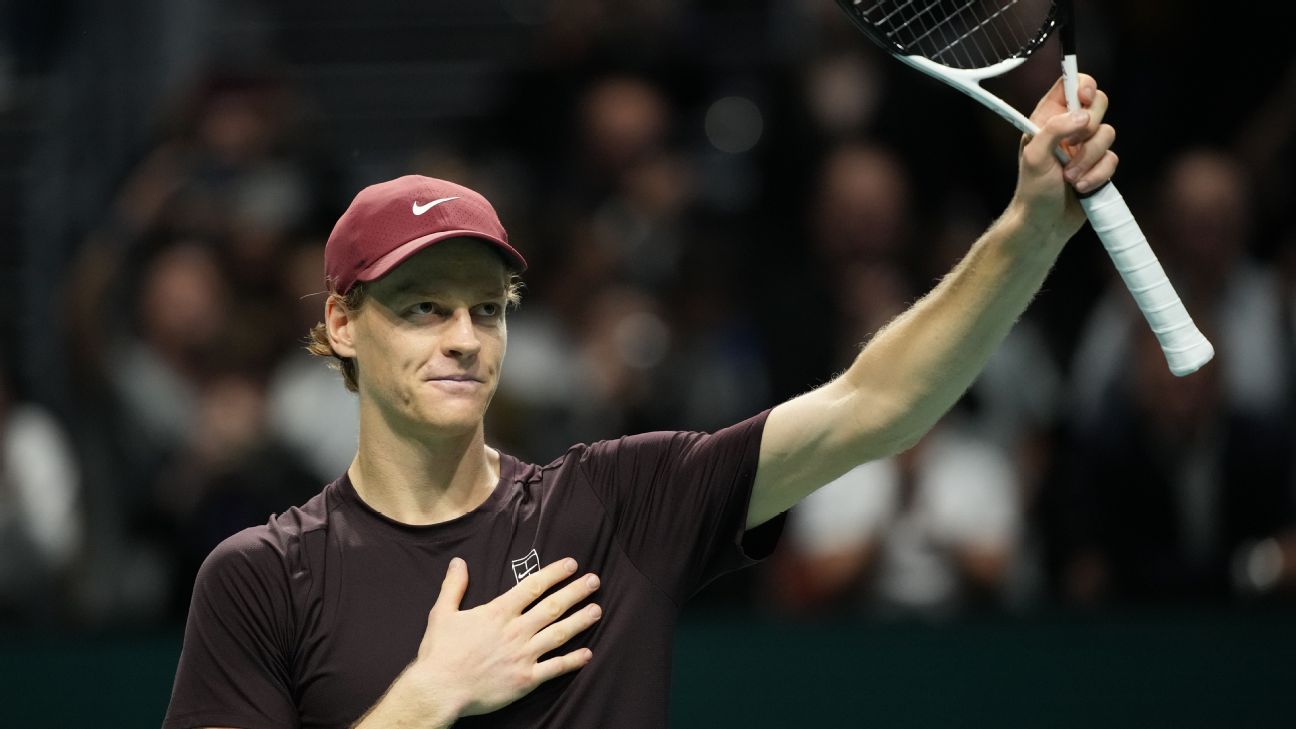
Under the bright lights of La Défense Arena, Jannik Sinner outmaneuvered Felix Auger-Aliassime in a taut 6-4, 7-6 (4) final, securing his first Paris Masters title and reclaiming the top ranking in men’s tennis. The Italian’s victory displaced Carlos Alcaraz from the summit, extending Sinner’s indoor winning streak to 26 matches after his recent triumph in Vienna. As the crowd’s energy pulsed through the arena, this win highlighted his evolution on swift surfaces, where every point carried the weight of a season’s ambitions.
Stakes heighten mental resolve
The four-time Grand Slam champion entered the match knowing a title would cement his lead, while his opponent fought for the eighth and final spot in the ATP Finals in Turin. Sinner’s preparation focused on sharpening his serve variations, using wide slices to pull Auger-Aliassime off the court and open angles for inside-out forehands. This mental fortitude, built through months of scrutiny, allowed him to stay composed amid the pressure, turning the Canadian’s aggressive returns into prolonged rallies that favored his baseline consistency.
Auger-Aliassime arrived with momentum from titles in Adelaide, Montpellier, and Brussels, his powerful one–two combinations testing Sinner early. Yet the Italian adapted by stepping inside the baseline on second serves, neutralizing the kick and forcing errors with crosscourt probes. Their rivalry, now tilted 3-2 in Sinner’s favor after this third straight win—including a US Open semifinal—revealed his growing edge in high-pressure encounters.
“it’s huge, honestly. It was such an intense final here, and we both knew what’s on the line,” Sinner said. “For him, it’s a very tough and difficult spot, but from my side, I’m extremely happy.”
Tactics clash in tight sets
The first set hinged on small margins, with Sinner breaking in the eighth game via a sharp 1–2 punch that drew an unforced error on the return. Auger-Aliassime’s serving depth kept the second set level until a time violation warning at 30-30 in the ninth game disrupted his rhythm, though he held firm to force a tiebreak. Sinner’s backhand precision dominated there, saving potential set points with down-the-line winners that exploited the indoor pace.
Throughout, the Canadian’s flat groundstrokes pushed Sinner deep, but the Italian countered with varied depths, mixing underspin slices to disrupt rhythm and flat drives to pin his foe back. He praised his opponent’s delivery post-match, noting how it demanded flawless execution on rare opportunities. This tactical interplay, under the arena’s echoing cheers, underscored Sinner’s ability to dictate tempo on faster courts.
“He was serving extremely well,” Sinner reflected. “You have to use your small chances well.”
Climax points to Turin promise
On his first match point, Sinner fired a crisp two-handed backhand down the line, the ball skidding past for the decisive winner as he tilted his head back in triumph. Arms raised, he patted his heart and waved his racket to the roaring crowd, a release after navigating a year of peaks and adjustments. These refinements— from enhanced return positioning to bolder net forays—have transformed challenges into dominance, positioning him as the favorite heading into the season finale.
Reflecting on recent months, Sinner expressed joy in his progress, tying team efforts to on-court results that now define his ascent. No matter the outcome in Turin, this Paris victory stands as a pinnacle of resilience, where psychological steadiness amplified his technical arsenal. The indoor streak’s continuation hints at more battles won through calculated poise, keeping the tour’s top echelon on alert as the year closes.