Beijing sets a generational final: Sinner’s standard vs Tien’s surge

Jannik Sinner extends his mastery over Alex de Minaur to book another hard-court final, while 19-year-old Learner Tien reaches his first tour title match after Daniil Medvedev retires. Coco Gauff edges Belinda Bencic in the parallel WTA draw.
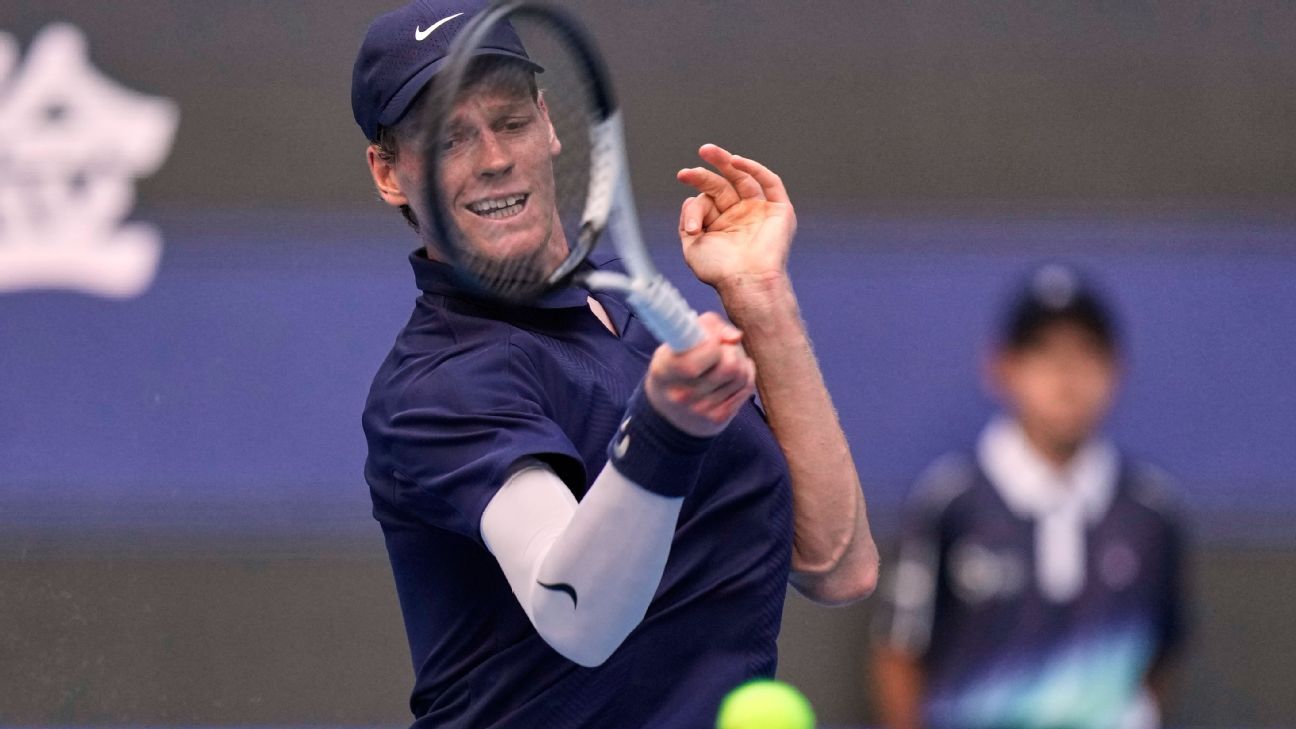
The China Open final will pit a sustained pace-setter against a teenager on debut. Jannik Sinner overcame Alex de Minaur 6-4, 3-6, 6-2, improving to 11–0 in a rivalry defined by the Italian’s heavier first strike. On the other half, 19-year-old Learner Tien, ranked 52, booked his first tour final after he trailed 5-7, drew level 7-5, and led 4-0 in the decider when Daniil Medvedev stopped.
Context matters. With the Asian swing underway and the U.S. Open having wrapped on September 8, Beijing’s medium-quick hard courts reward clean point construction and economical movement. The contrast here is sharp: the Italian arrives on the back of a sustained hard-court surge—nine consecutive finals on the surface—while the American teenager turns a breakout week into a chance at silverware.
According to on-site accounts, the semifinal felt like a baseline stress test that the favorite tilted late by reasserting forehand length and depth. He reduced risk at neutral, then accelerated into open lanes when the court geometry broke his way.
“I felt like the level was very high. Many great rallies, many great chances for both.”
Reading the matchup
The incumbent’s blueprint has been consistent. Against the Australian, he worked the backhand crosscourt until a seam appeared, then snapped down-the-line to change the axis and step forward behind an inside-in forehand. Expect similar one–two sequences in the final: establish the longer diagonal, drag the opponent wide with forehand inside-out, and close with a firm backhand down-the-line or a forehand taken early at shoulder height. His return stance has toggled sensibly—slightly deeper on first serves, assertive on second serves—to guarantee a playable ball and compress time on the next swing.
The newcomer’s path has been built on poise. Down 3-5 in the second set of his semifinal, he tightened margins, held the backhand crosscourt without overhitting, and chose his line changes judiciously. On serve, he leaned on body targets to blunt the returner’s swing, then used early-stance forehands to dictate without needing outright pace. When stretched, he is comfortable resetting with a measured slice to re-center the rally, provided the underspin stays low enough to avoid inviting an immediate forehand strike.
Biomechanics in brief
For the favorite, compact preparation and a late hip release underpin the forehand’s easy acceleration. He can sell the crosscourt and still redirect down-the-line with minimal tell, which is why his inside-in finish often lands on time even after a heavy, shape-filled ball to the opposite corner. The backhand’s straight path and quiet head stabilize contact, enabling flat redirections when he meets the ball above net height.
The teenager’s technique reads balanced rather than explosive. A stable base and moderate takeback keep the backhand organized under pace, helping him absorb and re-route heavy balls without drifting. His forehand contact looks most secure when he steps inside the baseline, trimming the swing and allowing clean inside-out or crosscourt acceleration; from neutral, that same economy helps him defend with depth rather than float.
What will decide the final
- Second-serve pressure: The favorite’s confidence stepping in on second serves routinely yields early 1–2 control. The underdog must vary body, T, and wide patterns to deny predictable replies and buy half a step to enter rallies on his terms.
- Directional discipline: Crosscourt backhand volume can lengthen points, but any short-center ball invites a down-the-line strike that flips court position instantly. The teenager’s best safeguard is height and depth, not outright pace.
- Scoreboard management: On this surface, momentum compounds. The Italian seldom gives back breaks; the American’s best scoring windows are early in sets—before patterns calcify—and in 30-all moments where his willingness to take the forehand early has paid dividends.
Wider lens and scheduling texture
Per the rhythm of this phase of the season—post–North American swing and before the tour’s indoor hard-court run—Beijing tends to reward players who can front-run with compact points and high first-ball quality. In that light, this final is a clean test of continuity vs possibility: a top-tier hard-court standard-bearer on one side, a first-timer translating composure into real scoreboard pressure on the other.
WTA thread: Gauff turns the screw
In the concurrent women’s event, Coco Gauff edged Belinda Bencic 4-6, 7-6(4), 6-2 to reach the last eight, nudging their head-to-head to 4-2. According to match coverage, the 2021 Olympic gold medalist had early traction, but the American’s tie-break poise reset the tempo and opened the court for freer baseline swings down the stretch.
Step back and the themes cohere: compressed travel, medium-quick hard courts, and a premium on clarity at neutral. Whether this Beijing final becomes a coronation for a player riding a months-long hard-court groove or a coming-out for a 19-year-old ranked 52, the deciding margins are likely to fit on a small handful of points—and how each man handles the next two or three balls after a neutral return may prove decisive.