Schwartzman and Verdasco Anchor 2025 ATP Retirements

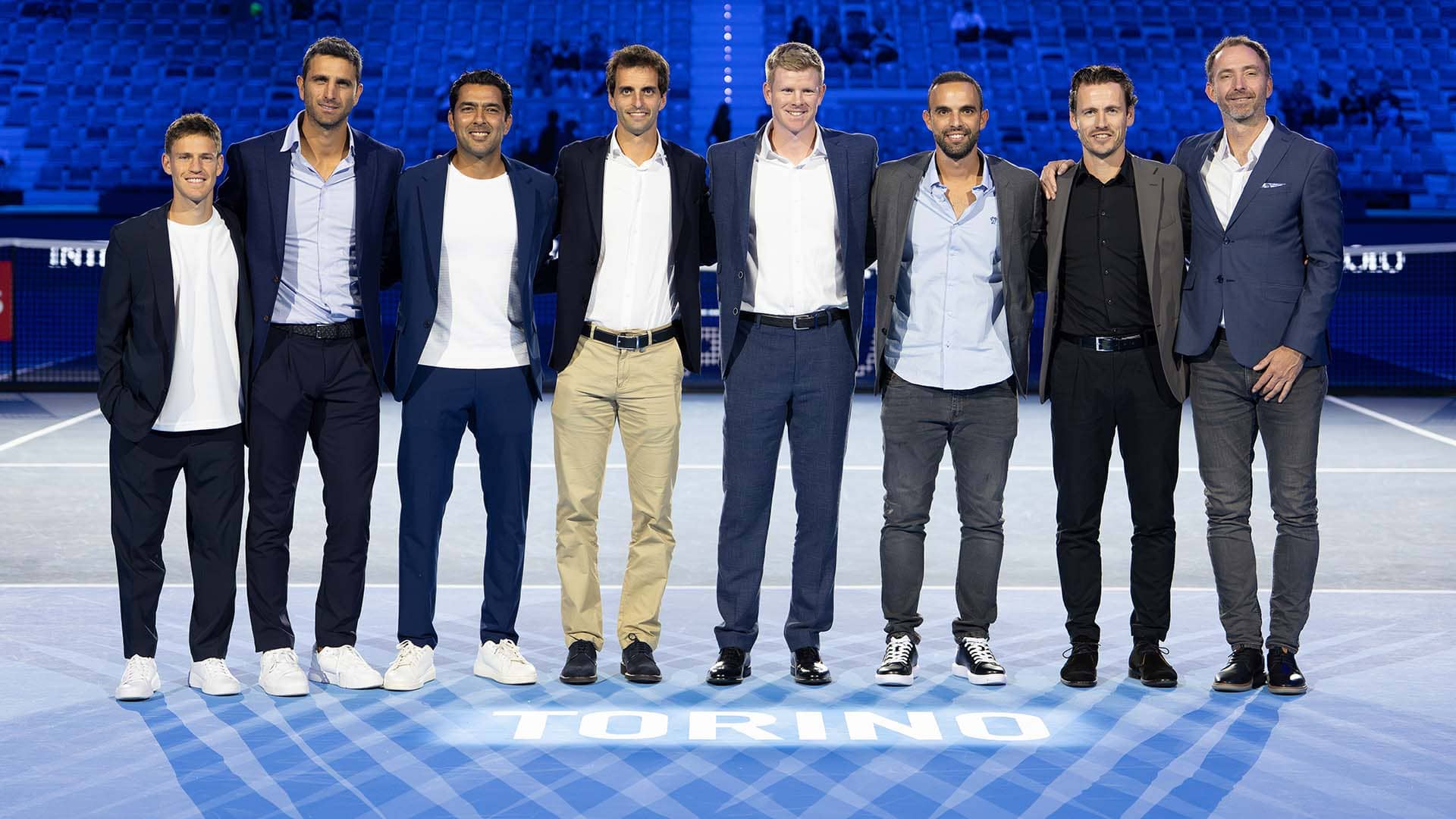
As the 2025 ATP season fades, Diego Schwartzman and Fernando Verdasco lead a procession of retirements, their battles on court revealing the grit that defined an era of relentless competition.

The 2025 ATP season slips away like a final backhand slice, leaving behind a trail of warriors who pushed limits until the body whispered enough. Our annual ‘Best Of’ series turns to these retirements, starting with Diego Schwartzman and Fernando Verdasco in Part 1, while Richard Gasquet and Fabio Fognini await in Part 2. Their stories pulse with the mental fire that turned underdogs into top-10 threats, from Buenos Aires crowds roaring approval to Doha’s quiet doubles court where legacies close. These exits remind us how the tour’s grind—endless rallies, surface shifts, and injury shadows—forces even the toughest to recalibrate dreams mid-swing.
Defying height with baseline fire
Schwartzman’s 5’7” frame never defined him; instead, it fueled a career where every point felt like a personal conquest against physics itself. He reached No. 8 in the PIF ATP Rankings, claiming four ATP Tour titles through a forehand loaded with heavy topspin that pinned taller opponents deep, forcing errors in prolonged exchanges. His discipline shone in 36 consecutive Grand Slams from Roland Garros in 2014, paired with 52 straight ATP Masters 1000 main draws that demanded unwavering focus across clay’s slow grind and hard courts’ quick bounces.
“I really like when people say to me, ‘You were a fighter, but you were also a very good tennis player’,” Schwartzman reflected in a first-person essay on his career. “Just being a fighter, you are not going to be at the top of the sport. You need to play good tennis. You need to have a good forehand, a good serve and good movement. Just being a fighter does not get you to the top.
“I was there because I was good at this sport. Nobody gave me a gift. I earned this. When I was young, I didn’t expect to achieve what I did. But during my career, I belonged.”
That 2020 Roland Garros semifinal on Paris clay captured his essence: compact swings whipping crosscourt angles to disrupt rhythm, inside-out forehands landing like precision strikes amid the crowd’s rising hum. At 33, he bowed out on home soil at the February ATP 250 in Buenos Aires, the air thick with emotion as his final serves echoed what it meant to belong among giants. His path inspires the next wave of short-game scrappers, proving tactical smarts can outlast any measuring tape.
Lefty serves carve lasting paths
Verdasco‘s journey spanned over 20 years, ending with a doubles pairing alongside Novak Djokovic in Doha after his last singles match in 2023. The Spaniard’s lefty serve, curving with slice to stretch returns wide, powered seven ATP Tour singles titles, including triumphs on home clay in Valencia 2004 and Barcelona 2010 where low-bouncing backhands skidded to keep rallies alive. He peaked at No. 7, racking up 559 tour-level wins that highlighted his knack for adapting flat groundstrokes to any surface, often using 1–2 patterns to transition from defense to attack.
National pride amplified his drive, contributing to Spain’s Davis Cup victories in 2008, 2009, and 2011, with that decisive fourth point in Argentina sealing the first as a memory etched in team glory. His 2009 Australian Open semifinal run remains legendary: toppling Radek Stepanek with aggressive net approaches, outdueling Andy Murray in baseline wars favoring his topspin lobs, and overpowering Jo-Wilfried Tsonga via down-the-line backhands before a grueling five-hour, 14-minute battle against Rafael Nadal.
“The biggest [memory] is the Davis Cup for my country, which I won three times,” Verdasco said. “Of these three, the most special one is the one in Argentina, when I won the fourth point of the finals against Acasuso, and I gave my country the victory.”
Doubles rounded out his legacy with eight titles, including the 2013 Nitto ATP Finals alongside David Marrero, where poaching second serves disrupted opponents’ setups to climb to No. 8 in doubles rankings. Verdasco’s farewell in Doha carried the weight of longevity’s quiet victories, his serves still whispering of big occasions even as the tour moved on without him. These moments linger, urging younger lefties to embrace the curve of persistence.
Power surges meet endurance tests
Christopher Eubanks exploded into prominence in 2023 with his ‘big-man tennis’ propelling him to the Wimbledon quarterfinals, where towering serves bombed down-the-line aces at 130 mph, forcing weak replies that he punished with flat crosscourt forehands. Straight from his only ATP Tour title in Mallorca, he stunned Stefanos Tsitsipas by targeting backhands in extended rallies, the grass slick underfoot as crowds buzzed with the upset’s energy. Yet the following two years exposed the toll of maintaining that velocity, with slower clays demanding topspin adjustments that sapped his rhythm and amplified every missed hold.
“If you had told this little boy from the Southside of Atlanta that he would’ve accomplished all that he did, he wouldn’t believe you,” Eubanks wrote on social media. “2 Time ACC Player of the Year? Yeah right. Wimbledon Quarter-finalist? No chance. An Olympian? Unfathomable. I was given opportunity to travel around the world and form incredible relationships all while fulfilling a lifelong dream of playing professional tennis. I can’t put into words how blessed I have been. Is this absolutely the end?! Tough to say for certain but if it is, WHOOPTY DOO!!! It’s been an incredible ride.”
Debuting in Atlanta in 2015, he hit No. 29 in 2023, but by November 2025, the psychological strain of chasing consistency across circuits—from grass slips to hard-court grinds—led to his exit. Eubanks’ arc captures the thrill and trap of explosive power, where one quarterfinal roar fades into qualifying doubts, leaving a blueprint for tall talents to balance boom with sustainability.
Nicolas Mahut wove a 25-year tapestry of doubles mastery and singles endurance, securing 37 tour-level doubles titles including two Nitto ATP Finals and five majors with Pierre-Hugues Herbert, while reaching No. 1 in doubles and contributing to France’s Davis Cup success. His singles resume featured four titles, but immortality came from the 2010 Wimbledon epic against John Isner, a three-day, 11-hour, five-minute marathon ending 70-68 in the fifth set, the Centre Court hush broken only by gasps as volleys hung in eternity. That endurance shaped his game, blending low slices with net rushes that pressured returns on all surfaces.
“I found a way to be associated, for eternity, with Wimbledon, which for me is the greatest [tournament] in the world,” Mahut, who won Wimbledon in 2016, said to ATPTour.com in October. “When I went this year with my son, walking through the aisles, he saw his name after all, because it’s also his. It gives me a little pride and ultimately there’s nothing more beautiful for me.”
Mahut’s farewell in 2025 released him from the doubles net’s constant vigilance, where every poach carried partnership trust amid the tour’s emotional swells. His legacy endures in those endless points, a nod to how shared courts can amplify individual resolve against time’s steady advance.
Denis Kudla, turning pro at 16, closed 16 years at the United Cup in January, teaming with Desirae Krawczyk for a mixed doubles win over the Czech Republic that clinched U.S. victory in a packed stadium’s roar. The Kyiv-born player peaked at No. 53, facing titans like Roger Federer, Djokovic, Nadal, and Murray with a baseline game mixing topspin drives and occasional underspin defenses to extend points. Nine ATP Challenger titles marked his grit, but team events like this finale blended national pride with personal closure, the crowd’s cheers washing over serves that once silenced inner skeptics.
“It was super emotional last night. I would say I definitely cried multiple times. I’m not a crying person. I didn’t expect emotions to take over. I thought that match was just to get on court and just participate and play,” Kudla said after partnering with Desirae Krawczyk to a victory. “But then it just turned into a special moment. I didn’t think I was going to retire in a stadium, a pretty full stadium too, and representing the country, which means everything to me.”
Kudla’s journey from immigrant roots to global stages highlights the tour’s mosaic of resolve, where every 1–2 rally pattern builds toward moments that redefine belonging. His United Cup sendoff sets a tone for retirements laced with collective triumph, echoing long after the final point.
Vasek Pospisil ended on familiar ground at Toronto’s ATP Masters 1000 in July, 12 years after his semifinal breakthrough there, his all-court style—flat serves teeing up inside-out forehands—driving highs of No. 25 in singles and No. 4 in doubles. Seven doubles titles, including 2014 Wimbledon with Jack Sock, showcased net instincts that turned poaches into winners across grass and hard. From a small British Columbia town, the Canadian navigated injuries with tactical tweaks like adding underspin to returns, but the 2025 schedule’s demands finally tipped the scale.
“it’s just [been] an incredible journey. I’m so grateful, honestly, [for] the career I’ve had, the opportunities the sport has given me, the people I’ve met along the way that are friends for life,” Pospisil said during a ceremony after the match in Toronto. “Coming from a small town in B.C., it felt like a bit of a pipe dream back then and it just felt like a completely different world. One thing leads to another and you start improving and playing some small tournaments, bigger tournaments and suddenly you’re here. it’s easy to lose perspective sometimes that this is truly a dream come true for me.”
Pospisil’s home farewell carried the scent of achievement mingled with release, his final groundstrokes a testament to how pipe dreams harden into reality through persistent adaptation. As Canadian fans lingered on court, his story bridges small-town starts to tour’s grand narrative, inviting reflection on paths less traveled.
Albert Ramos-Vinolas, pro since 2007, retired in October after a 6-4, 7-5 quarterfinal loss to Jan Choinski at Valencia’s ATP Challenger, surrounded by family and fans whose applause softened the defeat. Four ATP titles—from Bastad 2016 to Gstaad 2019, Estoril 2021, and Cordoba 2022—plus eight finals, including Monte-Carlo Masters 2017, defined his clay-court prowess: lefty topspin looping crosscourt to grind down foes, peaking at No. 17. That 2017 upset of then-No. 1 Murray came via patient rallies, drop shots pulling opponents forward before punishing lobs sealed the scalp.
Ramos-Vinolas’ career wove through European swings and Challenger battles, his baseline endurance a shield against ranking slides, but 2025’s pace—from Cordoba’s heat to Valencia’s chill—exposed the fade. His exit amid home cheers rounds out these retirements with quiet dignity, the lefty spin still visible in memory as the tour turns toward fresh faces. These stories, from underdog fires to veteran poise, pave the way for Part 2’s insights, ensuring the 2025 class leaves courts echoing with their unyielding spirit.