Sabalenka’s Unyielding Grip on WTA Supremacy

Aryna Sabalenka’s second straight Player of the Year award crowns a season of raw power and tactical grit, as she fends off challengers across every surface while new rivals sharpen their edges.
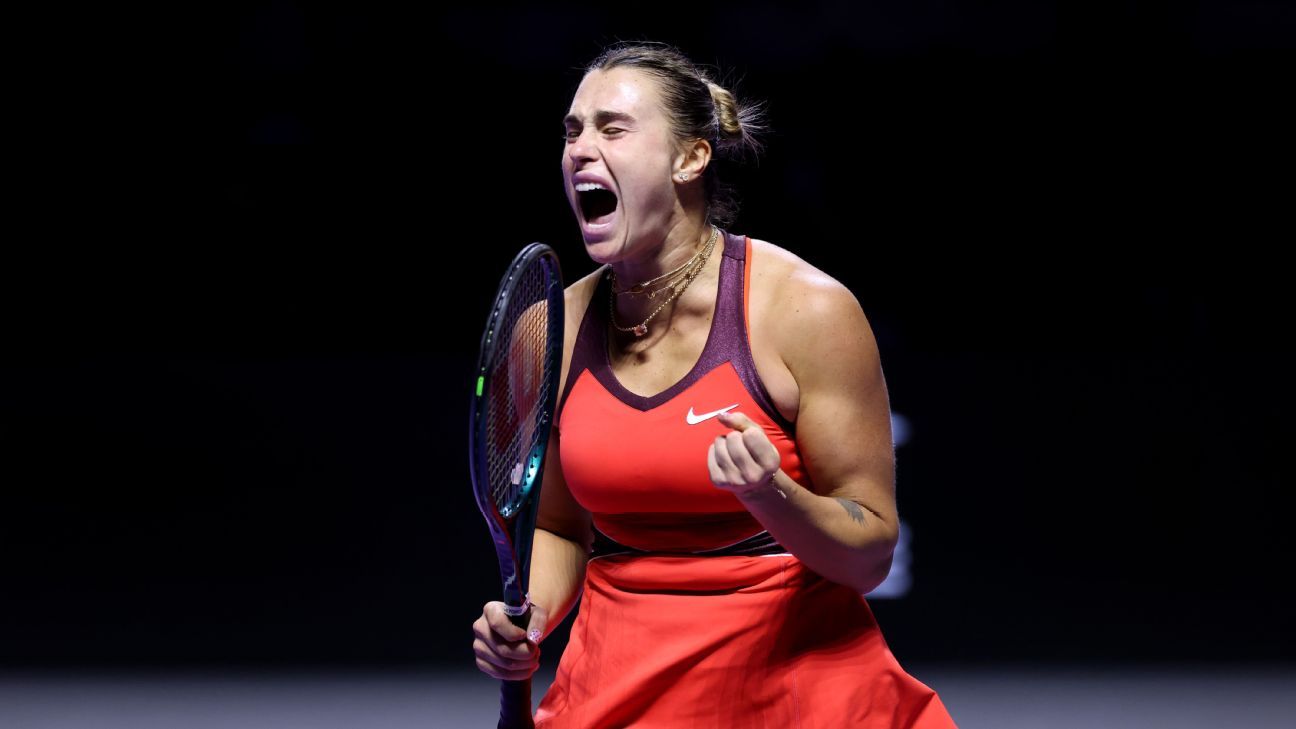
Aryna Sabalenka claimed her second consecutive WTA Tour Player of the Year award on Monday, December 15, 2025, securing nearly 80% of the media panel’s vote after a dominant run that included the US Open title, finals at two other majors, and the year-end No. 1 ranking. The 27-year-old Belarusian led the tour with 63 match wins against 12 losses, four titles, nine finals reached, and a record $15 million in prize money, spending the entire 2025 season at the top. This repeat honor places her alongside Serena Williams and Iga Swiatek as back-to-back winners over the past 25 years.
“struggling with my mental health” for nearly a year.
Sabalenka’s campaign unfolded under relentless pressure, her explosive groundstrokes adapting to each surface’s demands while the weight of expectations built with every deep run. Crowds at the majors fed off her intensity, the air thick with the thud of her heavy topspin forehands echoing through packed stadiums. Yet each setback sharpened her focus, turning near-misses into fuel for the hard-court redemption that sealed her supremacy.
Majors demand tactical reinvention
The Australian Open in January tested Sabalenka early, where she fell to Madison Keys in the final on Melbourne’s hard courts, Keys’ flat returns neutralizing her 1–2 patterns of big serves into crosscourt forehands. That straight-sets loss forced adjustments, Sabalenka dialing in deeper positioning to counter aggressive returns, a tweak that paid off later but left her recalibrating amid the Rod Laver Arena’s roar. By Roland Garros in June, clay’s slower bounce challenged her power game further, as Coco Gauff outlasted her in the final with speedy retrievals and down-the-line passing shots that stretched rallies into endurance battles.
Wimbledon’s grass in July brought sharper angles, Sabalenka’s slice backhands skidding low to draw cheers from the Centre Court faithful, but Amanda Anisimova upset her in the semifinals with bold inside-out forehands that exploited the surface’s pace. Anisimova, who had taken time off in 2023 after admitting she had been struggling with her mental health for nearly a year, channeled that resilience into her surge. Sabalenka absorbed the defeat, her No. 1 buffer intact, and pivoted to Flushing Meadows, where her defended US Open title against Anisimova featured overwhelming serve-volley mixes and inside-in winners that silenced the New York night.
Anisimova’s ascent challenges the throne
Anisimova earned Most Improved Player honors, reaching her first two Grand Slam finals at Wimbledon—where she lost to Swiatek—and the US Open, plus WTA 1000 titles in Doha and Beijing with flat groundstrokes that pierced defenses on faster courts. The 24-year-old American climbed from No. 36 at the end of 2024 to No. 4, nominated for Player of the Year after three other finals marked her top-10 debut. Her aggressive net rushes and poise under pressure mirrored Sabalenka’s intensity, their clashes adding layers of rivalry that thrilled fans from London to New York.
This breakthrough capped Anisimova’s mental recovery, her game now blending raw power with calculated risks that disrupted top seeds. Spectators sensed the shift in their US Open final, Anisimova’s inside-in attempts forcing Sabalenka to scramble, though the Belarusian’s deeper topspin ultimately prevailed. As Anisimova eyes 2026, her momentum promises tighter battles, pushing Sabalenka to evolve her patterns even further.
Resilience ripples through the tour
Beyond the singles summit, Vicky Mboko claimed Newcomer of the Year, the 19-year-old Canadian vaulting from outside the top 300 to inside the top 20 with a WTA 1000 triumph in Montreal, where she toppled four Grand Slam champions using heavy topspin baselines that wore down opponents on home clay. Belinda Bencic took Comeback Player after over a year away for her first child, winning two titles and reaching Wimbledon semifinals—her deepest major run since 2019—with all-court finesse blending underspin slices and drop shots. Katerina Siniakova and Taylor Townsend rounded out the night as Doubles Team of the Year, their Australian Open win and US Open final featuring Siniakova’s net poaching paired with Townsend’s athletic lobs.
These stories wove into Sabalenka’s dominant thread, the tour’s energy pulsing with comebacks and breakthroughs that amplified her achievements. As 2026 approaches, the WTA landscape feels charged, with Anisimova’s fire, Mboko’s promise, and Bencic’s return setting up a chase that demands Sabalenka’s power stay one step ahead. Her season’s blueprint—adapting across surfaces, harnessing mental steel—positions her to defend the crown amid rising threats.