Sabalenka and Kyrgios revive sexes battle in Dubai

With handicaps and history in play, top-ranked Aryna Sabalenka meets Nick Kyrgios for a December exhibition that blends power, precision, and psychological sparks under arena lights.
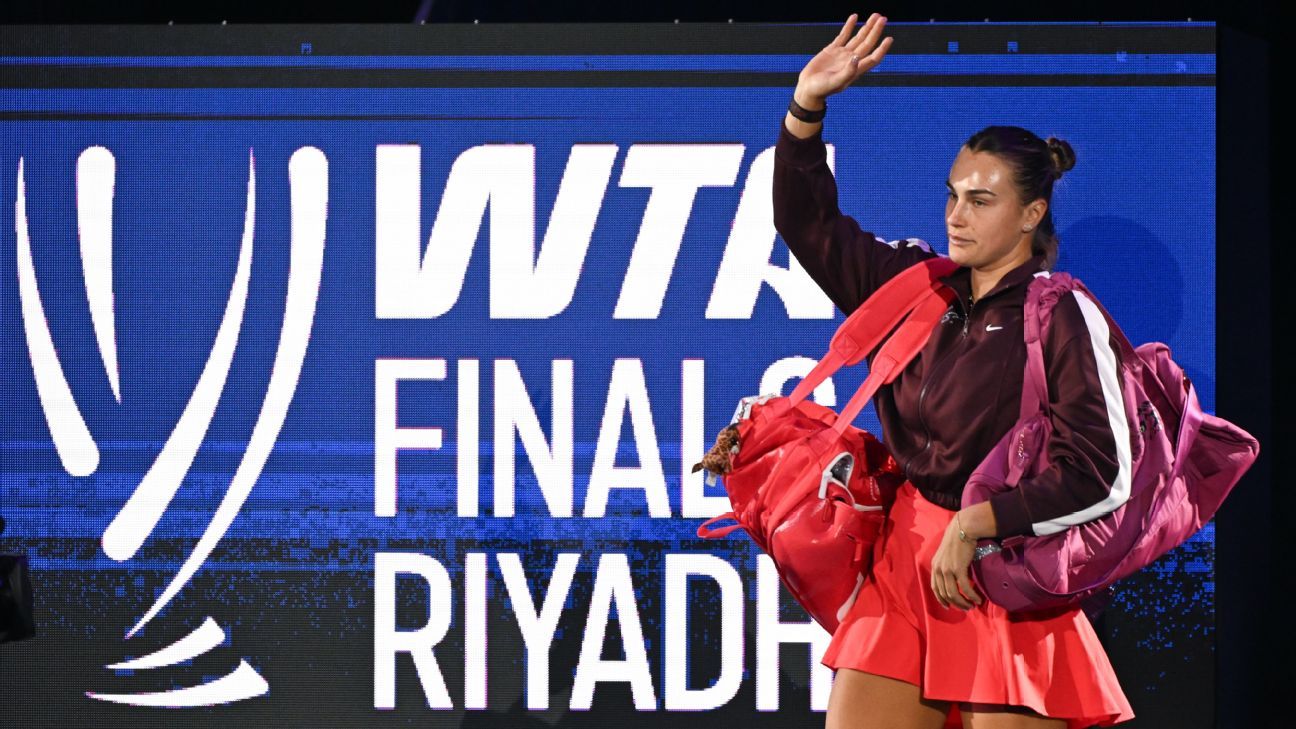
In the hush before Dubai’s indoor roar, a fresh take on an old showdown unfolds at the Coca-Cola Arena, where 17,000 seats will pulse with anticipation on December 28. Top-ranked Aryna Sabalenka, whose four Grand Slam titles anchor her baseline dominance, steps across the net from former Wimbledon finalist Nick Kyrgios in this Battle of the Sexes exhibition. Teased during her U.S. Open run, the event’s details emerged Tuesday on social channels, setting up a match that handicaps his serve while narrowing her target zone for a test of adaptability and flair.
Historical weight fuels tactical tension
The format echoes the 1973 clash where Billie Jean King dispatched Bobby Riggs in straight sets inside the Houston Astrodome, a milestone that reshaped perceptions in tennis and beyond. Sabalenka arrives with her hard-court edge, where deep crosscourt forehands stretch opponents into errors during extended rallies. Kyrgios, sidelined by injuries in recent years, brings a serve-volley legacy tempered by this setup’s constraints, potentially shifting early points toward her return game on the brisk indoor surface.
She thrives in these environments, redirecting pace with inside-out winners that pin foes deep, while he must thread precision through a constricted court half. The Australian has forecasted a quick victory, leaning on flat groundstrokes to disrupt her rhythm, yet the single-serve rule could expose any lingering rust from limited match time. As arena acoustics amplify every skid and grunt, the psychological layers deepen, turning a scripted event into a mirror of their season’s emotional arcs.
I cannot wait to get back out on court. Honestly I’m feeling amazing. I never thought I would be back into this position, being able to travel the world, see my fans and play some amazing tennis.
One serve reshapes point construction
Kyrgios‘s restriction to a lone delivery per point strips away his ace factory, forcing him to serve toward a smaller slice of the court and inviting Sabalenka‘s aggressive returns right from the outset. Her power game, built on heavy topspin that grips the hard courts, sets up one–two combinations where a solid return leads to down-the-line backhands. He counters with underspin slices to vary tempo, buying space for net approaches, but the halved target demands flawless placement under the enclosed air’s unforgiving speed.
This dynamic tests her focus after a year of top-seed pressures, where prolonged exchanges demand unflinching baseline control. Kyrgios, drawing from his 2022 Wimbledon final loss to Novak Djokovic, channels that near-miss intensity into creative shot-making, potentially flipping points with a well-timed volley. The crowd’s energy will surge with each adjustment, highlighting how these tweaks elevate exhibition play beyond mere entertainment.
New York prelude sharpens Dubai edges
Before Dubai’s spotlight, both warm up in a December 8 New York exhibition, where Sabalenka clashes with Naomi Osaka in a duel of raw power and resilient returns, and Kyrgios faces Tommy Paul, pitting flair against steady American baselines. These encounters fine-tune strategies, with her eyeing serve-holding patterns and him practicing angles on adjusted geometry. As the off-season beckons, the pairings underscore a tour’s fading grind, where joy reemerges amid tactical evolution.
Sabalenka’s unyielding pursuit meets Kyrgios’s disruptive spark, promising indoor rallies that blend history’s echo with modern invention. Under the lights, every inside-in forehand or sliced approach could ignite the next wave of mixed-format intrigue, leaving fans pondering the boundaries of competition long after the final point lands.