Sabalenka’s Wuhan reign deepens with streak extension

Under Wuhan’s closed roof, Aryna Sabalenka surges to 19 straight wins here, overpowering Liudmila Samsonova, as Jessica Pegula scrapes through yet another grueling three-setter to join the quarterfinal push.
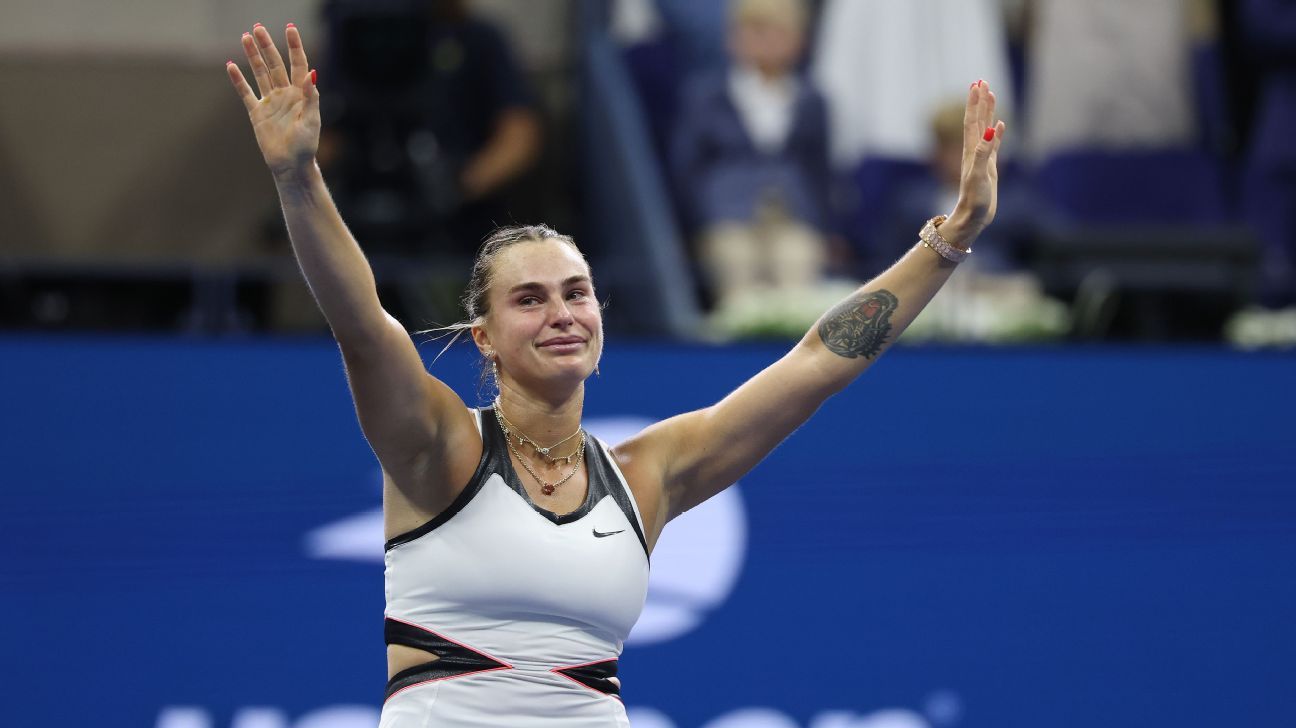
In the echoing enclosure of Wuhan’s Optics Valley International Tennis Centre, the air thick with the scent of fresh hard courts, US Open champion Aryna Sabalenka dismantled Liudmila Samsonova 6-3, 6-2, rolling her unbeaten streak at this WTA 1000 event to 19 matches and clinching a quarterfinal berth. The world No. 1’s thunderous groundstrokes, laced with heavy topspin, pinned her opponent deep, turning rallies into tests of sheer willpower amid the indoor humidity that quickened every exchange. This triumph echoes her past conquests in 2018, 2019, and 2024, a sequence that now carries the weight of seasonal expectations following her New York glory, where each victory sharpens her focus against the creeping fatigue of dominance.
Sabalenka builds on power and precision
Sabalenka’s approach against Samsonova blended relentless baseline pressure with smart directional shifts, firing crosscourt forehands to stretch the court before whipping inside-out backhands for winners. The faster indoor pace suited her flat-hitting style, allowing serves to skid low and disrupt returns, while the closed roof muted external distractions, letting her immerse in the rhythm of the match. As the second set unfolded, her opponent’s errors mounted under this tactical onslaught, highlighting how the Belarusian has refined her game to sustain streaks that demand both physical explosiveness and mental clarity.
Earlier under the same roof, Jessica Pegula erased an early third-set service break to outlast Ekaterina Alexandrova 7-5, 3-6, 6-3, advancing to the final eight after leveling at 2-2 and snaring four of the last five games. The sixth seed, rebounding from a China Open semifinal defeat last week, leaned on varied slice backhands to neutralize power, then unleashed inside-in forehands to exploit gaps in the Russian’s aggressive positioning. This effort capped her sixth straight three-set battle—and fifth success—coming a day after she survived on her seventh match point against fellow American Hailey Baptiste in the second round, her resilience forged in the adjusted bounce of these enclosed courts.
“I can’t remember the last time I played two sets,” Pegula said. “But I’ve been competing really hard, and I’ve been playing a lot of really good players. It was different conditions today with the roof closed, and I think it took us a little while to get adjusted.”
Pegula grinds through indoor adjustments
For Pegula, the win over Alexandrova revealed her growing affinity for the indoor hard courts’ drier conditions, where the ball’s quicker flight rewarded her precise angles and quicker footwork after Beijing’s outdoor setbacks. She disrupted patterns with occasional net rushes, forcing the ninth seed into uncomfortable mid-rally decisions, a strategy that turned potential exhaustion into controlled aggression. As the American eyes the quarters, her ability to adapt to the roof’s subtler acoustics and pace variations underscores the psychological edge gained from navigating a schedule that tests recovery as much as stroke production.
Turning to the evening session, No. 2 Iga Swiatek took on Belinda Bencic, pitting the Pole’s all-surface command against the Swiss player’s crafty underspin and slice variations that could slow the indoor tempo. Meanwhile, No. 3 Coco Gauff, still reflecting on her China Open semifinal loss to eventual champion Amanda Anisimova, prepared to meet Zhang Shuai, where the American’s explosive retrievals might counter the veteran’s steady down-the-line passes amid rising crowd energy.
Night matches test elite resolve
Swiatek’s matchup with Bencic, fresh from maternity leave, promises a clash of precision versus tactical depth, with the world No. 2’s one–two serve-forehand combinations potentially overwhelming the defender’s pace changes on this skiddy surface. Gauff, channeling speed to chase down Zhang’s slices, faces a test of converting recent frustrations into forward drive, the stadium’s humid buzz amplifying every point’s stakes. As Wuhan’s draw compresses, these encounters blend strategic nuance with the emotional undercurrents of a tour swing where mental poise and surface savvy will carve the path to the title.