Sabalenka and Djokovic chase mixed doubles millions

A revamped format and million-dollar prize pull elite singles players into quick tactical resets on Arthur Ashe Stadium hard courts.
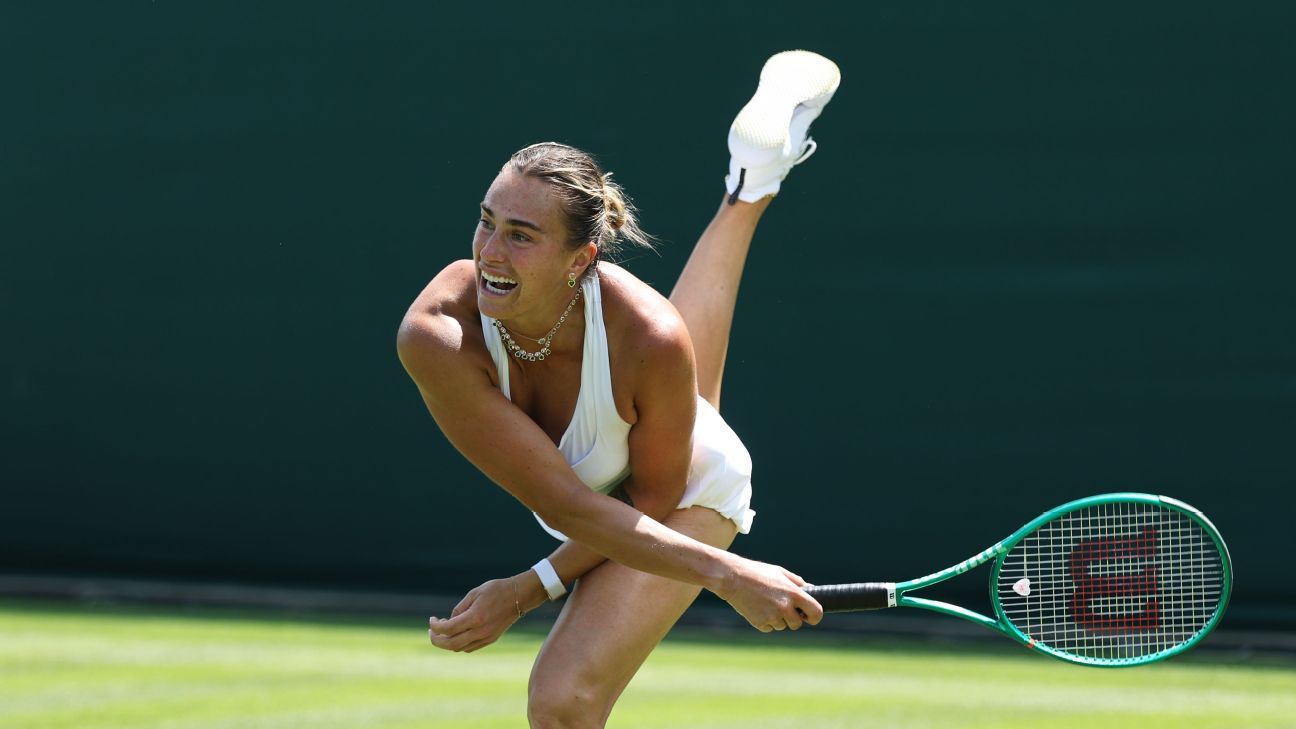
Top-ranked Aryna Sabalenka and 24-time Grand Slam champion Novak Djokovic headline the initial list of 16 teams entered into the U.S. Open mixed doubles championship. The two-day sprint on the biggest stages forces rapid adjustments from heavy baseline exchanges to sharper net play.
Iga Swiatek and Casper Ruud, the runners-up in 2025, return with their established baseline patterns intact. Elena Rybakina and Taylor Fritz pair power serves with crosscourt forehands that exploit the faster surface.
Any time you can bring women and men together on the same team, you showcase tennis at its best. This is exactly what the mixed doubles championship does.
The Japanese duo of Naomi Osaka and Kei Nishikori lean on inside-out groundstrokes refined on North American hard courts. Jessica Pegula and Jack Draper favor compact one-two combinations that transition rapidly to the net.
Season grind shapes early pairings
Mirra Andreeva and Andrey Rublev test aggressive inside-in angles against bigger servers. Belinda Bencic and Flavio Cobolli mix slice backhands with heavy topspin forehands to vary tempo. Diana Shnaider and Daniil Medvedev rely on deep crosscourt rallies that punish shorter replies.
Amanda Anisimova and Learner Tien emphasize first-strike tennis suited to the compressed scoring sets. Alex Eala and Felix Auger-Aliassime target wide serves followed by down-the-line winners on the quicker Louis Armstrong Stadium courts. Leylah Fernandez and Frances Tiafoe blend underspin approaches with flat groundstrokes to disrupt rhythm.
Rankings pressure locks in stars
Taylor Townsend and Alexander Zverev use height and reach to control net exchanges in best-of-three sets shortened to four games. Elena-Gabriela Ruse and Nuno Borges favor steady crosscourt exchanges that accumulate errors from opponents. Sara Errani and Andrea Vavassori bring proven doubles instincts into the compressed tiebreak formats.
Katerina Siniakova and Henry Patten add net poaching expertise that could thrive in qualifying. Peyton Stearns and Preston Stearns test sibling coordination on the biggest stages. Teams can enter up until Aug. 17, when the six duos with the best combined singles rankings at the time will be automatically entered into the main draw. That means Sabalenka, the two-time defending U.S. Open women’s champion, and Djokovic, still ranked No. 5 on the men’s tour at age 39, will be safely into the field.
Format tweaks test mental reset
Eight teams will be given wild cards by the USTA, and two other teams will play their way into the field through a qualifying tournament to be held Aug. 24. Errani and Vavassori are the two-time defending U.S. Open champions. The Italians needed a wild card to get into last year’s event because their singles rankings were too low, and that will be the case again this year. The main draw will be played over two days on Aug. 25-26, with all the matches set to be held in Arthur Ashe Stadium and Louis Armstrong Stadium, the two biggest venues at the U.S. Open, and televised on ESPN’s properties.
The U.S. Open was initially criticized last year because the format of the event shut out doubles specialists such as Errani and Vavassori, but the tournament certainly seemed a success, helping draw 78,000 fans to the grounds and selling out Ashe both days. The mixed doubles championship is an innovation that will engage new audiences and give our fans another opportunity to see the biggest stars compete together. Errani and Vavassori were the only traditional doubles team in last year’s tournament. There is a chance for more this year with the addition of the eight-team qualifying tournament, which will include six direct entries and two wild cards.
The format will be best-of-three-set matches with sets to four games, tiebreakers at 4-all and a 10-point match tiebreak instead of a third set, through the semifinals. The final will be standard scoring with sets to six games and a tiebreaker at 6-all, and a 10-point match tiebreaker if necessary. Siniakova and Patten are doubles specialists who must mesh their net instincts with the baseline habits of singles players under the compressed scoring. The psychological arc for every pairing runs through the need to compress preparation into one week while the broader season demands continue to mount. Concrete adjustments on Arthur Ashe Stadium’s hard courts will reward those who read early ball flight and switch from inside-out patterns to sharp down-the-line slices without hesitation.