Sabalenka shakes off wobbles to advance in Melbourne

Aryna Sabalenka battles through a gritty first set against Bai Zhouxuan at the Australian Open, her power prevailing in a 6-3, 6-1 win that hints at tactical tweaks for the long haul.
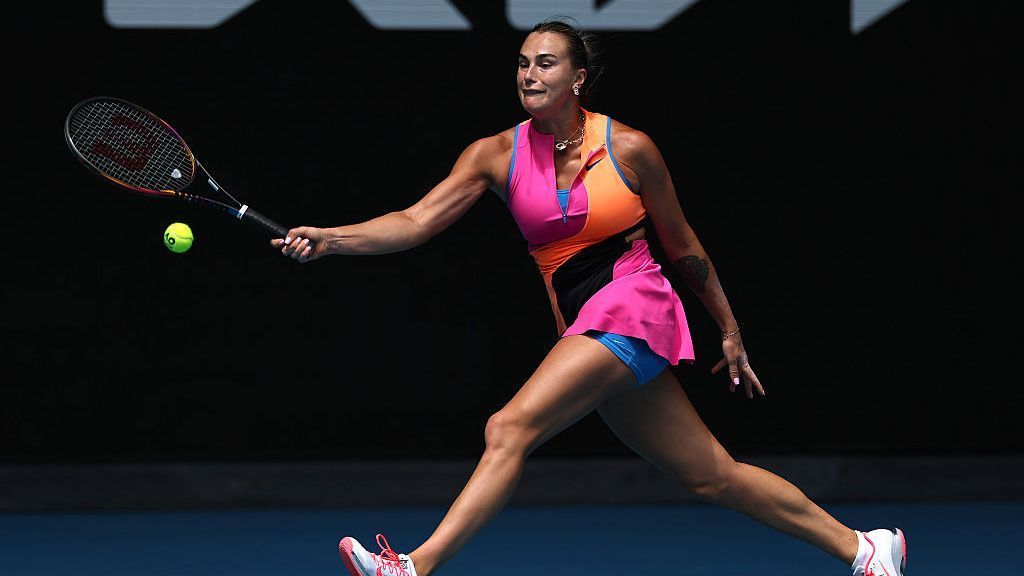
In the humid glare of Rod Laver Arena, Aryna Sabalenka surged to a 5-0 lead in the first set, her heavy topspin forehands crosscourt pinning Bai Zhouxuan deep behind the baseline. The top seed’s aggressive patterns dismantled the Chinese qualifier’s defense early, but Bai clawed back with clever drop shots that skimmed the net and forced Sabalenka into hurried approaches. It took seven set points before Sabalenka sealed the 6-3 opener, her inside-out forehand finally threading the needle down the line.
Bai’s underspin slices kept the rallies alive, turning the set into a test of patience on the medium-paced hard courts. Sabalenka, drawing on her familiarity with Melbourne’s true bounce, reset with deeper returns to neutralize the low skids.
“I was happy to get this win, a tricky opponent,” Sabalenka said. “She really stepped in in the first set.”
The second set turned into a rout as Sabalenka powered to 4-0, overwhelming Bai’s smaller frame with blistering serves wide to the deuce side followed by crosscourt passes. She even ventured to the net once, attempting a serve-and-volley that ended in a backhand winner, though the tactic fizzled against Bai’s quick reflexes.
“You saw serve-and-volley today,” Sabalenka said. “It didn’t really work well, but I did one.”
Bai’s defense exposes fleeting lapses
Bai Zhouxuan, in her second Australian Open main draw and first time reaching the second round, relied on defensive retrieves and precise drop shots to disrupt Sabalenka’s rhythm. Her underspin backhands skidded low on the surface, forcing the Belarusian to bend and stretch, exposing minor footwork hesitations in the longer exchanges. Yet Sabalenka’s one–two combinations—deep backhand into forehand winner—eventually broke through, converting that seventh set point with a forehand that hugged the sideline.
This encounter highlighted how even lower-ranked players can unsettle the elite with variety, pushing Sabalenka to shorten her returns and flatten her strokes against the slices. As the match progressed, Bai’s energy waned under the weight of Sabalenka’s relentless baseline pressure, allowing the top seed to dictate from the back of the court.
Sabalenka won the 2023 and 2024 Australian Open titles but was the runner-up a year ago to Madison Keys. She chases a fifth Grand Slam singles title, bolstered by two US Open victories, in a season where every early match sharpens her edge for the deeper stages.
Svitolina steadies amid emotional echoes
Across Melbourne Park, 12th-seeded Elina Svitolina of Ukraine grinded out a 7-5, 6-1 win over Linda Klimovicova of Poland, her steady baseline game prevailing in a first set laced with breaks. Svitolina’s husband, Gael Monfils, a popular 39-year-old Frenchman, had exited the previous day in his retirement year, losing in the first round to qualifier Dane Sweeny. The Ukrainian’s second-set dominance came via crosscourt forehands that pinned her opponent, a quiet resolve carrying her forward despite the personal undercurrents.
Svitolina saved key break points in the opener with deep returns that forced errors, her all-court transitions shining on the outer courts where the breeze could curl slices unpredictably. This advance blends professional focus with family closure, fueling her run on these familiar hard courts.
Sönmez surges with crowd’s embrace
On a packed outside court, Zeynep Sönmez of Turkey dispatched Anna Bondar 6-2, 6-4, advancing to the third round for the first time here. Praised in her opener for assisting an ill ballkid, she thrived amid the roars from Melbourne’s Turkish community, their energy turning the match into a home-like frenzy. Sönmez’s aggressive net rushes and down-the-line backhands clicked under the pressure, the noise amplifying her confidence in straight-sets control.
“I really appreciated there were many Turkish people, and I felt like I was at home,” she said. “At first I couldn’t even hear my own thoughts. It was very, very loud.”
As the Australian Open 2026 unfolds, these wins underscore the blend of individual grit and external boosts that propel players deeper. Sabalenka’s path now sharpens toward ranked threats, her subtle adjustments against Bai signaling readiness for the psychological grind ahead in Melbourne’s escalating heat.