Rybakina grinds out Tokyo win for Finals qualification

In a pressure-cooker quarterfinal under Tokyo’s lights, Elena Rybakina turned the tables on a determined challenger, securing her WTA Finals berth through sheer baseline resolve and a season’s worth of hard-earned lessons.
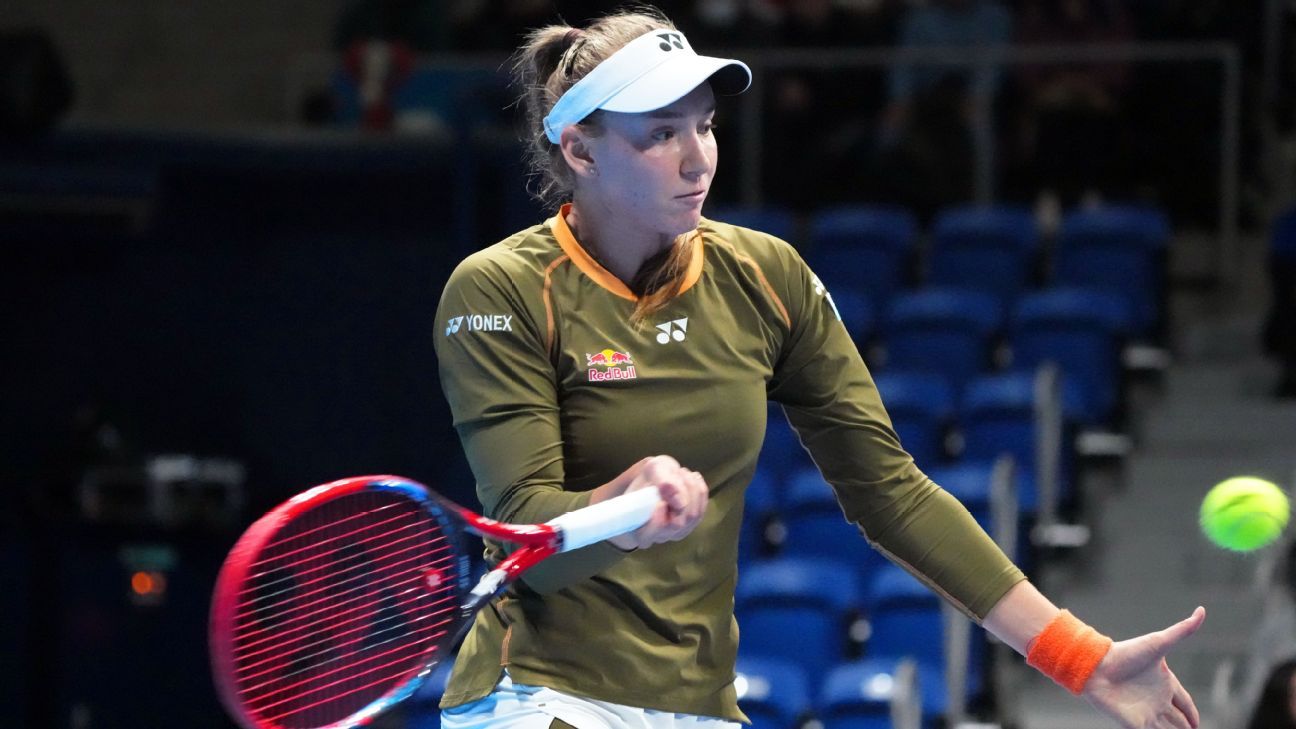
In the charged atmosphere of Ariake Coliseum on October 24, 2025, Elena Rybakina delivered a hard-fought 6-3, 7-6 (4) quarterfinal victory over Victoria Mboko at the Pan Pacific Open, clinching the final spot for the WTA Finals. The Kazakhstan player’s penetrating groundstrokes cut through the indoor hard court’s pace, absorbing Mboko’s aggressive returns and underspin slices to maintain control in extended rallies. This win not only advanced her to the semifinals but capped a grueling qualification race, where every hold amplified the crowd’s growing anticipation.
Season’s trials build unshakeable focus
Rybakina’s path traced months of tactical shifts across surfaces, from Europe’s clay to Asia’s hard courts, where her deep returns and inside-out forehands accumulated vital points. She edged ahead of Mirra Andreeva for the eighth position, her consistent performances amid injuries transforming doubt into disciplined routine. The first set’s early wobbles gave way to steady down-the-line backhands, as the murmurs from the stands echoed her internal push to treat each point as essential groundwork.
That resolve stemmed from a campaign of selective scheduling, where physical setbacks demanded mental recalibration without losing her flat-hitting edge. Mboko‘s crosscourt winners tested her early, but Rybakina redirected pace with flattened strokes, turning defense into decisive advances. Her composure under the humid buzz highlighted a player who had silenced distractions through repetition, positioning her for the bigger stage ahead.
“it’s great to qualify and play some more matches, especially against top players,” Rybakina said. “Last week, I was focusing one match at a time and I knew that to qualify it’s going to take a long road.”
Tiebreak duel sharpens power and placement
The second set evolved into a baseline chess match, with Mboko’s underspin disrupting rhythm and forcing Rybakina to vary her one–two combinations of serve and forehand. At 6-6, the tiebreak intensified, her firm serves neutralizing net rushes while an inside-in forehand sealed the break. This tactical patience exploited the surface’s true bounce, rewarding her depth over Mboko’s hurried errors in the heat of the moment.
Now facing Linda Noskova in the semifinals, Rybakina’s evolved game—incorporating drop shots to counter all-court versatility—promises another layer of intensity. Noskova’s sharp down-the-line passes will challenge her hold percentage, yet the fast conditions favor Rybakina’s flat trajectories, much like they did against Mboko’s approaches. Under Tokyo’s relentless lights, this matchup could extend her momentum, blending power with precise adjustments.
Riyadh showdowns test seasoned resolve
From November 1-8 in Saudi Arabia, Rybakina joins top-ranked Aryna Sabalenka, Iga Swiatek, Coco Gauff, Amanda Anisimova, Madison Keys, Jessica Pegula, and Jasmine Paolini in the elite round-robin fray. Gauff, the defending champion, overpowered Zheng Qinwen in last year’s final, claiming $4.8 million and a legacy-defining run. For the 2022 Wimbledon champion, this gathering offers a platform to merge her precision with the psychological grit forged through the year’s long road.
The indoor hard courts in Riyadh mirror Tokyo’s controlled pace, suiting her penetrating shots while demanding adaptability against Sabalenka’s thunderous serves or Swiatek’s defensive spins. As group dynamics unfold, Rybakina’s quiet intensity positions her to thrive, eyes on deeper breakthroughs amid the desert’s high-stakes tempo. Her qualification not only rewards resilience but sets the stage for unfinished rivalries among the world’s best.